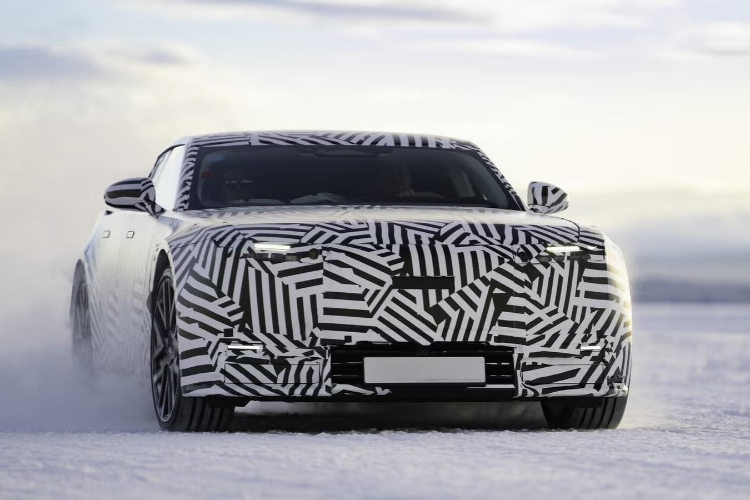
After months of anticipation, Jaguar is finally ready to show the world its new Type 01 – the all-electric GT that is intended to define the next chapter of the famous British marque.
There have been countless discussions about Jaguar’s future since the brand revealed its dramatic Type 00 concept in 2024. There has also been plenty of debate surrounding the direction Jaguar has chosen to take.
We previously looked at the Jaguar Type 01 and the dramatic change of direction Jaguar was taking with its new flagship electric model.
Now, however, the talking is almost over.
The Jaguar Type 01 will make its world debut in New York tonight, 6 October 2026, marking one of the most important moments in the company’s modern history. The UK will see the full reveal during the early hours of 7 October because of the time difference.
And while Jaguar has already revealed plenty about the car – including its interior, electric architecture and some very impressive performance figures – the final production design remains one of the biggest unanswered questions.
A Completely New Jaguar
The Type 01 is not simply a replacement for an existing Jaguar model.
It represents the starting point for an entirely different direction for the brand.
Jaguar has moved away from the traditional saloons and SUVs that have made up much of its recent range and instead chosen a dramatic four-door GT as the first production model of its new era.
The Type 01 name itself reflects that change.
The ‘Type’ element connects the car with Jaguar’s historic naming tradition, while the ‘0’ represents its zero-emission electric powertrain and the ‘1’ signifies the first model of a new generation. The Type designation has a long history within Jaguar, dating back to the Le Mans-winning C-Type of 1951 and later appearing on iconic models such as the E-Type and F-TYPE.
It is a deliberately significant name for what Jaguar considers to be a significant car.
The Type 01 is also the first production Jaguar to use the company’s dedicated Jaguar Electric Architecture, or JEA. This means the car has not been created by adapting an existing combustion-engine platform for electric power.
Instead, Jaguar has designed the architecture around the requirements of its new electric vehicles. The Type 01 is also being designed, developed and built in the UK, reinforcing Jaguar’s connection with its British heritage as it moves into a completely new electric era.
Jaguar Has Chosen A Very Different Formula
The Type 01 is a sizeable car, measuring around 5.2 metres in length, but it is not designed to look like a conventional large luxury saloon.
It has a long bonnet, low roofline, wide stance and dramatically proportioned body.
That approach is intentional.
Jaguar has repeatedly said it does not want its future electric cars to simply follow the increasingly familiar EV formula of tall bodies, short bonnets and highly aerodynamic shapes designed primarily around efficiency.
The Type 01 instead places design, presence and emotion at the centre of the car.
That is a particularly important point for Jaguar.
The company is attempting to move the brand further into the luxury market, where buyers are not necessarily looking for the most practical vehicle or the biggest possible battery. That move also places Jaguar alongside other JLR luxury products entering the electric market, including the Range Rover Sport Electric.
They are buying into design, exclusivity, craftsmanship, performance and the experience of owning something distinctive.
The Type 01 is Jaguar’s answer to that market.
A Four-Door GT With Four Individual Spaces
Inside, the Type 01 continues Jaguar’s decision to do things differently.
Despite its substantial exterior dimensions, this is not a conventional five-seat luxury car.
It has four individual seats, with a dramatic central spine running through the cabin from front to rear.
Rather than treating the centre of the interior as simply a conventional transmission tunnel or storage area, Jaguar has made it a major part of the cabin’s architecture.
The result is an interior divided into four distinct areas, giving the occupants a more individualised environment.
Jaguar has also taken a considerably more restrained approach to screens than some modern luxury manufacturers.
The dashboard does not simply consist of enormous displays covering every available surface. Instead, technology is integrated into the architecture of the cabin, with controls and information presented where they are intended to be used.
There is also a digital ClearSight Rear View Display because the Type 01 does not use a conventional rear windscreen.
A camera provides the rearward view, with the display positioned inside the cabin to give the driver the information normally provided by a traditional mirror.
The interior is therefore just as much a statement about Jaguar’s future as the exterior.
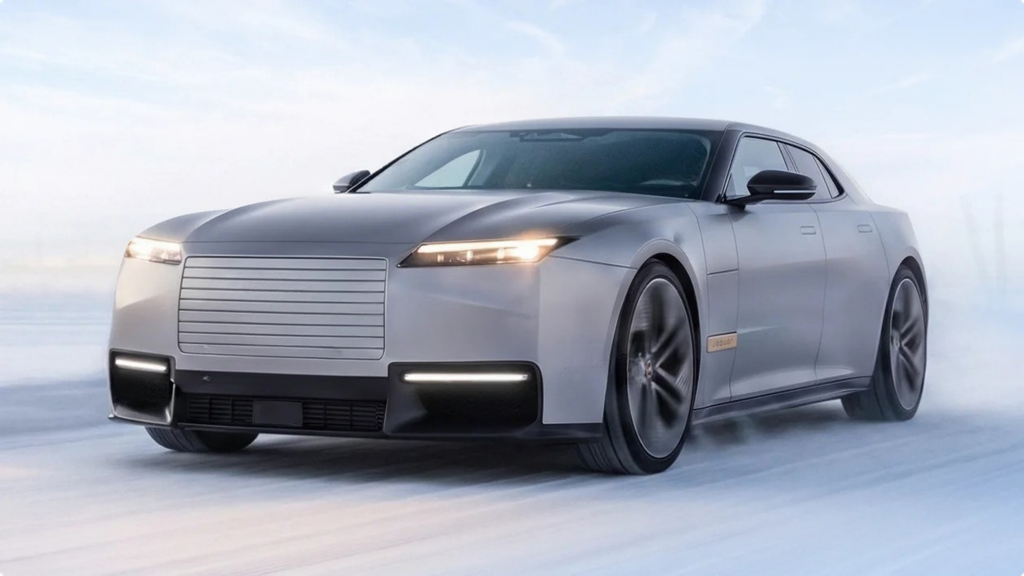
More Than 1,000PS From Three Electric Motors
Underneath the dramatic bodywork is where the Type 01 becomes particularly interesting.
Jaguar has confirmed that the car will use a tri-motor electric powertrain, with total output exceeding 1,000PS.
Torque is expected to be above 1,300Nm.
Those figures put the Type 01 firmly into high-performance territory.
This is not an electric GT designed simply to provide a quiet and comfortable alternative to a conventional luxury car. Jaguar wants it to deliver the performance expected from a flagship model while retaining the refinement associated with a grand tourer.
The car is expected to accelerate from 0-62mph in just over three seconds.
That is remarkable for a vehicle of this size.
It is also important because Jaguar has been keen to stress that the Type 01 is not being developed purely around headline power figures.
The company’s engineers have been working on the chassis, steering and suspension to ensure that the car remains a genuine Jaguar to drive.
A Large Battery And Long-Distance Capability
Performance is only one part of the Type 01’s brief.
As a grand tourer, the car also needs to be capable of covering long distances without constantly stopping to recharge.
Jaguar has previously indicated that the Type 01 will use a battery of around 120kWh, with a targeted range of up to around 435 miles depending on the final specification and testing cycle.
That puts the car firmly into long-distance EV territory.
The electrical system is also designed to support very rapid charging, with Jaguar targeting charging speeds of up to 350kW.
Under suitable conditions, the company has indicated that around 200 miles of additional range could be added in less than 15 minutes.
For a luxury GT, that matters.
The Type 01 is not being positioned as a city-focused electric car. It is intended to be a vehicle capable of covering substantial distances while maintaining the comfort and refinement expected from an expensive grand tourer.
It Will Be Electric Only
There will be no petrol or diesel version of the Type 01.
Jaguar has committed to making the car fully electric, with no plan to introduce an internal-combustion version.
That decision is particularly significant given how important Jaguar’s traditional performance cars have been to the company’s identity.
Models such as the F-TYPE built their reputation around powerful petrol engines, exhaust noise and traditional sports-car performance.
The Type 01 is effectively Jaguar demonstrating that its idea of performance can exist without any of those things.
Instead, instant electric torque, multiple motors and sophisticated chassis technology are being used to create the performance character of the new Jaguar.
Designed To Be A Luxury Car First
Perhaps the most interesting thing about the Type 01 is that Jaguar does not want buyers to choose it simply because it is an electric car.
That is an important distinction.
There are now plenty of premium and luxury electric vehicles available, and simply adding a large battery and powerful motors is no longer enough to make a new model stand out.
Jaguar wants the Type 01 to appeal because people want the car itself.
The design.
The interior.
The sense of occasion.
The performance.
The exclusivity.
And, ultimately, the Jaguar badge.
That is a much more ambitious proposition than simply creating another premium electric saloon.
How Much Will The Jaguar Type 01 Cost?
The Type 01 is not going to be an affordable entry point into Jaguar ownership.
Jaguar has previously indicated that pricing will start at around £120,000, with the brand expecting the typical customer spend to move considerably higher once personalisation and bespoke options are taken into account.
That puts the Type 01 into a very different part of the market from Jaguar’s previous mainstream models.
The company is effectively attempting to position the new Jaguar alongside some of the most prestigious luxury manufacturers rather than competing directly with the mass-market premium brands.
There will also be considerable scope for personalisation.
Rather than offering a huge number of conventional trim levels, Jaguar intends to place greater emphasis on bespoke specifications and highly individual cars.
That fits the wider strategy.
If Jaguar wants to become a more exclusive luxury brand, limited production runs and highly personalised vehicles could become an increasingly important part of its business model.
When Will The Jaguar Type 01 Go On Sale?
The Type 01 is expected to move towards customer deliveries in 2027, following the official reveal and opening of orders.
The full production specification, final pricing and other details will become clearer as Jaguar completes the launch process.
For UK buyers, this is therefore still very much the beginning of the Type 01 story.
Tonight’s reveal is the moment Jaguar finally takes the covers off the production car.
What follows will be just as important.
What Does The Type 01 Mean For Jaguar?
That may ultimately be the biggest question surrounding the new Jaguar.
The Type 01 is not being launched into a vacuum. Jaguar is joining a much wider shift among performance and luxury manufacturers, with Ferrari also moving into fully electric territory.
Jaguar is attempting to reinvent itself at the same time as the automotive industry is undergoing one of its biggest changes in decades.
Electric vehicles are becoming increasingly capable, luxury manufacturers are moving towards higher levels of technology, and buyers have more choice than ever before.
Jaguar has therefore chosen not to fight for a larger share of the traditional premium market.
Instead, it is attempting to make itself different.
That is a considerable risk, particularly given the wider challenges Jaguar Land Rover has faced as the company reshapes its business and prepares for its next phase.
But it is also what makes the Type 01 so interesting.
There is very little point in Jaguar producing another anonymous electric SUV or executive saloon and expecting it to transform perceptions of the brand.
The Type 01 is anything but anonymous.
 Call our expert team on