
A well-managed vehicle fleet can help businesses control operating costs, maintain productivity and ensure vehicles remain suitable for their operational requirements. However, as a fleet grows or business needs change, it can become harder to identify unnecessary expenditure, underused vehicles, recurring maintenance issues and opportunities to improve efficiency.
A fleet audit provides an opportunity to take a structured look at how company vehicles are being used, how much they cost to operate and whether they continue to meet the needs of the business. By reviewing vehicle data, running costs, utilisation, maintenance, compliance and replacement plans, businesses can make more informed decisions about their fleet.
For companies operating cars, vans and other commercial vehicles, a fleet audit can also help identify whether current leasing arrangements, vehicle specifications and maintenance processes remain appropriate.
At Commercial Vehicle Contracts (CVC), we help businesses explore vehicle leasing and wider fleet management solutions. Understanding the results of a fleet review can provide a useful starting point for assessing your vehicle requirements and planning for the future.

What Is a Fleet Audit?
A fleet audit is a structured review of a business’s vehicles, associated costs, operational performance and management processes. Its purpose is to establish how effectively the fleet supports the organisation and identify areas where improvements may be possible.
The scope will depend on the size of the fleet, the type of vehicles operated and the objectives of the review. A small business running several vans might concentrate on vehicle utilisation, servicing costs and replacement decisions, while a larger organisation may need a more detailed assessment of vehicle data, driver requirements, compliance procedures and fleet-wide expenditure.
A fleet audit typically considers:
- Vehicle inventory: The number, type, age, mileage and condition of vehicles operated by the business.
- Operating costs: Expenditure on leasing or finance, fuel, electricity, insurance, maintenance, tyres and other vehicle-related expenses.
- Vehicle utilisation: Whether vehicles are being used efficiently and remain necessary for their intended purpose.
- Maintenance and downtime: Servicing schedules, repair history, recurring faults and the effect of vehicle downtime on operations.
- Compliance and safety: MOT deadlines, inspection procedures, defect reporting, maintenance records and relevant legal obligations.
- Driver and operational requirements: Whether vehicle specifications, payloads, equipment and working arrangements suit the tasks being undertaken.
- Replacement planning: Whether vehicles should be retained, replaced or reassigned based on their condition, costs and operational suitability.
The findings can help businesses establish a clearer picture of their current fleet and prioritise changes that offer practical operational or financial benefits.
Why Should Businesses Conduct a Fleet Audit?
Vehicle fleets can represent a significant ongoing expense. Even where individual vehicles appear economical, unnecessary mileage, poor utilisation, inefficient vehicle choices or inconsistent maintenance arrangements can increase the overall cost of operation.
A fleet audit helps bring these factors together rather than considering each vehicle or expense in isolation.

Identify Opportunities to Reduce Fleet Costs
Reviewing expenditure across the fleet can reveal costs that may otherwise be overlooked. These might include vehicles that are rarely used, recurring repair bills, excessive fuel consumption, unnecessary mileage or vehicles that no longer suit their workload.
Businesses should assess costs in context rather than automatically replacing the most expensive vehicles. A vehicle covering high annual mileage may incur greater servicing costs but still be essential to daily operations. Equally, a vehicle with relatively low maintenance expenditure may be uneconomical if it spends most of its time unused.
The objective is to identify opportunities for genuine savings without compromising safety, reliability or business performance.
Improve Vehicle Utilisation
Vehicle utilisation measures how effectively vehicles are being used relative to their availability and intended purpose. Poor utilisation can indicate that a business operates more vehicles than it needs, has an unsuitable allocation of vehicles or could organise its operations more efficiently.
For example, a business might discover that several vans are regularly parked at the depot while other teams have to share vehicles during busy periods. Reviewing usage patterns could help determine whether vehicles should be reassigned, shared differently or removed from the fleet.
However, low mileage alone does not necessarily mean a vehicle is unnecessary. Some vehicles are retained for emergency cover, seasonal demand or specialist work. Utilisation data should always be assessed alongside operational requirements.
Review Vehicle Suitability
A fleet that met business requirements several years ago may no longer be appropriate. Changes to staffing, customer demand, delivery routes, equipment or working locations can affect the type and number of vehicles required.
A fleet audit can help establish whether vehicles provide sufficient load space, payload, passenger capacity, range and equipment for their intended tasks.
This is particularly important for commercial vehicles. Choosing a van that is too small can create operational difficulties, while using a larger vehicle than necessary may increase acquisition and running costs.
Businesses can use these findings to inform future purchasing and leasing decisions.
Improve Maintenance Planning and Reliability
Maintenance expenditure and vehicle downtime can have a direct impact on business performance. Recurring faults, missed servicing appointments and poor defect-reporting procedures may indicate that existing maintenance arrangements need reviewing.
An audit can help identify vehicles with unusually high repair costs, maintenance tasks that are frequently overdue and processes that could be improved.
For a more detailed look at this area, read our guide to fleet vehicle servicing and maintenance.
Strengthen Compliance and Record-Keeping
A fleet audit can help businesses check whether their vehicle records and procedures are sufficiently organised to support ongoing compliance.
This includes reviewing applicable MOT requirements, servicing schedules, driver checks, defect reporting, repair records and the allocation of responsibilities between managers and drivers.
An audit does not itself make a fleet compliant, and outsourcing some administrative tasks does not automatically transfer an employer’s legal responsibilities. However, identifying gaps can help businesses take appropriate corrective action.
Support Long-Term Fleet Planning
Fleet audits are also useful when reviewing longer-term vehicle requirements. Businesses can use their findings to assess whether existing vehicles should be retained, replaced or reassigned, and whether future leasing arrangements are likely to suit their operational needs. A fleet audit can also provide a useful starting point for wider vehicle replacement and procurement decisions. Our guide to fleet planning and leasing explains how businesses can approach fleet requirements, vehicle selection and leasing decisions in a more structured way.
Our guide to fleet lifecycle management explains how vehicle selection, operation, maintenance and replacement fit together throughout a vehicle’s working life.

What Does a Fleet Audit Include?
A useful fleet audit should examine the areas most likely to affect the business’s costs, safety and operational performance. The following checklist provides a starting point.
| Audit area | What to review | Why it matters |
|---|---|---|
| Vehicle inventory | Vehicle types, ages, mileage and condition | Establishes the size and composition of the fleet |
| Running costs | Leasing, fuel, electricity, maintenance, tyres and insurance | Helps identify major expenditure and potential savings |
| Utilisation | Mileage, usage patterns, availability and periods of inactivity | Highlights potential overcapacity or allocation issues |
| Maintenance | Servicing, repairs, recurring faults and downtime | Supports reliability and better maintenance planning |
| Compliance | MOT dates, inspections, defects and records | Helps identify gaps in procedures and documentation |
| Driver requirements | Vehicle suitability, equipment and operational needs | Ensures vehicles remain fit for their intended purpose |
| Leasing and finance | Contract terms, mileage allowances, end dates and potential charges | Supports informed decisions about existing and future arrangements |
| Replacement planning | Condition, repair costs, remaining contract periods and future needs | Helps businesses plan vehicle changes more effectively |
The checklist should be adapted to the fleet. For example, a business operating specialist commercial vehicles may need to assess conversions, load-handling equipment and payload requirements, while a company car fleet may place greater emphasis on employee needs, business mileage and taxation.
Review Total Fleet Operating Costs
A fleet audit should consider more than the monthly lease payment or the initial cost of a vehicle. The total cost of operating a vehicle includes the expenditure incurred throughout its use.
Depending on the fleet, this may include:
- Lease rentals or finance payments.
- Fuel or electricity.
- Servicing, repairs and replacement parts.
- Tyres and other wear-related items.
- Insurance and applicable vehicle taxes.
- Breakdown recovery and replacement transport.
- Vehicle downtime and its operational consequences.
- End-of-contract charges and vehicle disposal costs, where applicable.
Not every business will record these costs in the same way. Establishing a consistent method of collecting and comparing expenditure can make the audit more useful.
Before committing to additional leased vehicles, businesses should also understand the finance provider’s assessment criteria and the information they may need to supply. Our guide to vehicle leasing eligibility requirements explains the factors that may affect an application.
Businesses should also distinguish between direct vehicle expenditure and indirect costs, such as lost working time when a van is unavailable. Although indirect costs can be harder to quantify, they may have a substantial effect on operations. For a more detailed breakdown of the expenses involved in operating a commercial vehicle, read our guide to the true cost of running a van. It covers costs such as fuel, insurance, servicing, repairs and downtime that businesses should consider when budgeting for their vehicles.
VAT recovery can also affect the overall cost of leasing business vehicles, although the amount a business can reclaim depends on the vehicle and how it is used. Our guide to reclaiming VAT on a business van or car lease explains the main considerations for cars and commercial vehicles.
Assess Vehicle Utilisation and Mileage
Mileage records and usage data can help businesses understand how vehicles are performing in practice.
Useful information may include annual mileage, daily usage patterns, periods of inactivity, journey types and whether vehicles are allocated appropriately to different teams.
For leased vehicles, mileage is particularly important because the contract may specify an agreed mileage allowance. Consistently exceeding that allowance could lead to additional charges, depending on the agreement.
Conversely, regularly covering substantially less mileage than anticipated may indicate that future contract allowances or vehicle allocations should be reviewed.
Mileage should not be considered in isolation. A low-mileage vehicle may still be essential for specialist work, while a high-mileage vehicle may be operating efficiently if it is reliable, economical and well suited to its role.
Businesses should also compare actual mileage with the allowance agreed in each leasing contract, particularly when planning vehicle returns. Our guide to excess mileage charges explains how additional mileage fees work and why monitoring mileage throughout the agreement can help businesses manage costs.
Examine Maintenance History and Downtime
Reviewing servicing and repair records can reveal patterns that are not obvious when individual invoices are considered separately.
For example, several vehicles of the same type may develop similar faults, or one vehicle may require repeated repairs that affect its availability. These findings could inform decisions about maintenance planning, vehicle suitability and future replacement.
Businesses should record the duration and operational effect of significant periods of downtime where possible. This provides a better understanding of reliability than repair expenditure alone.
It is also worth checking whether drivers know how to report defects, whether reported issues are followed up and whether maintenance records are accessible to the people responsible for managing the fleet.
When reviewing these costs, businesses should distinguish between routine servicing and repairs covered by a vehicle warranty. Our guide to maintenance versus warranty cover explains the difference and what each may cover.
Check Compliance Procedures and Documentation
A fleet audit should review the processes used to maintain safe and roadworthy vehicles.
Depending on the vehicles and their use, this may involve checking MOT expiry dates, servicing schedules, driver walkaround checks, defect-reporting procedures, inspection records and repair documentation.
Businesses should confirm that responsibilities are clearly allocated and that defects are dealt with promptly. Vehicles with safety-critical defects must not be used until it is safe and lawful to do so. Keeping these processes organised requires clear records, defined responsibilities and effective communication. Businesses that need help coordinating day-to-day vehicle administration can read our guide to fleet administration and account support.
For further guidance, see our article on leased vehicle driver responsibilities.
How to Conduct a Fleet Audit: A Step-by-Step Guide
A fleet audit does not have to begin with an extensive external review. Businesses can start by gathering reliable information, identifying their main concerns and working through the areas that matter most to their operation.
Step 1: Establish the Objectives
Start by deciding what the audit needs to achieve.
A business concerned about rising operating costs may focus on fuel, maintenance, utilisation and vehicle selection. Another organisation may be preparing to expand, introduce electric vehicles or review a number of leases approaching their end dates.
Setting clear objectives helps ensure that the audit produces useful findings rather than an overwhelming collection of vehicle data.
Step 2: Build an Accurate Vehicle Register
Create a central record of every vehicle operated by the business.
Depending on the fleet, useful information includes:
- Vehicle make, model and registration.
- Vehicle type and operational purpose.
- Age, current mileage and annual mileage.
- Assigned driver, department or location.
- Lease or finance arrangement and contract end date.
- Servicing schedule and MOT expiry date.
- Maintenance history and known recurring faults.
Check the information for gaps and inconsistencies. An inaccurate vehicle register can undermine the findings of the audit, particularly where several departments maintain separate records.
Step 3: Collect Cost and Usage Data
Gather available expenditure records and usage information for a consistent period.
Ideally, compare vehicles over similar timeframes and take differences in mileage, age, operational role and workload into account.
Where possible, calculate cost per mile alongside total expenditure. This can help make comparisons between vehicles more meaningful, although cost per mile should not be the only measure of performance.
Record data limitations as well. If fuel receipts, mileage records or maintenance invoices are incomplete, acknowledge this rather than treating estimates as confirmed figures.
Step 4: Review Maintenance, Safety and Compliance
Check whether maintenance schedules are being followed and whether the business has effective arrangements for inspections, defect reporting and repairs.
Review applicable MOT deadlines, servicing records and other relevant documentation. Investigate overdue work, missing records and recurring faults.
This stage should identify areas requiring attention, but an administrative audit does not replace a competent physical inspection of a vehicle where one is needed.
Step 5: Compare Vehicles Against Operational Requirements
Consider whether each vehicle remains appropriate for its role.
For commercial vans, assess payload, load space, journey patterns, equipment and any specialist conversion requirements. For cars, consider passenger requirements, business mileage, accessibility, running costs and suitability for the drivers concerned.
Some businesses may also need vehicles adapted to suit specific operational requirements, such as specialist storage, internal racking or other equipment. Our guide to commercial vehicle conversions explores the options available when a standard vehicle does not meet the needs of the job.
Where vehicles are underused, investigate whether they can be reassigned or whether the business genuinely needs to retain them. Where vehicles are heavily used or regularly unavailable, consider whether additional capacity or a different vehicle specification would improve operations.
Step 6: Identify and Prioritise Improvements
Turn the findings into a practical action plan.
Each proposed change should identify the issue, the potential benefit, any associated cost, the person responsible and an appropriate timescale.
For example, actions might include improving maintenance reminders, revising vehicle allocations, investigating repeated repair costs or reviewing the specification of vehicles due for replacement.
Prioritise safety and compliance issues first. Financial savings should not take precedence over keeping drivers and other road users safe.
Step 7: Monitor Results and Review Progress
A fleet audit is most useful when the findings lead to action.
Monitor whether the changes achieve their intended results. Relevant measures may include maintenance expenditure, downtime, fuel consumption, vehicle utilisation and the number of overdue maintenance tasks.
Review the information periodically and repeat the audit when significant changes occur. This allows the business to assess whether its fleet remains appropriate as requirements evolve.
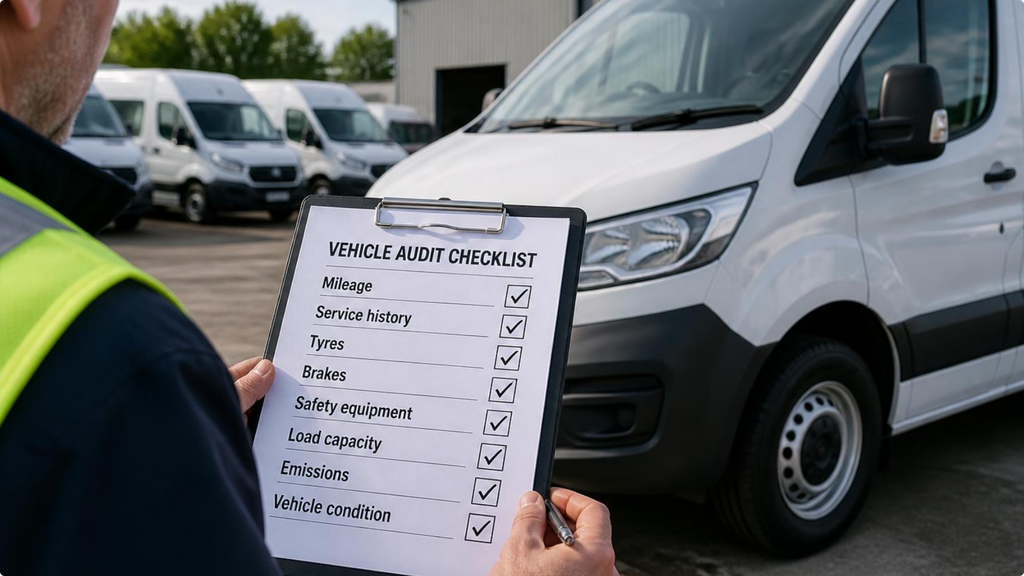
Fleet Audit Checklist: What Should You Review?
The following checklist can help businesses organise an initial review before deciding whether a more detailed assessment is necessary.
- Is the vehicle register complete and up to date?
- Are all vehicles still required for their current operational roles?
- Are vehicles allocated appropriately across teams and locations?
- Are mileage records accurate and consistent?
- Are fuel and electricity costs being monitored?
- Are leasing or finance commitments and contract end dates recorded?
- Are mileage allowances appropriate for leased vehicles?
- Are servicing and MOT deadlines monitored?
- Are driver checks and defect-reporting procedures clear?
- Are repairs, recurring faults and downtime recorded?
- Are maintenance costs reviewed across comparable vehicles?
- Are vehicle specifications and payloads appropriate for the work?
- Are specialist equipment and conversion requirements being met?
- Are replacement decisions based on condition, costs and operational suitability?
- Are actions from previous reviews being completed and monitored?
Not every item will apply to every fleet. The checklist should be adjusted to reflect the type of vehicles, the work they undertake and the business’s responsibilities.
Fleet Audits and Vehicle Replacement Planning
A fleet audit can provide valuable evidence when deciding whether to keep an existing vehicle or arrange a replacement.
Keeping a vehicle for longer may appear economical because its original acquisition costs have already been incurred. However, increasing maintenance expenditure, unreliable operation or changing business requirements may make replacement worth considering.
Equally, replacing a vehicle simply because it has reached a particular age or mileage is not always the most cost-effective approach. Its condition, reliability, operating costs, expected future use and replacement alternatives all need to be considered.
Vehicle condition should also be considered when planning for the end of a lease, as damage beyond acceptable wear and tear may result in additional charges. Our guide to fair wear and tear on leased vans explains what businesses should consider before returning a vehicle.
For leased vehicles, contract end dates, mileage allowances, potential excess mileage charges and vehicle return conditions are important parts of the decision. Where a review identifies a need to replace vehicles or expand the fleet, fleet van leasing can help businesses explore suitable commercial vehicle options.
Businesses should also assess whether their existing vehicles will continue to meet future requirements. Changes in delivery patterns, staff numbers, payload needs or operating locations may justify a different vehicle specification. A structured approach to fleet planning and leasing can help businesses align vehicle replacement decisions, contract commitments and future operational requirements.
Our guide to the vehicle leasing process explains the stages involved in arranging a vehicle lease, while our overview of van leasing in the UK provides further information for businesses reviewing their commercial vehicle options.
Fleet Audits for Electric Vehicles
Electric vehicles introduce additional considerations when reviewing fleet performance. A fleet audit can help businesses determine whether electric cars or vans are suitable for their routes, mileage requirements and charging arrangements.
Important factors include:
- Range and daily mileage: Whether vehicles can complete their regular journeys without disrupting operations.
- Charging arrangements: Access to workplace charging, home charging where appropriate, and public charging when required.
- Energy costs: Electricity expenditure compared with the cost of running equivalent petrol or diesel vehicles.
- Payload and load space: Whether an electric commercial vehicle can accommodate the necessary equipment, passengers and cargo.
- Maintenance: Servicing requirements, tyre wear, repairs and access to appropriately qualified technicians.
- Vehicle availability: Whether charging time and the location of charging facilities fit operational schedules.
- Replacement planning: Whether electric vehicles are appropriate for vehicles approaching the end of their current service or lease period.
Businesses should compare whole-life costs rather than focusing solely on purchase prices or advertised driving ranges. The outcome will depend on mileage, electricity tariffs, charging access, vehicle specification and how each vehicle is used. Charging access and reimbursement arrangements should also form part of the assessment. Our guide to electric vehicle charging for businesses explains the practical considerations involved in charging company cars and vans.
CVC can also help businesses explore available car and van leasing options when reviewing potential changes to their fleet.
How Often Should a Business Conduct a Fleet Audit?
There is no single audit frequency that suits every business. The appropriate interval depends on the size and complexity of the fleet, how quickly operational requirements change, and the quality of the information already available.
Some businesses may benefit from a comprehensive annual review supported by regular monitoring of mileage, costs, maintenance and compliance. Others may need more frequent assessments because they operate intensively used vehicles, work across several locations or experience frequent changes in demand.
A further audit or targeted review may be appropriate when:
- The business expands or reduces its fleet.
- Several vehicle leases approach their end dates.
- Maintenance expenditure or downtime increases unexpectedly.
- Vehicle utilisation changes significantly.
- The business plans to introduce electric vehicles.
- Operational requirements or the types of work undertaken change.
- Existing processes reveal gaps in maintenance records or compliance monitoring.
Routine monitoring between formal reviews is important. Waiting until an annual audit to identify an overdue MOT, an unresolved defect or an emerging maintenance problem would defeat the purpose of effective fleet management.
How CVC Can Support Your Fleet Requirements
A fleet audit can help businesses understand where improvements may be possible, but implementing the findings is the next step.
Depending on the results, a business may need to review its vehicle selection, consider alternative leasing arrangements, improve maintenance administration or plan for vehicles approaching the end of their working life.
Commercial Vehicle Contracts provides vehicle leasing options for businesses looking to source cars and commercial vehicles. Our wider support can also help businesses consider their vehicle requirements alongside fleet management, maintenance support and specialist conversions.
Our fleet management solutions provide a starting point for exploring support with managing business vehicles. For organisations reviewing their commercial vehicle requirements, our fleet van leasing service offers a route to explore suitable vans and available leasing and maintenance options.
For businesses seeking a more joined-up approach, our one-stop fleet solutions explain how vehicle supply, conversions and fleet support can be considered together.
The most appropriate solution will depend on your existing fleet, operational requirements and the areas identified for improvement. Reviewing those requirements first can help you ask better questions and make more informed decisions about your next steps.

 Call our expert team on