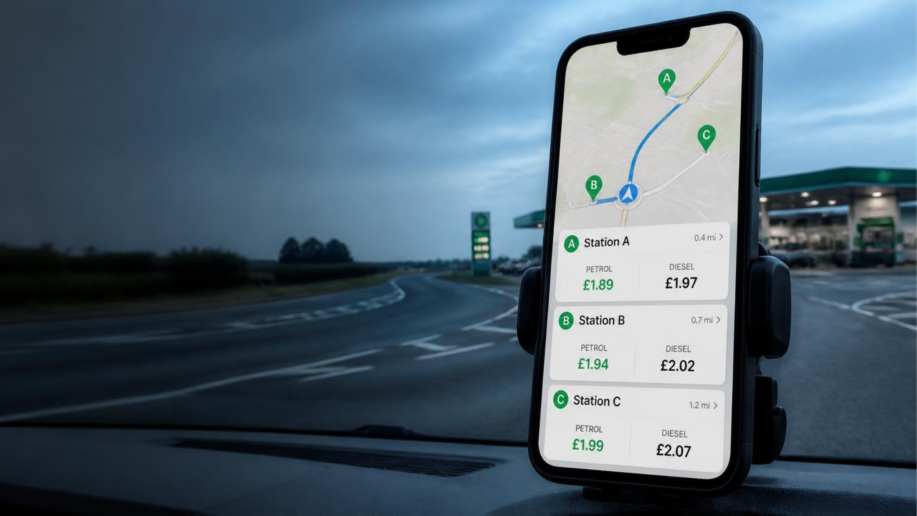
Drivers across the UK can now see up-to-date petrol and diesel prices directly through Google Maps, making it easier to compare nearby forecourts before filling up.
The new feature uses data from the Government’s Fuel Finder service, which now covers around 99% of fuel sold in the UK.
For motorists and businesses that rely heavily on their vehicles, the addition could make it considerably easier to identify cheaper places to refuel without having to visit several different fuel-price websites or apps.
Fuel Prices Now Available On Google Maps
The Government launched Fuel Finder earlier this year as part of efforts to improve transparency within the UK fuel market.
Under the scheme, fuel stations are required to report changes to their pump prices within 30 minutes. This means the information being displayed can give drivers a much clearer picture of what they are likely to pay when they arrive at a particular forecourt.
The move follows concerns raised by the Competition and Markets Authority (CMA) over weakening competition in the petrol and diesel market.
The CMA previously found that motorists had been paying more for fuel than they should have been, with concerns that changes in wholesale costs were not always being reflected quickly enough at the pumps.
Fuel Finder data is already used by services including Waze, the AA, Petrol Prices, Confused.com and RAC Fuel Watch.
Its integration into Google Maps is expected to put fuel-price information in front of a much larger number of drivers.
For anyone already using Google Maps to plan a journey, the ability to compare fuel prices along the route could make choosing where to stop considerably simpler.
Diesel Prices Remain Close To £2 A Litre
The timing of the Google Maps update comes as UK drivers continue to face exceptionally high petrol and diesel prices.
Diesel prices recently moved above £2 per litre on average for the first time, although there are now early indications that prices may be starting to ease.
Latest Fuel Finder figures put the average diesel price at just below £2 per litre, at around 199.98p.
For a typical 55-litre tank, that still means a fill-up costing approximately £110.
Petrol prices have also remained high, with the average sitting at around 174.79p per litre.
That puts the cost of filling a typical 55-litre petrol tank at roughly £96.
Although the recent movement in diesel prices is relatively small, there are more encouraging signs further up the supply chain.
Wholesale diesel costs have reportedly fallen by around 6p to 8p, which could provide scope for further reductions at the pumps if retailers pass those savings on.
More Forecourts Are Cutting Diesel Prices
Fuel Finder data also suggests that some forecourts have already started responding to lower wholesale costs.
Over a recent 24-hour period, more than 200 fuel stations reduced their diesel prices, while considerably fewer increased them.
A similar trend was recorded for petrol, with more stations cutting prices than putting them up.
This could indicate that the recent surge in fuel costs is beginning to stabilise, although international events and fluctuations in wholesale oil prices mean there is still considerable uncertainty.
For businesses operating vans and other commercial vehicles, even relatively small changes in the price of diesel can have a noticeable impact on running costs.
A vehicle covering tens of thousands of miles each year can consume several thousand litres of fuel, meaning a reduction of just a few pence per litre can quickly add up across an entire fleet.
Motorway Fuel Can Still Cost Significantly More
While Google Maps can help drivers identify cheaper fuel nearby, where you choose to refuel remains important.
Motorway service areas continue to be among the most expensive places to buy petrol and diesel.
Recent AA analysis found that petrol at motorway service areas was around 18p per litre more expensive than the national average, while diesel was approximately 14p more expensive.
On a 55-litre tank, that could mean paying almost £10 extra for petrol or close to £8 more for diesel simply by filling up at a motorway service area.
For drivers covering long distances for work, those differences can become significant over the course of a year, particularly for businesses operating vehicles with a high mileage allowance.
Planning ahead and checking prices before stopping could therefore be particularly useful for high-mileage motorists and commercial vehicle drivers.
What Does This Mean For Van Drivers And Fleets?
The addition of fuel prices to Google Maps is unlikely to transform fuel costs overnight, but it gives drivers another straightforward way to make more informed decisions.
For van drivers, sole traders and fleet operators, fuel is one of the ongoing costs that can have a major influence on the overall cost of running a vehicle.
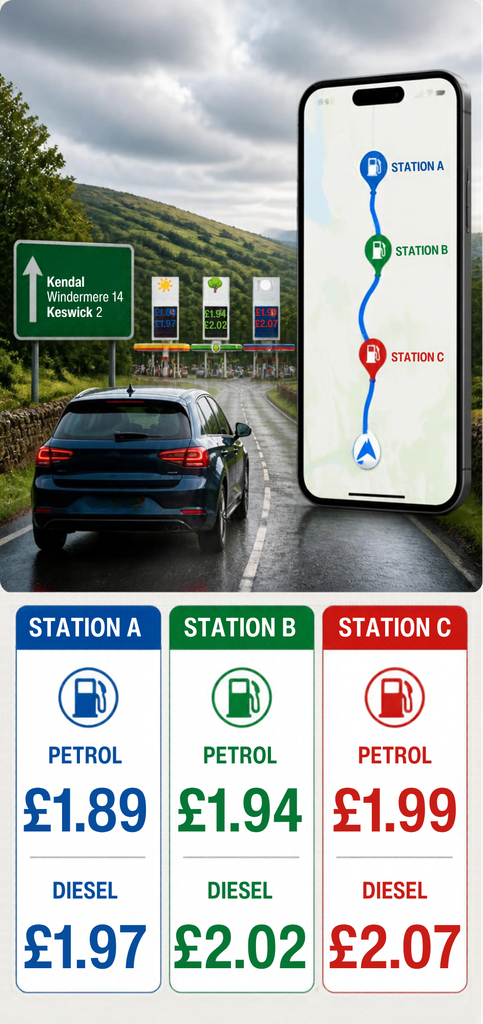
Being able to compare prices while planning a journey could make it easier to avoid unnecessarily expensive forecourts, particularly when travelling through unfamiliar areas.
For larger fleets, the potential savings can be greater because even a small reduction in the average price paid per litre can become substantial when multiplied across multiple vehicles. This is one reason why effective fleet management can play an important role in controlling vehicle operating costs.
It also highlights the importance of looking beyond the headline monthly cost when choosing a commercial vehicle. Fuel consumption, annual mileage, maintenance, insurance and taxation can all influence the true cost of operating a van. Businesses looking to reduce fuel expenditure can also consider which models offer the best efficiency, with our guide to the best MPG vans in the UK comparing some of the most fuel-efficient options available.
Fuel consumption, annual mileage, maintenance, insurance and taxation can all influence the true cost of operating a van, particularly for businesses using vehicles every day.
Fuel Duty Increase Could Add Further Pressure
The introduction of fuel prices on Google Maps also comes at a time when motorists are facing the possibility of higher fuel costs from taxation.
A further increase in fuel duty is currently planned for next year, which could add another 5p per litre to pump prices if the proposed increase goes ahead.
That would put additional pressure on motorists and businesses at a time when fuel prices are already considerably higher than they were earlier in the year.
For businesses that rely on vans for deliveries, installations, servicing or travelling between customers, keeping fuel expenditure under control is therefore becoming increasingly important.

 Call our expert team on