The VAT difference between charging an electric vehicle at home and using public charging infrastructure is coming under renewed scrutiny, with industry representatives calling for the tax treatment of public charging to be brought into line.
A new 0% VAT rate on domestic electricity has now taken effect, meaning EV drivers who are able to charge at home can potentially pay significantly less VAT on their electricity than drivers who depend on public charging.
The change has prompted ChargeUK, the trade association representing the UK electric vehicle charging sector, to renew calls for a change to the VAT treatment of public EV charging.
According to ChargeUK, the difference could amount to around £200 a year for a typical EV driver who charges predominantly at home.
The organisation says the disparity is particularly significant for drivers who do not have access to a driveway or private parking space where a home charger can be installed.
Why EV Charging VAT Has Become An Issue
The introduction of the 0% VAT rate for domestic electricity changes the financial calculation for drivers who can charge an EV at home.
ChargeUK estimates that a typical EV driver charging 80% of their energy at home and 20% using rapid public charging could save around £200 a year in VAT compared with a driver who relies entirely on public charging.
The comparison highlights an issue that has become increasingly important as more motorists move away from petrol and diesel vehicles.
Public charging is particularly important for drivers without off-street parking, as well as people who regularly travel longer distances and cannot rely solely on electric vehicle charging at home.
ChargeUK argues that the current difference in VAT treatment risks creating a financial divide between EV drivers depending on where they are able to charge.
It estimates that an EV driver with access to home charging could have annual charging costs more than £1,000 lower than someone relying on public charging, depending on charging patterns and energy use.
Industry Calls For Public Charging VAT To Be Reduced
ChargeUK has helped coordinate a letter to Prime Minister Andy Burnham calling for the VAT treatment of public EV charging to be reviewed.
The letter has received support from organisations including EVA England, EVA Cymru, The AA, Auto Trader and the FairCharge campaign.
The organisations are calling for the difference between domestic and public charging VAT to be addressed, arguing that the current system places drivers who cannot charge at home at a disadvantage.
ChargeUK chief executive Shane Brennan said the reduction in VAT on domestic electricity was welcome, particularly at a time when household energy costs remain an important concern.
However, he argued that the change also increases the disparity between motorists who can charge at home and those who cannot.
The ‘Driveway Divide’
Access to private parking is an important consideration when looking at EV charging costs.
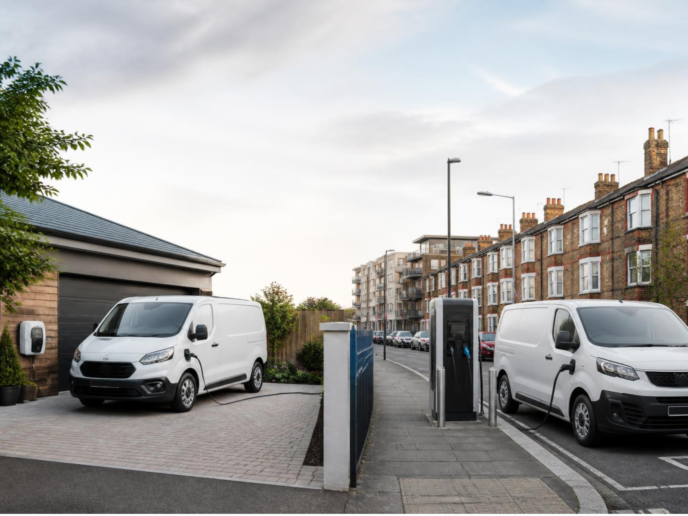
Drivers with a driveway, garage or other suitable private parking space can potentially install a home charger and take advantage of the lower VAT rate applying to domestic electricity.
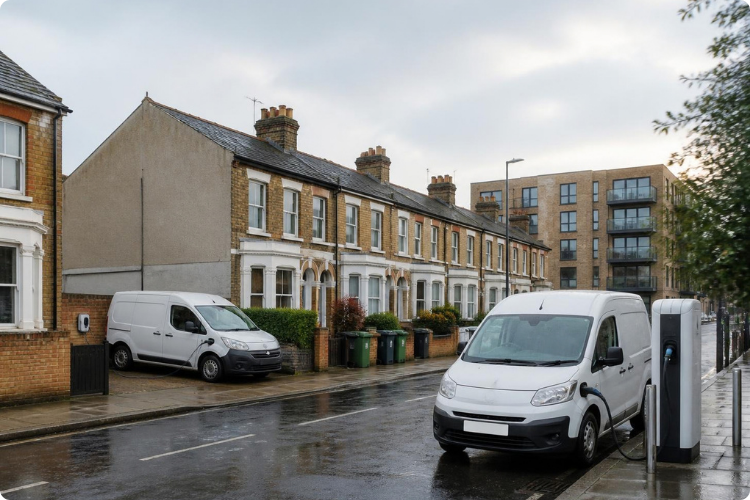
For drivers living in flats, terraced properties without off-street parking or areas where dedicated parking is unavailable, public charging may be the only practical option.
This has led to increasing discussion around what is sometimes referred to as the “driveway divide”.
The issue is also relevant to businesses operating electric company cars and vans.
While many commercial operators can provide workplace charging or depot infrastructure, employees who take company vehicles home may also need a suitable home EV charging reimbursement arrangement, depending on their circumstances.
For businesses moving towards electric van leasing, understanding where vehicles will be charged — and how those charging costs are treated — is therefore becoming an increasingly important part of fleet planning.
This is becoming increasingly important as the UK EV charging network continues to expand, with more drivers relying on public infrastructure where home charging is not practical.
Public Charging VAT Could Cost The Treasury More
ChargeUK estimates that reducing the VAT rate on public charging to bring it into line with home charging would cost the Treasury approximately £180 million a year.
The organisation argues that this would be substantially below the estimated £1.1 billion a year that the Government expects to raise from the forthcoming electric vehicle excise duty arrangements.
The debate therefore comes as the Government continues to consider how taxation of road transport should evolve as the number of electric vehicles on UK roads increases.
EVs currently benefit from different tax treatment compared with petrol and diesel vehicles, but the Government is gradually introducing new measures designed to replace revenue traditionally generated through fuel duty and other motoring taxes.
Tribunal Ruling Adds To The VAT Debate
The VAT debate has also been complicated by a recent tax tribunal case involving public EV charging.
Earlier in 2026, a tribunal ruling in a case brought by Charge My Street found that electricity supplied through public EV charging points should be subject to a lower VAT rate, an issue covered in our article on reduced VAT for public EV charging.
At the time of the ruling, that lower rate was 5%.
HMRC has subsequently appealed the decision, meaning the issue remains subject to further legal consideration.
The case adds another dimension to the wider argument over whether electricity used to charge EVs should be taxed differently depending on whether it is supplied at home or through a public charging network.
What Does The VAT Change Mean For EV Drivers?
For drivers with access to home charging, the introduction of the 0% domestic electricity VAT rate could reduce the cost of charging an EV.
However, the financial benefit will vary according to how much electricity is used for charging, the household’s electricity tariff and how much driving is undertaken.
Drivers who depend heavily on public charging will not receive the same benefit from the change.
This is particularly relevant to high-mileage motorists, businesses operating electric vans and company car drivers who regularly undertake longer journeys.
For businesses considering switching vehicles to electric, the cost of charging should therefore be considered alongside the vehicle’s lease cost, energy consumption, taxation and other running costs.
The continuing debate over VAT could also become increasingly important as the UK’s electric vehicle fleet grows and more drivers depend on public charging infrastructure.
 Call our expert team on