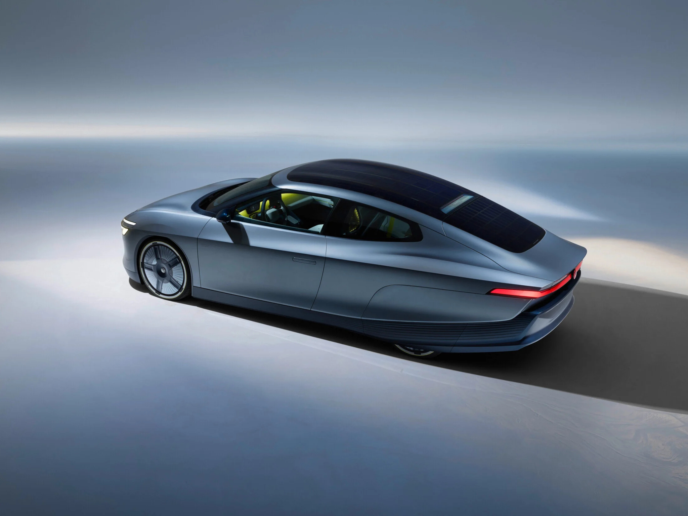
Volkswagen has demonstrated the potential of its next generation of electric vehicles with a new prototype that has achieved three records using technology developed for the forthcoming Volkswagen ID Polo and ID Cross.
Known as the Mission Efficiency, the four-seat prototype is not intended to enter production. Instead, Volkswagen has created it as a technology demonstrator to show how improvements in aerodynamics, rolling resistance, weight and electric powertrain efficiency can dramatically reduce energy consumption.
The results are particularly striking because the prototype uses technology derived from production models rather than relying entirely on an experimental powertrain.
During testing, the Mission Efficiency achieved consumption of up to 9.6 miles per kWh, while a 794-mile journey between Wolfsburg in Germany and Vienna produced an average of 9 miles per kWh, excluding charging losses.
The project provides an insight into how Volkswagen could improve the efficiency of its future electric cars without simply relying on increasingly large batteries.
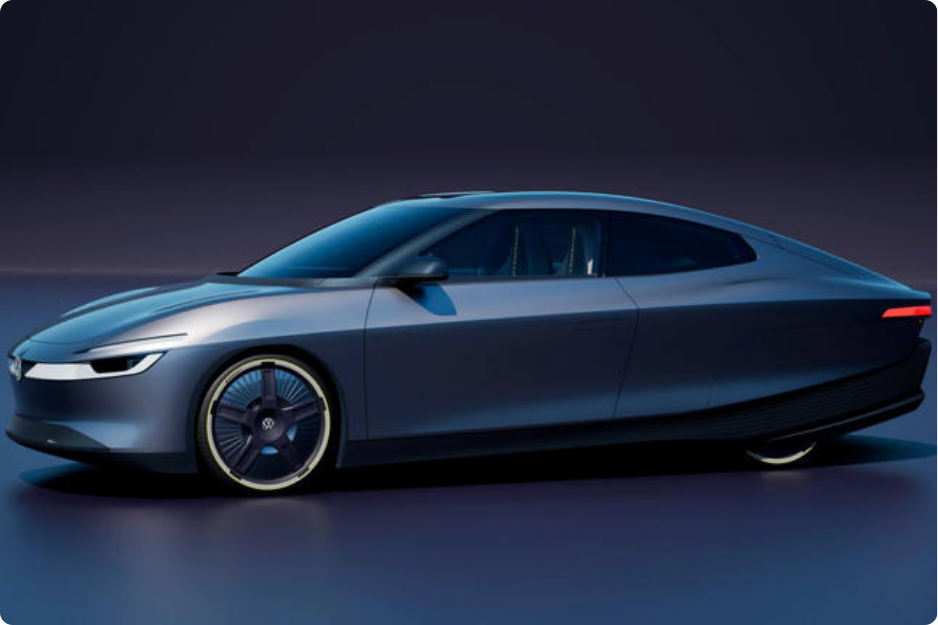
Volkswagen Mission Efficiency Sets Three Records
The Mission Efficiency prototype was developed around one key objective: maximising the amount of distance that could be travelled from each unit of electricity.
Its headline figure came during a controlled efficiency test, when the vehicle achieved 9.6 miles per kWh while travelling at a constant 42mph.
However, the test was conducted under highly favourable conditions. The vehicle’s air conditioning and other ancillary systems were switched off, while the route did not include any uphill sections.
As a result, the figure should not be interpreted as representative of normal everyday driving. Instead, it demonstrates the maximum efficiency potential of the vehicle under carefully controlled conditions.
Volkswagen then subjected the prototype to a much longer real-world journey.
794-Mile Journey From Germany To Austria
The Mission Efficiency travelled 794 miles from Wolfsburg to Vienna, recording average energy consumption of 9 miles per kWh when charging losses were excluded.
Including the energy lost during charging, consumption stood at 8.3 miles per kWh.
The vehicle completed the journey at an average speed of 42mph, although it reached a maximum speed of 86mph.
Its 54.9kWh battery was charged just once during the journey.
Even more notably, Volkswagen says the prototype arrived in Vienna with 102 miles of indicated range remaining.
The journey therefore demonstrates how reducing energy consumption can have a major effect on usable range, even without fitting an exceptionally large battery.
For drivers considering electric cars to lease, efficiency is becoming an increasingly important consideration alongside battery capacity and quoted range.
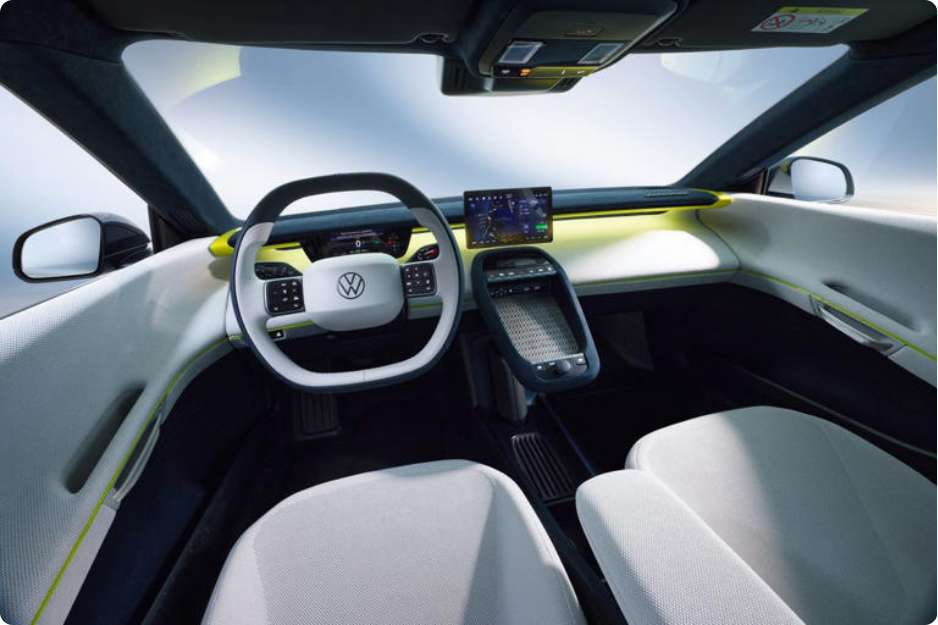
Aerodynamics Are Central To The Prototype
One of the biggest contributors to the Mission Efficiency’s performance is its aerodynamic design.
Volkswagen recorded a drag coefficient of 0.158, which the manufacturer says is a record for a road-approved car.
Aerodynamic drag becomes increasingly important as vehicle speed rises. By reducing the amount of resistance created as the car moves through the air, less energy is required to maintain speed.
The Mission Efficiency therefore combines its production-derived electric technology with a highly streamlined body designed specifically around minimising energy consumption.
The prototype also incorporates measures designed to reduce rolling resistance and overall weight.
Together, these changes demonstrate how several relatively small efficiency improvements can combine to produce a significant reduction in energy consumption.
Specially Developed Continental Tyres
Volkswagen also worked with Continental to develop tyres specifically for the Mission Efficiency.
The tyres are based on Continental’s EcoContact 7 technology and feature extremely low rolling resistance.
According to Volkswagen, their rolling resistance is 25% below the threshold required to achieve the EU’s highest A rating.
Tyres are an important part of an EV’s efficiency because rolling resistance directly affects the amount of energy required to move the vehicle.
This becomes particularly relevant with electric cars because lower energy consumption can translate directly into additional driving range.
It also demonstrates why looking solely at battery size does not necessarily provide a complete picture of an EV’s efficiency.
ID Polo Technology Underpins The Mission Efficiency
Although the Mission Efficiency itself will not be sold to customers, Volkswagen has deliberately based much of its technology on components intended for future production vehicles.
The prototype uses a 99kW electric motor and high-voltage battery technology derived from the technology being developed for the ID Polo.
It also uses Volkswagen’s MEB+ platform and a front-wheel-drive configuration.
The same underlying architecture will be used by the forthcoming ID Polo and ID Cross, meaning lessons learned from the prototype could potentially feed into Volkswagen’s next generation of electric cars.
This is one of the most significant aspects of the project.
Rather than creating an entirely bespoke electric vehicle purely for the purpose of setting records, Volkswagen has taken production-focused technology and combined it with extensive aerodynamic and weight-saving development.
Volkswagen Looks To Get More From Its EV Technology
The Mission Efficiency project also forms part of Volkswagen’s wider strategy to improve efficiency across its vehicle development operations.
The Volkswagen Group is increasing cooperation between its volume brands, including Volkswagen, Škoda, SEAT/CUPRA and Volkswagen Commercial Vehicles.
The strategy involves sharing more development, procurement and production activity in an effort to reduce duplication and shorten development times.
For Volkswagen, the Mission Efficiency provides an opportunity to demonstrate what can be achieved when existing technology is pushed further.
Instead of developing an entirely separate electric powertrain, engineers have combined components associated with the ID Polo and ID Cross with improvements to aerodynamics, weight and rolling resistance.
This approach could help Volkswagen extract more range and efficiency from future EVs while keeping development focused on production technology.
What Does The Mission Efficiency Mean For Future Volkswagen EVs?
The prototype is not intended to become a production model, but its development provides an indication of where Volkswagen’s electric vehicle technology is heading.
The ID Polo will form part of Volkswagen’s next generation of smaller electric vehicles, while the ID Cross will extend the technology into a different vehicle format.
The Mission Efficiency shows that Volkswagen is looking beyond simply increasing battery capacity when improving EV range.
Reducing aerodynamic drag, lowering rolling resistance and controlling vehicle weight can all help an electric car travel further using the same amount of stored energy.
That could be particularly important for smaller EVs.
Installing a significantly larger battery can increase range, but it also adds weight and can increase vehicle cost. Improving efficiency allows manufacturers to extract more usable range without necessarily increasing battery capacity to the same extent.
For businesses and drivers considering the move to electric, this makes vehicle efficiency an increasingly relevant part of the selection process.
EV Efficiency Could Become More Important For Fleets
For business users, energy efficiency can have a direct impact on operating costs.
The amount of electricity an EV consumes depends on a range of factors, including vehicle weight, driving style, weather, speed, terrain and charging conditions.
This means that the headline battery capacity alone does not tell the whole story.
Charging arrangements are also an important consideration when assessing whether an electric vehicle will work for a business.
CVC’s guide to EV charging for businesses covers home, workplace and public charging options, including the practical considerations for employees and fleet operators.
For drivers who use an electric vehicle for business mileage, energy efficiency can also feed into reimbursement calculations. CVC’s HMRC AER reimbursement calculator allows users to estimate electricity consumption, charging costs and applicable AER reimbursement for an electric car or van.
How Efficient Is The Mission Efficiency?
The key figures from Volkswagen’s prototype can be summarised below:
| Measure | Mission Efficiency Result |
|---|---|
| Maximum controlled-test efficiency | 9.6 miles per kWh |
| Wolfsburg to Vienna distance | 794 miles |
| Journey efficiency excluding charging losses | 9 miles per kWh |
| Journey efficiency including charging losses | 8.3 miles per kWh |
| Battery capacity | 54.9kWh |
| Remaining indicated range in Vienna | 102 miles |
| Electric motor | 99kW |
| Maximum recorded speed | 86mph |
| Drag coefficient | 0.158 |
| Number of battery charges during journey | 1 |
The records were assessed by the Record Institute for Germany in the category for near-production, four-seat electric vehicles suitable for everyday use.
Volkswagen’s Electric Future
The Mission Efficiency is ultimately a demonstration of what can be achieved when several areas of EV engineering are optimised at the same time.
Its combination of a production-derived electric motor and battery technology, the MEB+ platform, front-wheel drive, low rolling-resistance tyres and highly aerodynamic bodywork allowed Volkswagen to achieve exceptionally low energy consumption.
The prototype will not become a production Volkswagen, but its technology provides an interesting glimpse into the engineering behind the company’s next generation of electric cars.
As manufacturers continue expanding their electric ranges, improvements in efficiency could become just as important as increases in battery capacity.
For businesses and private drivers, that could mean future EVs delivering greater usable range without necessarily requiring ever-larger batteries.
 Call our expert team on