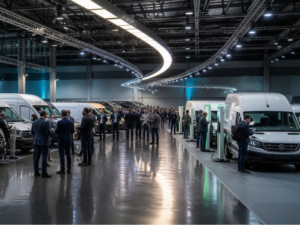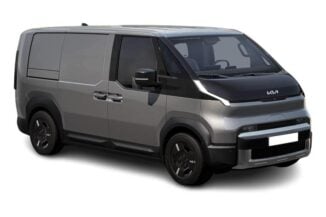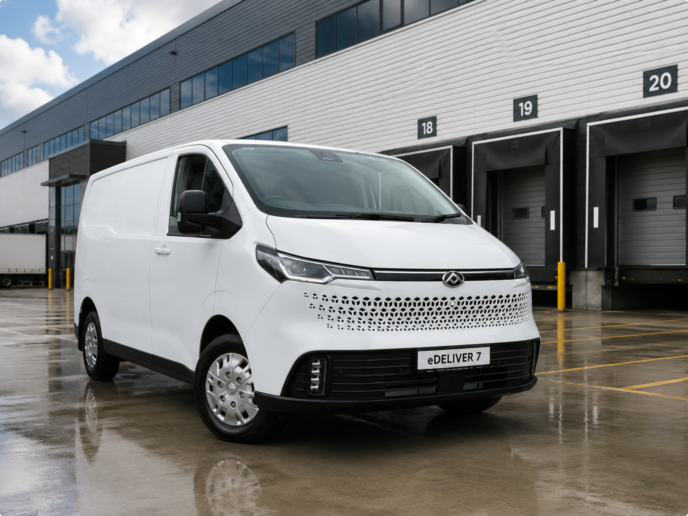
Maxus is preparing to unveil its updated 2027 commercial vehicle line-up at IAA Transportation in Hannover next month, alongside new charging technology and a selection of future-focused transport concepts.
The manufacturer will use the major international commercial vehicle event, running from 14 to 20 September 2026, to highlight its latest vans and pick-ups, building on its growing presence in the Maxus van leasing market.
Visitors to the Maxus stand will see a mixture of diesel, hybrid and fully electric commercial vehicles, reflecting the different powertrain options available to businesses as the industry continues to transition towards lower-emission transport.
Updated Maxus Range For 2027
Maxus says its 2027 model year range has been developed with commercial operators in mind, with improvements focused on areas including functionality, specification and overall operating costs.
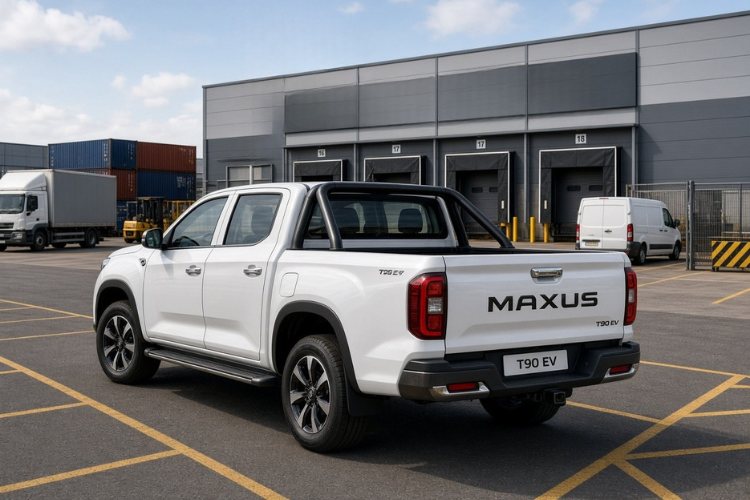
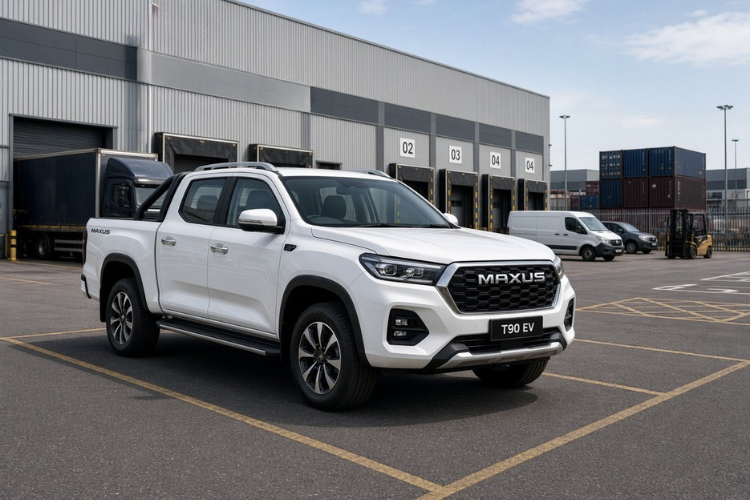
The manufacturer is continuing to expand its electrified offering, with the Maxus eDeliver 7 providing a larger electric van option for businesses looking to reduce emissions without compromising on everyday practicality. The pick-up market is also an important part of the Maxus line-up, with the Maxus T90 EV offering businesses an all-electric alternative to conventional diesel pick-ups.
Electric commercial vehicles will be particularly prominent at the event, with Maxus also using IAA Transportation to demonstrate how van batteries could become an important part of a company’s wider energy strategy.
New Bidirectional Charging Technology
One of the key attractions on the Maxus stand will be its latest bidirectional charging technology.
The system incorporates several applications, including:
- Vehicle-to-Load (V2L) – allowing an electric vehicle to supply power to external equipment.
- Vehicle-to-Building (V2B) – enabling energy stored in a vehicle’s battery to be used within a building.
- Vehicle-to-Grid (V2G) – allowing electricity to flow between the vehicle and the wider power grid.
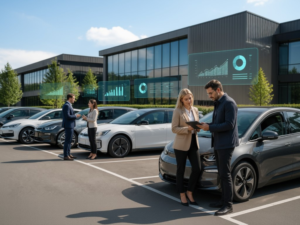
These technologies could give electric vans a role beyond simply providing transportation, making electric van leasing increasingly relevant for businesses looking at both transport and energy costs.
For businesses with electric fleets, bidirectional charging could help manage energy usage by allowing stored vehicle energy to be used when electricity demand is higher. It could also help businesses make greater use of electricity generated by their own solar panels.
Electric Vans Could Become Mobile Power Stations
V2L technology could be particularly useful for tradespeople and other mobile workers, particularly those who need to power tools and equipment away from a mains electricity supply.
Rather than relying entirely on a mains electricity connection or separate generator, an electric van can use its traction battery to provide power for equipment and tools while working away from the business premises.
Maxus will demonstrate potential real-world applications at IAA Transportation, highlighting how an electric commercial vehicle could effectively double as a mobile power source.
For businesses considering electric vans for tradespeople, this could become an increasingly useful feature, particularly for operators working on construction sites, at customer properties or in locations where access to electricity is limited.
Maxus Looks Beyond Conventional Vans
Maxus will also use the event to showcase technologies that go beyond its current production vehicle range.
Among the exhibits will be an electric heavy-duty truck, forming part of the company’s wider zero-emission commercial vehicle strategy.
The manufacturer will also display an autonomous transport platform, providing an insight into how highly automated vehicles could potentially be used for urban deliveries and last-mile logistics. The development of autonomous technology is also becoming increasingly relevant to commercial fleets, with manufacturers and technology companies investigating how self-driving vehicles could support future transport and delivery operations.
These concepts demonstrate that Maxus is looking at the future of commercial transport from a much broader perspective than conventional van manufacturing.
Growing European Presence
Maxus is owned by SAIC Motor, one of China’s major automotive groups, and has been building its presence across the European commercial vehicle market.
The brand has made particular progress in the electric van sector, offering businesses a growing selection of battery-electric commercial vehicles.
Its UK range currently covers a variety of applications, from compact electric vans and larger panel vans through to electric pick-ups such as the Maxus T90 EV, giving operators several options depending on their payload, load space and operational requirements.
The appearance at IAA Transportation will provide an early look at how Maxus intends to develop its commercial vehicle offering for 2027 and beyond.
With electrification, alternative charging solutions, autonomous technology and new commercial vehicle concepts all featuring prominently, the manufacturer is signalling that its future ambitions extend well beyond simply producing traditional vans.
The Future Of Electric Commercial Vehicles
The developments being presented by Maxus highlight how the role of an electric van could change over the coming years.
As charging technology develops, electric commercial vehicles could increasingly become part of a company’s wider energy infrastructure, helping businesses store, use and potentially return electricity when required.
For fleet operators, this could create new opportunities to reduce energy costs while making better use of renewable electricity generated on-site, particularly as more businesses consider electric commercial vehicles for their fleets.
Maxus’ presence at IAA Transportation will therefore offer more than a preview of its 2027 van range. It will also provide an indication of how the manufacturer sees electric commercial vehicles fitting into the wider future of business transport and energy management, an area that is becoming increasingly important as businesses take a more strategic approach to fleet lifecycle management.
 Call our expert team on