Why Charging Safety Is One of the Most Common EV Questions
As electric vehicles become increasingly popular across the UK and Europe, one question continues to appear regularly in online discussions:
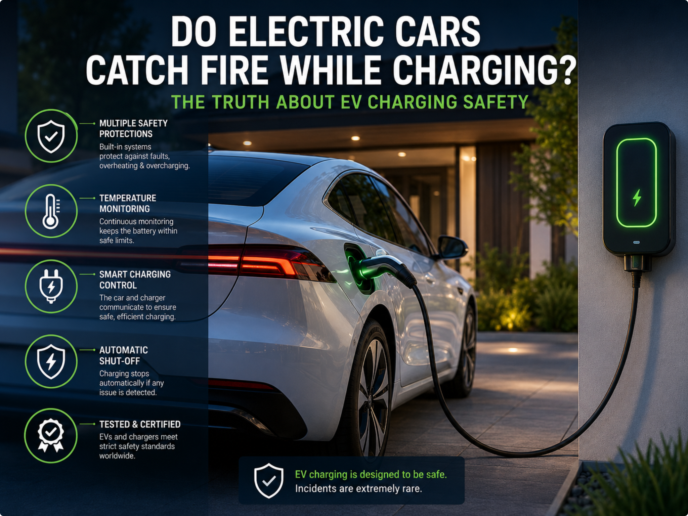
Do electric cars catch fire while charging?
The short answer is yes, it can happen — but it is extremely rare.
Media reports occasionally highlight charging-related EV fires, leading some people to believe that plugging in an electric vehicle carries a significant fire risk. However, the available evidence suggests that charging-related fires account for only a very small proportion of overall EV incidents.
Modern electric vehicles, charging cables, home wall boxes, and public charging stations are all designed with multiple layers of safety protection intended to prevent overheating, electrical faults, and battery damage.
Understanding how EV charging works helps separate genuine risks from common misconceptions.
Key Takeaways
- EV fires during charging are extremely uncommon.
- Modern charging systems include multiple safety protections.
- Most charging-related incidents involve equipment faults, damaged components, or improper installations.
- EV battery management systems continuously monitor battery health during charging.
- Public charging networks and home chargers must comply with strict safety standards.
- Current evidence suggests EVs remain less likely to catch fire than petrol and diesel vehicles overall.
How EV Charging Safety Systems Work
When an EV is connected to a charger, the process is carefully controlled by several interconnected safety systems.
These include:
- Battery Management Systems (BMS)
- Charging control modules
- Temperature monitoring sensors
- Voltage regulation systems
- Automatic shut-off protection
- Ground fault detection
The vehicle and charger communicate continuously throughout the charging process.
If abnormal conditions are detected, charging can automatically slow down or stop altogether.
This means modern EV charging is far more sophisticated than simply supplying electricity to a battery.
What Happens During Charging?
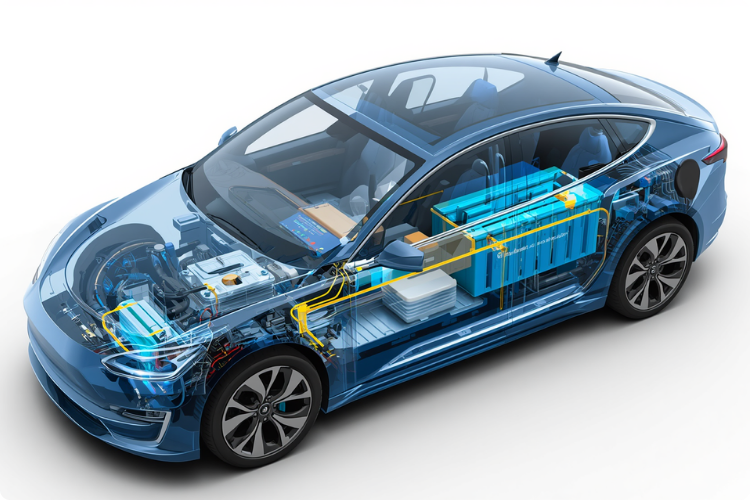
During charging, electricity flows from the power source into the vehicle’s battery pack.
At the same time, the EV constantly monitors:
- Battery temperature
- Cell voltage
- Charging speed
- Electrical resistance
- Current flow
If any value moves outside predefined safety limits, the system can intervene immediately.
This active monitoring significantly reduces the likelihood of battery overheating.
Can Charging Cause Thermal Runaway?
One concern frequently raised in discussions about EV fires is thermal runaway.
Thermal runaway occurs when a battery cell experiences uncontrolled temperature increases that can spread to neighbouring cells.
In theory, charging could contribute to thermal runaway if a serious battery defect existed.
However, modern EVs are specifically designed to prevent this from occurring.
Protection measures include:
- Cell isolation barriers
- Liquid cooling systems
- Battery temperature sensors
- Charging rate controls
- Automatic fault detection
In most cases, potential issues are identified long before dangerous temperatures are reached.
What Causes Charging-Related EV Fires?
When charging-related incidents do occur, investigations typically identify specific underlying causes.
1. Faulty Charging Equipment
Damaged charging cables, connectors, or charging units can occasionally create electrical faults.
Potential issues include:
- Damaged insulation
- Loose electrical connections
- Overheating connectors
- Water ingress
This is why using approved charging equipment is important.
2. Poor Installation
Home charging units should always be installed by qualified professionals.
Incorrect installation can increase the risk of:
- Electrical overload
- Wiring faults
- Circuit failures
- Insufficient protection systems
Fortunately, modern UK installation standards significantly reduce these risks.
3. Battery Manufacturing Defects
Rare manufacturing defects can occasionally affect individual battery cells.
While uncommon, defective cells have been responsible for some high-profile recalls across the automotive industry.
Manufacturers continuously monitor battery performance and issue recalls when necessary.
4. Severe Battery Damage
In some cases, batteries damaged during previous collisions may develop faults later.
A damaged battery might initially appear normal but subsequently develop internal problems.
This is why manufacturers recommend battery inspections following serious accidents.
Are Public Charging Stations Safe?
Yes.
Modern public charging networks incorporate extensive safety systems designed to protect both vehicles and users.
These typically include:
- Automatic fault detection
- Emergency shut-off systems
- Ground fault protection
- Weather-resistant equipment
- Continuous system monitoring
Public charging operators are also subject to strict maintenance requirements and safety regulations.
As a result, charging at public stations is generally considered very safe.
Are Rapid Chargers More Dangerous?
Rapid chargers often attract additional attention because they deliver significantly higher power levels.
However, higher charging speeds do not automatically mean greater danger.
Rapid charging systems are specifically engineered to manage increased power safely.
Vehicles monitor:
- Battery temperature
- Charging current
- Cell voltage
- Cooling system performance
If temperatures rise beyond acceptable limits, charging speeds are automatically reduced.
This helps maintain battery safety throughout the charging session.
Home Charging vs Public Charging
Both charging methods are considered safe when using properly installed equipment.
Home Charging
Advantages include:
- Controlled environment
- Regular equipment inspection
- Overnight charging convenience
- Lower charging speeds
Public Charging
Advantages include:
- Professionally maintained infrastructure
- Advanced monitoring systems
- Regular safety inspections
- Built-in fault detection
Neither option appears to present a significantly elevated fire risk when used correctly.
Why Charging Fires Receive So Much Attention
Charging-related incidents often attract extensive media coverage because they occur during what people perceive as a routine activity.
Many consumers expect parked vehicles to be completely inactive.
When a charging-related fire occurs, it can therefore seem particularly alarming.
However, visibility does not necessarily reflect frequency.
A single charging incident may generate national headlines, while thousands of routine charging sessions occur safely every day without attracting attention.
This helps explain why public perception can differ from actual risk.
For a deeper look at how media coverage shapes public opinion, see our guide to Why EV Fires Go Viral Online: Media Bias, Social Media and Risk Perception.
What the Evidence Shows
Although individual studies vary, several conclusions appear consistently across transport safety reports and fire investigations:
- Charging-related EV fires are rare.
- Most incidents involve identifiable causes.
- Modern battery management systems are highly effective.
- Charging equipment safety standards continue to improve.
- Fire rates remain low relative to the number of EV charging sessions taking place every day.
Current evidence does not suggest that charging an electric vehicle represents a significant fire hazard.
Continue Reading: EV Fire Safety & Electric Vehicle Research
Want to learn more about electric vehicle safety, battery technology, and vehicle fire risks? Explore our latest guides below:
- EV Fire Risk vs Petrol & Diesel (2026 Update): What the Data Really Shows – Discover how EV fire rates compare with petrol and diesel vehicles and what the latest evidence reveals.
- Are Electric Cars Safer Than Petrol Cars in 2026? – A closer look at crash safety, vehicle design, driver assistance technology, and real-world safety performance.
- EV vs Hybrid vs Petrol Fire Risk Comparison – Compare fire risks across different vehicle types and understand how modern safety systems influence outcomes.
- EV Battery Safety Improvements (2020–2026): How Modern EVs Became Safer – Explore the technological advances that have helped improve battery protection and thermal management.
- Why EV Fires Go Viral Online: Media Bias, Social Media and Risk Perception – Learn why electric vehicle fires often attract disproportionate attention despite their relatively low frequency.
- What Actually Causes Lithium-Ion Battery Fires? The Real Risks Explained – This guide explains thermal runaway, battery damage, charging failures, manufacturing defects, and the safety systems designed to reduce fire risk
- Are EV Fires Harder to Extinguish Than Petrol Vehicle Fires? (2026 Guide) – This guide explains why lithium-ion battery fires behave differently from conventional vehicle fires, how thermal runaway can affect firefighting efforts, the specialist techniques used by fire services, and what the latest evidence reveals about EV fire risk and emergency response.
Whether you’re researching electric vehicle safety, battery technology, or the facts behind EV fire statistics, these guides provide evidence-based insights into one of the most discussed topics in modern motoring.
 Call our expert team on