Why EV Battery Safety Has Improved So Rapidly
Concerns about electric vehicle battery safety have existed since the earliest days of modern EV adoption.
Stories involving battery fires, thermal runaway, and vehicle recalls often attract significant media attention, leading some consumers to question whether electric vehicles are truly safe.
However, one important fact is often overlooked:
EV battery technology has improved enormously over the past five years.
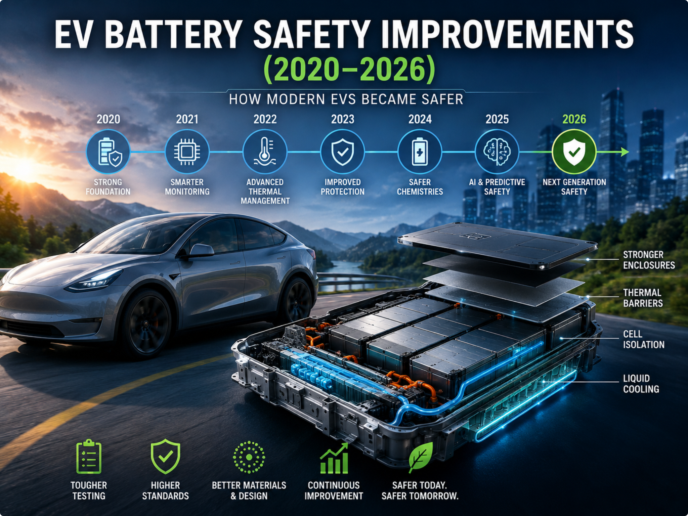
Between 2020 and 2026, manufacturers have introduced major advances in battery design, thermal management, structural protection, software monitoring, and safety regulations.
As a result, modern electric vehicles are safer, more reliable, and better protected against battery-related failures than ever before.
Understanding these developments helps explain why EV fire rates remain relatively low despite rapid growth in electric vehicle ownership worldwide.
Key Takeaways
- Battery safety technology has advanced significantly since 2020.
- Modern EVs use sophisticated battery management systems (BMS).
- Improved cooling systems help prevent overheating and thermal runaway.
- Stronger battery enclosures provide greater crash protection.
- New battery chemistries are prioritising safety alongside performance.
- Regulatory standards continue to become more demanding worldwide.
How EV Battery Safety Looked in 2020
In 2020, electric vehicles were already highly advanced compared with earlier generations.
However, manufacturers were still learning valuable lessons about:
- Large-scale battery production
- Thermal management
- Battery durability
- Crash protection
- Long-term reliability
While serious battery incidents were rare, the industry recognised that further improvements were possible.
This led to substantial investment in battery safety research and development throughout the decade.
Smarter Battery Management Systems
One of the biggest improvements has been the development of increasingly sophisticated Battery Management Systems (BMS).
The BMS acts as the brain of the battery pack.
Modern systems continuously monitor:
- Cell voltage
- Temperature
- Charging rates
- Energy flow
- Battery health
- Electrical faults
If abnormal conditions are detected, the system can automatically:
- Reduce charging speed
- Limit power output
- Isolate affected battery sections
- Alert the driver
- Shut down high-voltage systems when necessary
Modern battery management systems can identify potential issues long before they become serious safety concerns. Advanced monitoring and fault-detection capabilities have become a major focus of battery safety development since 2020.
Improved Thermal Management Systems
Heat remains one of the most important factors influencing battery safety.
Lithium-ion batteries operate most efficiently within a carefully controlled temperature range.
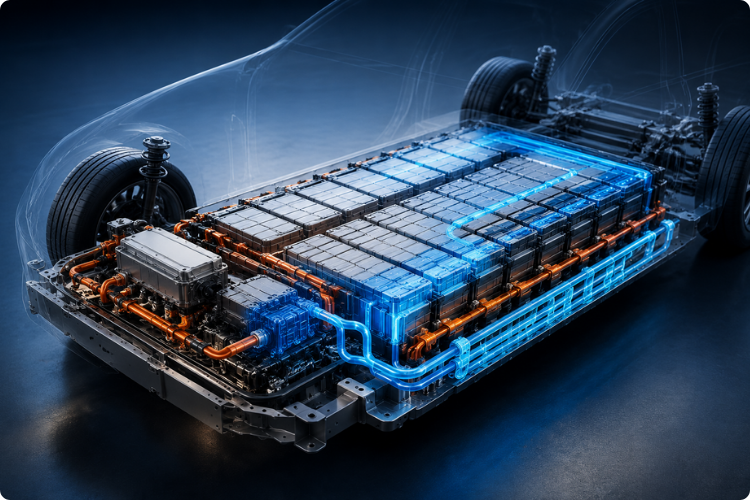
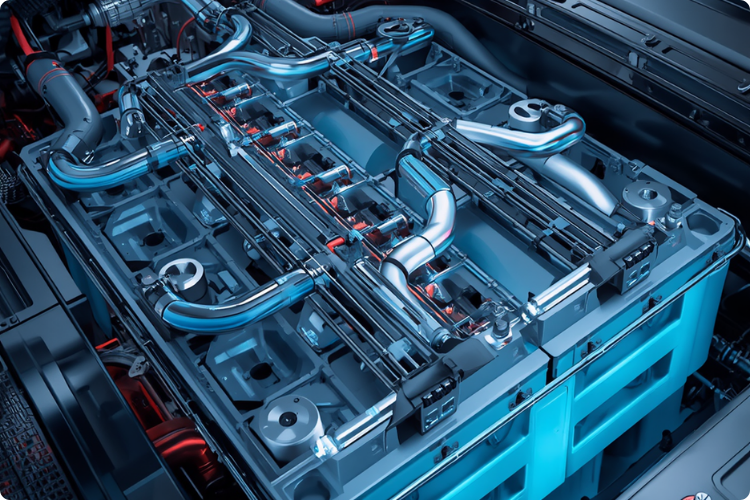
Modern EVs now use increasingly advanced thermal management systems that include:
- Liquid cooling circuits
- Heat exchangers
- Thermal sensors
- Intelligent cooling controls
- Heat pumps
These systems help maintain stable operating temperatures during:
- Fast charging
- Long-distance driving
- Extreme weather conditions
- High-performance operation
Recent research highlights the growing importance of advanced thermal management systems in preventing overheating and reducing the likelihood of thermal runaway events.
Better Protection Against Thermal Runaway
Thermal runaway remains one of the most discussed aspects of EV battery safety.
Manufacturers have invested heavily in technologies designed to prevent thermal events from spreading between battery cells.
Modern battery packs increasingly include:
- Cell isolation barriers
- Fire-resistant materials
- Thermal propagation protection
- Improved venting systems
- Advanced cooling strategies
Research into thermal runaway prevention has accelerated significantly between 2020 and 2026, leading to improved containment methods and enhanced battery pack designs.
Stronger Battery Enclosures
Battery packs form one of the largest and most expensive components in an electric vehicle.
Manufacturers now design battery enclosures to withstand:
- High-speed collisions
- Side impacts
- Underside strikes
- Debris impacts
- Structural deformation
Modern battery packs are often integrated into the vehicle structure itself.
This improves both crash protection and overall vehicle rigidity.
Additional protective materials and reinforced battery casings have become increasingly common across the industry.
Safer Battery Chemistries
Not all lithium-ion batteries are identical.
One of the most significant developments since 2020 has been the growing adoption of safer battery chemistries.
Many manufacturers now use Lithium Iron Phosphate (LFP) batteries in certain vehicle models.
Advantages include:
- Improved thermal stability
- Reduced fire risk
- Longer cycle life
- Lower manufacturing costs
The increasing use of LFP technology reflects the industry’s focus on balancing performance, affordability, and safety.
The Rise of AI and Predictive Monitoring
Battery management is becoming increasingly intelligent.
Modern EVs can analyse enormous amounts of data generated by battery systems.
Manufacturers now use predictive software capable of:
- Detecting abnormal cell behaviour
- Identifying potential faults
- Monitoring battery ageing
- Improving charging performance
- Predicting maintenance requirements
This allows potential issues to be identified before they develop into more serious problems.
Tougher Global Safety Standards
Battery safety regulations have also evolved significantly.
Governments and regulators continue introducing stricter testing requirements for:
- Crash protection
- Thermal runaway resistance
- Fast charging durability
- Battery abuse testing
- Fire containment
Recent regulatory developments in major EV markets have introduced increasingly demanding requirements relating to thermal runaway containment and battery fire prevention.
Emerging Technologies That Could Further Improve Safety
Several next-generation battery technologies are expected to reach the market over the coming years.
These include:
Solid-State Batteries
Solid-state batteries replace flammable liquid electrolytes with solid materials.
Potential advantages include:
- Reduced fire risk
- Improved thermal stability
- Faster charging
- Higher energy density
Sodium-Ion Batteries
Sodium-ion technology is attracting increasing attention as a potentially safer and lower-cost alternative for certain applications. Recent developments suggest growing commercial interest in the technology.
Advanced Thermal Materials
Researchers continue developing:
- Phase-change materials
- Improved cooling technologies
- Advanced thermal barriers
- New fire-resistant coatings
These innovations aim to further reduce the likelihood of thermal runaway events.
How EV Battery Safety Compares With Earlier Generations
Compared with vehicles produced just five or six years ago, many modern EVs benefit from:
| Safety Improvement | Typical 2020 EV | Typical 2026 EV |
|---|---|---|
| Battery Monitoring | Good | Highly Advanced |
| Thermal Management | Effective | Significantly Improved |
| Thermal Runaway Protection | Basic Containment | Enhanced Isolation & Prevention |
| Crash Protection | Strong | Stronger Structural Integration |
| Fault Detection | Reactive | Predictive Monitoring |
| Battery Chemistry Options | Limited | Wider Range of Safer Chemistries |
While no technology is entirely risk-free, the overall direction of travel is clear.
Battery safety continues to improve.
Continue Reading: EV Fire Safety & Electric Vehicle Research
Want to learn more about electric vehicle safety, battery technology, and vehicle fire risks? Explore our latest guides below:
- EV Fire Risk vs Petrol & Diesel (2026 Update): What the Data Really Shows – Discover how EV fire rates compare with petrol and diesel vehicles and what the latest evidence reveals.
- Are Electric Cars Safer Than Petrol Cars in 2026? – A closer look at crash safety, vehicle design, driver assistance technology, and real-world safety performance.
- EV vs Hybrid vs Petrol Fire Risk Comparison – Compare fire risks across different vehicle types and understand how modern safety systems influence outcomes.
- Why EV Fires Go Viral Online: Media Bias, Social Media and Risk Perception – Learn why electric vehicle fires often attract disproportionate attention despite their relatively low frequency.
- What Actually Causes Lithium-Ion Battery Fires? The Real Risks Explained – This guide explains thermal runaway, battery damage, charging failures, manufacturing defects, and the safety systems designed to reduce fire risk
- Do Electric Cars Catch Fire While Charging? – The Truth About EV Charging Safety – This guide explores how EV charging systems work, what can cause rare charging-related incidents, the safety protections built into modern electric vehicles, and why charging an EV is generally considered one of the safest aspects of EV ownership.
- Are EV Fires Harder to Extinguish Than Petrol Vehicle Fires? (2026 Guide) – This guide explains why lithium-ion battery fires behave differently from conventional vehicle fires, how thermal runaway can affect firefighting efforts, the specialist techniques used by fire services, and what the latest evidence reveals about EV fire risk and emergency response.
Whether you’re researching electric vehicle safety, battery technology, or the facts behind EV fire statistics, these guides provide evidence-based insights into one of the most discussed topics in modern motoring.
What the Evolution of EV Battery Safety Really Shows
The story of electric vehicle battery safety between 2020 and 2026 is one of continuous improvement.
Manufacturers have invested billions in safer battery chemistries, smarter monitoring systems, advanced thermal management technologies, and stronger structural protection.
As a result, modern EVs are better equipped than ever to prevent, detect, and manage battery-related issues.
While no vehicle is completely free from risk, the evidence suggests that battery safety technology has advanced rapidly — and the next generation of electric vehicles is likely to become safer still.
 Call our expert team on