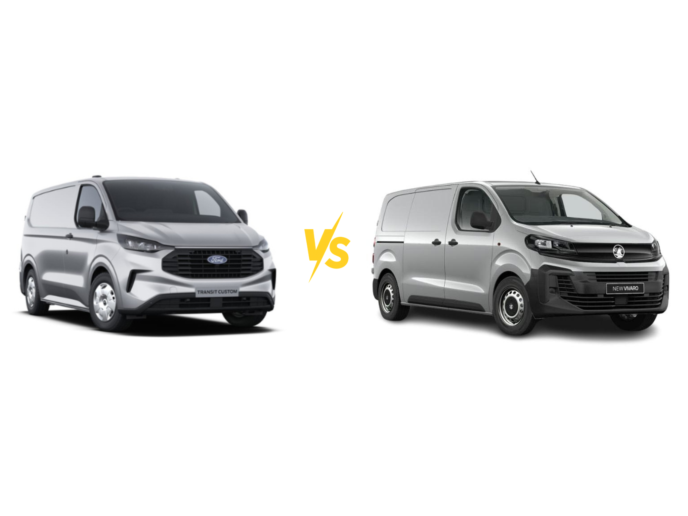
Ford Transit Custom vs Vauxhall Vivaro – we often get asked these questions by customers looking to lease a medium-sized van. And the truth is, it’s not always easy to give a straightforward answer. Both vans are among the UK’s best-sellers in the medium LCV segment, offering strong practicality, efficient engines, and impressive technology.
While the Transit Custom and Vivaro don’t share the same platform, they compete directly in the same class and offer similar payloads, load volumes, and configurations. In this article, we’ll compare the Transit Custom and Vivaro side by side, giving you a time-saving alternative to reading separate van reviews. By examining how they differ, you’ll gain a clearer understanding of which model best suits your business needs.
Medium Van Test: Ford Transit Custom Vs Vauxhall Vivaro
Designed to handle demanding workloads while keeping drivers comfortable and connected, both vans bring plenty to the table. Let’s take a closer look…
Exterior Design
The Ford Transit Custom and Vauxhall Vivaro both feature a practical, squared-off design that maximises load capacity. However, their styling takes noticeably different approaches.
The Transit Custom has a bold and modern look, heavily inspired by Ford’s passenger vehicle range. The large grille, sharp LED headlights and strong shoulder lines give it a more premium, almost SUV-like presence. The latest model especially feels more refined and aerodynamic than previous generations.
The Vivaro, meanwhile, adopts a more conservative and functional design. It’s clean and professional, with a wide front grille and neatly integrated headlights. While it may not be as visually striking as the Ford, it has a smart and purposeful appearance that appeals to many tradespeople and fleet users.
If exterior styling matters to you or your brand image, the Transit Custom arguably has the edge for visual impact.
Let’s Check Out The Cabin
The cabin is where you’ll notice some of the biggest differences between the Transit Custom and Vivaro.
Dashboard
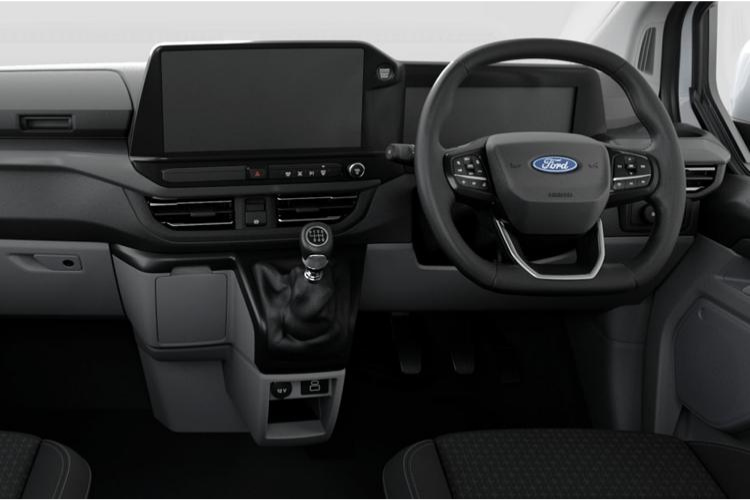
The Transit Custom features a thoroughly modern interior, particularly in the latest generation. A large central touchscreen dominates the dashboard, running Ford’s SYNC infotainment system. The digital driver display and car-like layout give it a premium feel. Controls are logically placed, and the steering wheel design mirrors Ford’s passenger cars.
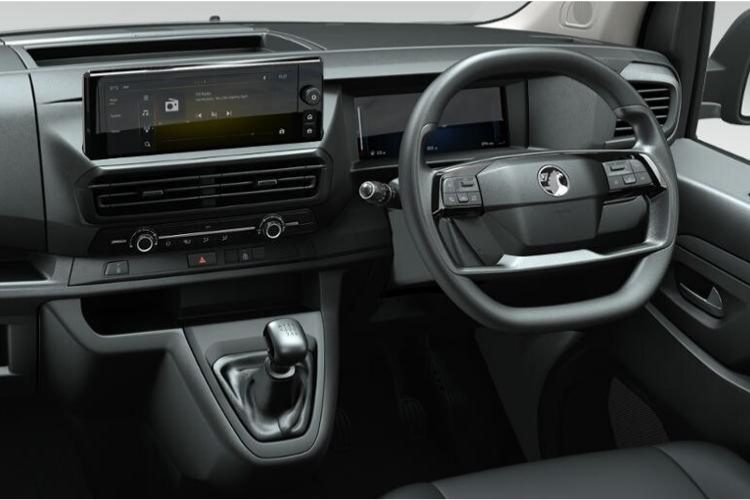
The Vivaro offers a more traditional dashboard layout. It’s clear, practical and easy to use, but not as visually impressive as the Ford. Physical buttons for climate controls make it straightforward to operate, even with gloves on. Higher trims include a touchscreen infotainment system with smartphone connectivity.
Overall, the Transit Custom feels more cutting-edge and car-like, while the Vivaro focuses on practicality and simplicity.
Storage And Space
Both vans offer excellent cabin storage, making them ideal mobile workspaces.
In standard form, both models come with three front seats (driver plus dual passenger bench), although some entry trims may offer two-seat configurations. Fold-down centre seats can double as desks in certain versions.
The Transit Custom stands out with clever storage solutions, including under-seat compartments and large door bins. The Vivaro also offers generous storage, including overhead shelves and practical dashboard cubbies.
In terms of comfort, both vans provide ample headroom and supportive seating suitable for long working days.
Load Space
Both the Ford Transit Custom and Vauxhall Vivaro are available in two lengths and two roof heights, depending on the version.
- Transit Custom load volume: typically between 5.8 and 9.0 cubic metres (depending on configuration)
- Vivaro load volume: approximately 5.3 to 8.6 cubic metres
Payload capacities are competitive in both vans, with maximum payloads exceeding 1,000kg in selected models.
Both offer:
- Twin rear barn doors or tailgate options
- Sliding side doors (single or twin, depending on spec)
- Load-through bulkhead options for longer items
The load area width between the wheel arches is sufficient in both vans to carry standard pallets, making them suitable for a wide range of trades.
In pure numbers, the Transit Custom often offers slightly more maximum load volume, but the difference isn’t dramatic in day-to-day use.
Van Dimensions
Dimensionally, these vans are very close competitors.
Both offer:
- Two wheelbases (short and long)
- Practical loading heights
- Competitive turning circles for urban driving
If manoeuvrability in tight city streets is a priority, both perform well for a van of this size.
Trim Options
The Transit Custom range typically includes trims such as Leader, Trend, Limited and Sport, giving buyers a wide choice from basic workhorse to premium lifestyle van.
The Vivaro line-up usually includes trims like Prime, Pro and GS, covering similar ground from functional entry-level models to more highly equipped variants.
Standard equipment in both vans commonly includes:
- Steel bulkhead
- Rear parking sensors
- Cruise control
- Smartphone connectivity (Apple CarPlay and Android Auto in most trims)
Higher trims add features like alloy wheels, upgraded infotainment, climate control and additional driver assistance systems.
Under The Bonnet: Engines
The Transit Custom offers a range of diesel engines, typically based around a 2.0-litre EcoBlue diesel in various power outputs. There are also plug-in hybrid (PHEV) and fully electric E-Transit Custom versions available in the latest generation.
The Vivaro offers 1.5-litre and 2.0-litre diesel options, depending on power output. It is also available as the fully electric Vivaro Electric.
In terms of diesel performance:
- The Transit Custom’s 2.0 EcoBlue engines are known for strong torque and smooth delivery.
- The Vivaro’s 2.0-litre diesel offers solid pulling power, while the 1.5 is more economy-focused.
If you want hybrid technology, the Transit Custom has historically had the advantage with its plug-in hybrid option.
Gearboxes: Automatic And Manual Options
Both vans offer manual gearboxes as standard across most engine variants.
Automatic options are also available:
- Transit Custom offers an automatic transmission on selected engines.
- Vivaro offers an automatic transmission on higher-powered 2.0-litre models.
For drivers spending long hours in traffic, the availability of automatic gearboxes makes both strong contenders.
MPG Figures
Fuel economy will depend on engine choice and configuration, but both vans deliver competitive efficiency for the medium van segment.
Typically:
- Lower-powered diesel engines in both vans offer the best MPG figures.
- The Vivaro’s smaller 1.5-litre diesel can provide slightly stronger economy figures.
- The Transit Custom balances performance and efficiency well, particularly in its mid-range outputs.
Fleet buyers focused purely on fuel savings may lean toward the lower-powered Vivaro diesel, while those wanting stronger performance may prefer the Ford’s 2.0-litre units.
Driving Experience
This is where the Transit Custom often stands out.
The Transit Custom is widely regarded as one of the best-driving vans in its class. It feels composed, refined and surprisingly car-like on the road. Steering is precise, body roll is well controlled, and motorway cruising is comfortable and quiet.
The Vivaro delivers a comfortable and stable ride, especially when loaded. It’s easy to drive and confidence-inspiring, though not quite as engaging or refined as the Ford.
If driving enjoyment and long-distance comfort are high priorities, the Transit Custom may have the edge.
Safety
Both vans offer strong safety credentials and a wide range of driver assistance systems.
Common features include:
- Electronic stability control
- Hill start assist
- Autonomous emergency braking
- Lane departure warning
- Rear parking sensors
Higher trims in both ranges can include blind-spot monitoring, adaptive cruise control, and advanced driver alert systems.
Both models are designed to meet modern commercial vehicle safety standards, making either a secure choice for business use.
Ford Transit Custom Or Vauxhall Vivaro: The Final Verdict
Having compared the Ford Transit Custom and Vauxhall Vivaro, it’s clear that both are excellent medium vans suitable for a wide variety of trades and businesses.
The Transit Custom stands out for:
- Class-leading driving dynamics
- More modern and premium-feeling interior
- Broader powertrain options, including hybrid
The Vivaro impresses with:
- Strong value for money
- Excellent practicality
- Competitive fuel economy, especially in lower-powered models
Ultimately, the right choice depends on your priorities. If you want a van that feels the most car-like to drive and offers cutting-edge interior tech, the Transit Custom is likely to appeal more. If you’re focused on practicality, efficiency and value, the Vivaro makes a compelling case.
As always, we recommend test-driving both models to see which better suits your daily workload and driving style.
 Call our expert team on