
The UK electric van market has reached another milestone, with 4,832 battery electric light commercial vehicles registered in September 2026 – the strongest monthly result on record.
However, despite the growth, electric vans still account for only a fraction of the new van market. With the Government’s Zero Emission Vehicle (ZEV) Mandate targeting a 24% share for electric vans in 2026, the latest figures show just how significant the gap remains.
According to the latest industry figures, battery electric vans represented 9.6% of all LCV registrations in September, while the year-to-date figure stands at 10.8%.
That means the market is moving in the right direction, but electric van adoption remains at less than half the level required by the current mandate.
Electric Van Registrations Reach New Record
September is traditionally an important month for the UK new vehicle market because of the introduction of the new registration plate. This year’s September proved particularly strong, with the overall new LCV market increasing by 4.8% to 49,704 vehicles.
Electric van registrations increased by 13.4% compared with September 2025, rising to 4,832 vehicles.
The year-to-date figures also show continued progress, with more than 27,000 electric LCVs registered during the first nine months of 2026.
| Electric LCV Registrations | September 2026 | Year To Date 2026 |
|---|---|---|
| Electric LCVs | 4,832 | 27,359 |
| Market share | 9.6% | 10.8% |
| Year-on-year growth | 13.4% | 23.7% |
| 2026 ZEV Mandate target | 24% | 24% |
The figures show that electric van adoption is continuing to grow, but the pace remains considerably below the level required by the current Government target.
How Far Behind The ZEV Mandate Is The Market?
The difference between the current market share and the Government’s target is substantial.
Electric vans accounted for 10.8% of registrations during the first nine months of 2026, compared with the 24% target for the year.
| Measure | Percentage |
|---|---|
| September 2026 electric van share | 9.6% |
| 2026 year-to-date electric van share | 10.8% |
| 2026 ZEV Mandate target | 24% |
| Difference between YTD share and target | 13.2 percentage points |
In other words, the market would need to more than double its current year-to-date share to reach the mandated level.
That does not necessarily mean businesses are rejecting electric vans altogether. Instead, it highlights the difference between what manufacturers can supply and what businesses are currently able or willing to adopt.
There are now more than 40 battery electric LCV models available to UK operators, giving businesses considerably more choice than they had only a few years ago. From compact urban vans to larger electric LCVs, the expanding choice means businesses can increasingly find a vehicle suited to their particular operation.
The growing choice is also being reflected in competition between manufacturers, with models such as the Kia PV5 becoming increasingly prominent in the UK electric van market.
The challenge is increasingly about whether an electric van works financially and operationally for a particular business.
Why Aren’t More Businesses Switching To Electric Vans?
There is no single reason behind the slower-than-targeted adoption.
For many operators, the decision comes down to a combination of vehicle cost, charging infrastructure, range, payload, daily mileage and the practical demands of their work.
Higher Upfront Costs
Electric vans have become increasingly competitive, but the initial cost can still be a significant consideration for businesses comparing them with established diesel alternatives.
For a small business or operator running several vehicles, even a relatively modest difference in monthly costs can have a substantial impact across an entire fleet.
Leasing can help businesses avoid a large upfront purchase cost, but the overall affordability of an electric van still needs to make sense against the vehicle’s expected use. Running costs also need to be considered, particularly when comparing an electric van with a diesel equivalent.
CVC’s electric van leasing options cover a range of vehicle sizes and applications, allowing businesses to compare different approaches to electrification.
Charging Infrastructure
Charging is another major consideration.
An electric van can be perfectly capable of completing a business’s daily work, but that advantage can disappear if the operator cannot conveniently recharge the vehicle.
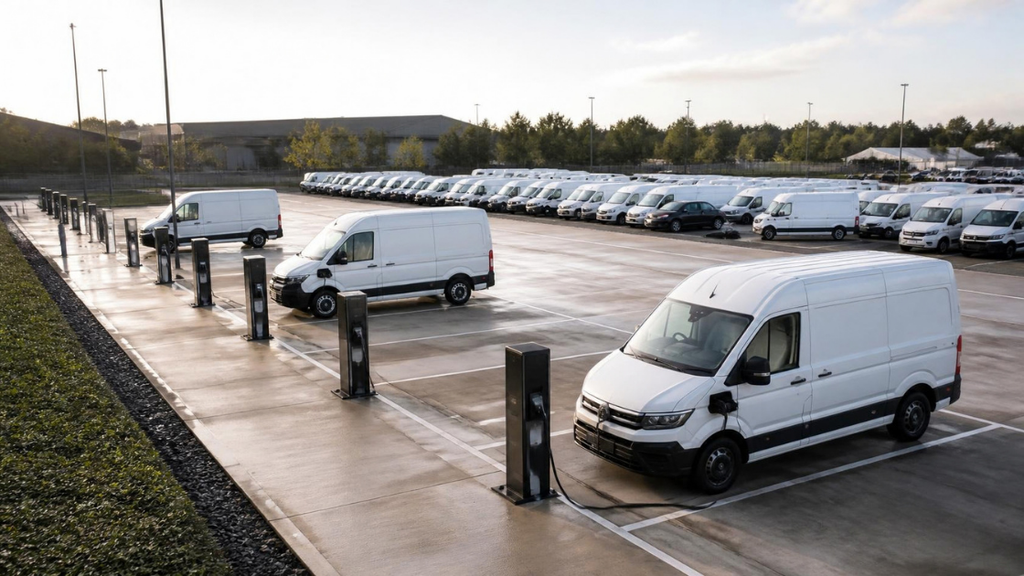
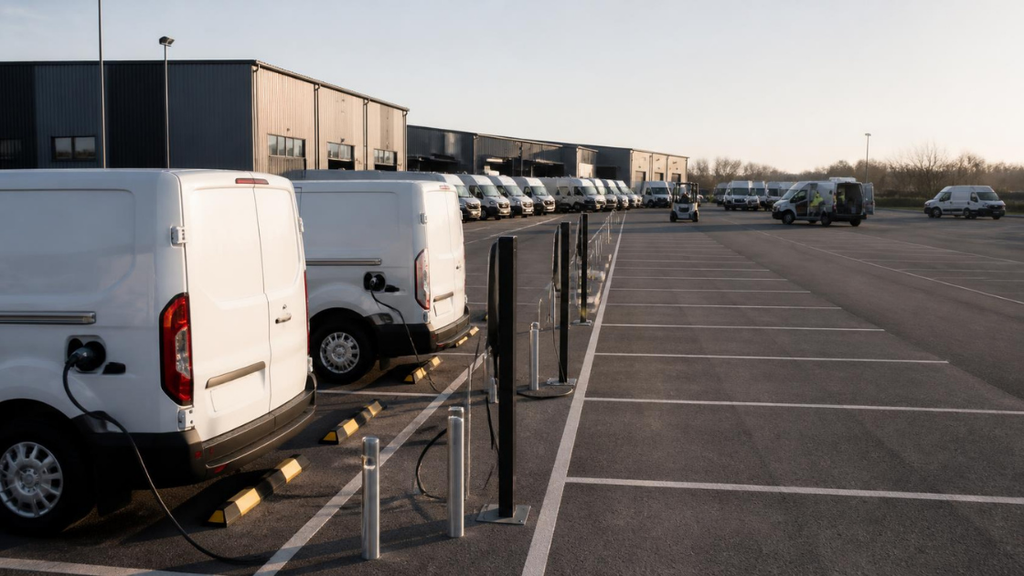
For a business returning its vans to a depot every evening, workplace or depot charging can make electrification considerably easier.
For businesses whose vehicles spend much of the day away from base, however, dependable public charging becomes much more important. This can be particularly relevant for smaller businesses or drivers who cannot rely on dedicated home charging.
This is why charging should be assessed before choosing the van, rather than after the vehicle has been ordered.
CVC’s EV charger reliability guide highlights the importance of considering the charging network alongside the vehicle itself.
Range Isn’t The Only Consideration
It is easy to focus on the headline WLTP range when comparing electric vans, but range is only one part of the equation.
A business should also consider:
- Average daily mileage
- Typical payload
- Number of journeys each day
- Motorway mileage
- Access to overnight charging
- Availability of workplace charging
- Public charging requirements
- Seasonal conditions
- Downtime between jobs
An electric van with a shorter official range could be a better choice than a longer-range model if it fits the company’s actual operating pattern.
Likewise, a vehicle with an impressive range may not be appropriate if its payload, load volume or charging requirements do not suit the business.
The Plug-In Van Grant Remains Important
Government support also remains an important part of the electric van transition.
The Plug-In Van Grant is designed to reduce the cost of eligible electric vans, with support available according to the vehicle’s weight category.
CVC’s guide to the Plug-In Van Grant explains how the scheme works for businesses considering an electric van.
For leasing customers, the grant can be particularly useful because the incentive is incorporated into the leasing arrangement rather than requiring the business to purchase the vehicle outright.
| Electric Van Category | Potential Grant |
|---|---|
| Small vans up to 2.5 tonnes GVW | Up to £2,500 |
| Vans between 2.5 and 3.5 tonnes GVW | Up to £5,000 |
Eligibility and grant availability can change, so businesses should check the current position when requesting a quotation.
Diesel Still Dominates The LCV Market
Despite the rapid growth of electric vans, diesel remains overwhelmingly dominant in the UK LCV market.
The latest figures show that diesel vehicles below 3.5 tonnes accounted for 82.6% of September’s registrations, compared with 8.3% for battery electric vans below 3.5 tonnes.
| Powertrain | September 2026 Market Share |
|---|---|
| Diesel LCVs under 3.5 tonnes | 82.6% |
| Battery electric LCVs under 3.5 tonnes | 8.3% |
| Other powertrains under 3.5 tonnes | 7.9% |
| BEV LCVs including eligible 3.5–4.25t vehicles | 9.6% |
This illustrates the scale of the transition still required.
It also explains why the Government’s ZEV Mandate review is so significant for the commercial vehicle sector.
The ZEV Mandate Review Could Be Important For Fleets
The Government is currently reviewing the ZEV Mandate, including how the existing targets and flexibilities are working in practice.
The current 2026 target requires manufacturers to achieve a 24% zero-emission share for vans, but the latest registration data demonstrates that the market is currently some distance away from that level.
For businesses, the outcome matters because regulatory targets can influence vehicle availability, manufacturer strategies, pricing and the range of powertrains offered in the future.
The issue is therefore not simply whether electric vans will become more common. It is how quickly the transition happens and whether the infrastructure and economics develop quickly enough to support it. For fleet operators, this is just one part of an increasingly complex vehicle management landscape.
The Wider Van Market Is Growing Too
Electric vans were not the only area of growth during September.
The overall new LCV market increased for the sixth consecutive month, with 49,704 vans, pickups and 4x4s registered during September.
Large vans recorded the biggest volume increase, with registrations rising 11.1% to 36,302 units. Medium vans increased 2.2% to 7,304, while small vans rose 13.2% to 1,361 units.
Interestingly, 4×4 registrations more than tripled, increasing by 221.3% to 2,079 units.
Pickups moved in the opposite direction, with registrations falling by 53.8% to 2,658 vehicles.
| LCV Segment | September 2026 Registrations | Year-On-Year Change |
|---|---|---|
| Large vans | 36,302 | +11.1% |
| Medium vans | 7,304 | +2.2% |
| Small vans | 1,361 | +13.2% |
| 4x4s | 2,079 | +221.3% |
| Pickups | 2,658 | -53.8% |
The figures demonstrate that businesses continue to have a broad range of vehicle requirements, and electrification will not necessarily be suitable for every operation at the same pace.
Choosing An Electric Van Is About More Than The Vehicle
For businesses considering an electric van, the latest registration figures should not necessarily be interpreted as a reason to switch immediately. For larger operators, electrification also needs to form part of a wider fleet strategy covering vehicle selection, running costs, replacement cycles and operational requirements.
Instead, they highlight the importance of making the right vehicle choice for the individual business.
A company running predictable local routes and returning its vans to base every evening may find an electric van particularly well suited to its operations.
Another business covering hundreds of miles a day, carrying heavy payloads and relying on public rapid charging may have a very different experience.
CVC’s electric van versus diesel van guide looks at the potential running-cost differences between the two powertrains and demonstrates why charging arrangements can have a significant influence on the economics of making the switch.
The same principle applies when considering a wider fleet transition. CVC’s guide to switching to an electric vehicle recommends assessing existing vehicle use, charging requirements, available incentives and vehicle suitability before making the move.
 Call our expert team on