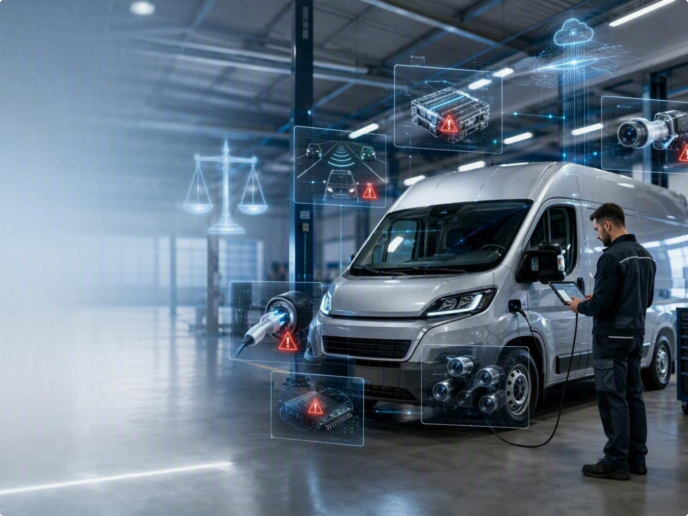
Modern vehicles are becoming increasingly dependent on software, connected technology and sophisticated electronic systems. As a result, diagnosing and repairing a vehicle fault is becoming very different from the traditional process of identifying a failed mechanical component and replacing it.
Now, a fault with a vehicle’s charging system, driver assistance technology, battery management system, sensors or connectivity could involve multiple systems working together. In some cases, resolving the problem may also require manufacturer-specific software, technical information, specialist training or direct intervention from the vehicle manufacturer.
That is raising an increasingly important question for the automotive industry: does the UK’s Consumer Rights Act adequately reflect the way modern vehicles are designed, diagnosed and repaired?
Warranty Solutions Group (WSG) has highlighted the issue as part of an industry discussion around how the Consumer Rights Act is applied when modern vehicles become increasingly dependent on software, connected technology and complex electronic systems.
The issue could become increasingly important as more UK drivers and businesses move towards newer, highly connected vehicles and electric vans.
It is important to stress that this is currently an industry discussion rather than an announced change to UK consumer law. No changes to the Consumer Rights Act have been announced specifically as a result of WSG’s concerns about modern vehicle technology.
How Vehicle Faults Have Changed
For much of the automotive industry’s history, diagnosing a vehicle problem was relatively straightforward.
A component failed, a technician identified the problem and the defective part could be repaired or replaced.
Modern vehicles are considerably more complicated.
A single fault warning can potentially be linked to a number of different systems. A problem that appears to involve one component may actually originate elsewhere, while some faults may only occur under particular driving conditions.
Modern vehicles can also depend on software for a wide range of functions, including:
- Battery management
- Charging systems
- Driver assistance technology
- Parking sensors and cameras
- Infotainment
- Connectivity
- Vehicle diagnostics
- Safety systems
- Electronic control units
- Over-the-air software updates
This means that repairing a vehicle is increasingly about understanding the interaction between hardware and software rather than simply replacing a physical component.
WSG has highlighted this changing environment as part of its wider discussion around the Consumer Rights Act and modern vehicle technology. Its recent industry webinar specifically examined the challenges faced by dealers, repairers and consumers when faults become more difficult to diagnose.
Why The Consumer Rights Act Is Being Questioned
The Consumer Rights Act 2015 established a framework covering consumer contracts for goods, services and digital content. For goods, consumers have protections relating to issues including satisfactory quality, fitness for purpose and whether goods match their description.
The Act also provides remedies when goods do not conform to the contract.
Depending on the circumstances, these can include repair or replacement and, where the relevant requirements are met, a reduction in price or rejection of the goods.
The legislation therefore provides important protections for consumers buying vehicles from traders.
Warranty arrangements can also play an important role when something goes wrong with a vehicle, particularly for businesses relying on their vans every day.
The issue being raised is not necessarily about reducing consumer protection. Instead, it is about whether responsibility between manufacturers and retailers is sufficiently clear when faults involve software and manufacturer-controlled technology.
The practical realities of diagnosing and resolving vehicle faults have changed significantly since the legislation was introduced. Understanding where responsibility lies between routine maintenance and manufacturer warranty coverage can also become more complicated as vehicles incorporate more software and electronic systems.
A dealer may have an obligation to address a customer’s problem but may not have complete control over the technology required to diagnose or repair it.
For example, a technician could identify that a vehicle requires a particular software update or manufacturer intervention. The dealer may then have to rely on the manufacturer before the vehicle can be properly repaired.
This can create a difficult situation for everyone involved.
Who Is Responsible When The Manufacturer Controls The Technology?
This is arguably the central question behind the debate.
Imagine a customer reports a fault with a modern vehicle.
The retailer has a responsibility to investigate the problem, but the fault cannot be resolved without access to manufacturer-specific diagnostic software or technical information.
The dealer may be the customer’s point of contact, yet another organisation effectively controls the tools required to resolve the problem.
WSG argues that this creates a potential mismatch between responsibility and control.
Its position is that if retailers are expected to resolve faults, the industry needs to consider whether they have sufficient access to the information, software, training and manufacturer support required to do so.
This does not necessarily mean that manufacturers should automatically become responsible for every vehicle fault.
Instead, it raises the question of whether the legal and commercial framework surrounding vehicle faults should better reflect how modern vehicles are actually designed and supported.
This Does Not Mean Consumer Protection Should Be Weakened
It is important to make this distinction.
The argument for reviewing the legislation should not be interpreted as an argument for giving consumers fewer rights.
The Consumer Rights Act provides an important framework for consumers when things go wrong, and the legislation continues to provide remedies for faulty goods.
The question is whether the rules and guidance surrounding those rights provide enough clarity when a vehicle’s fault depends upon software, connected services or technology controlled by a third party.
WSG has explicitly framed its position around the allocation of responsibility rather than removing consumer protection. The organisation says the issue is about ensuring responsibility reflects where the relevant knowledge and technical control actually sit.
That distinction is important.
Are Modern Electric Vehicles Making The Issue More Important?
The growth of electric vehicles adds another dimension to the debate, particularly as more UK businesses introduce electric fleets and adapt to the different technology, charging requirements and maintenance considerations involved.
An electric vehicle still has many traditional mechanical components, but its operation also depends heavily on electronic control systems and software.
The battery, charging system, thermal management, regenerative braking and various vehicle control systems can all involve sophisticated electronic technology.
That does not mean EVs are inherently unreliable. However, it does mean that when something does go wrong, the diagnostic process can be very different from the traditional experience of repairing a purely mechanical fault.
For businesses operating electric vans, this can have an additional consequence, particularly when a technical fault leaves a vehicle unavailable for work. Understanding what happens when an electric vehicle breaks down is therefore becoming increasingly important for businesses making the transition to electric fleets.
Vehicle downtime can have a direct impact on business operations.
A van that cannot be used because a fault is waiting for diagnosis, software intervention or a manufacturer-approved repair can potentially leave a business without one of its working vehicles.
For a tradesperson, delivery business or service company, that can be considerably more significant than an inconvenience for a private driver.
What Does This Mean For Businesses Running Fleets?
Although the current discussion centres on the Consumer Rights Act and consumer transactions, the wider issue of vehicle technology is relevant to businesses running both cars and vans, particularly when considering the wider implications of business vehicle leasing and fleet management.
Businesses choosing new cars and vans increasingly need to think beyond the traditional questions of purchase price, payload, fuel economy and specification. These considerations form part of the wider fleet lifecycle, which also includes maintenance, downtime, replacement planning and vehicle disposal.
The aftersales support available from the manufacturer can also be important.
When comparing vehicles, fleet operators may want to consider:
- Manufacturer support: How quickly can technical issues be escalated?
- Dealer network: Is there an authorised repairer conveniently located for the business?
- Specialist expertise: Does the dealer have the necessary training to work on the vehicle?
- Software support: How are software faults and updates handled?
- Vehicle downtime: What happens if a vehicle cannot be repaired immediately?
- Replacement vehicles: Are courtesy or replacement vehicles available where appropriate?
- Warranty coverage: What components and systems are covered?
Effective fleet management can also help businesses monitor vehicle availability, maintenance requirements and downtime as their fleets become increasingly complex.
These considerations are particularly relevant as vehicles become increasingly sophisticated.
Could Software Become A Bigger Part Of Vehicle Consumer Rights?
The Consumer Rights Act already contains specific provisions relating to digital content. However, applying those concepts to modern vehicles is more complicated because a vehicle combines physical hardware with software, connected services and electronic systems.
The legislation provides specific rights where digital content does not conform to the contract.
The Act also recognises that some contracts can contain combinations of goods, services and digital content, with different rights potentially applying to the different elements.
That becomes increasingly interesting when considering the modern motor vehicle, particularly as the growing use of software, cameras, connected systems and vehicle data raises wider questions around access to technology and the right to repair.
A vehicle is clearly a physical product, but it can also incorporate substantial amounts of software and connected functionality.
This raises some difficult questions.
What happens if a physical component works correctly but the software controlling it does not?
What happens if a fault can only be diagnosed using manufacturer-controlled software?
What happens when a software update is required to resolve a problem?
And who should ultimately bear the cost and responsibility when the retailer cannot independently resolve the issue?
These questions are becoming more relevant as manufacturers increasingly treat vehicles as connected technology platforms rather than simply mechanical products.
The Challenge Of Diagnosing Modern Vehicle Faults
One of the biggest changes facing the automotive industry is the increasing importance of diagnosis.
A technician may no longer be able to identify a fault simply by inspecting a component.
Instead, they may need access to:
- Manufacturer diagnostic systems
- Technical service information
- Software updates
- Vehicle-specific data
- Specialist training
- Manufacturer technical support
- Information about known software issues
This can make the relationship between manufacturer, dealer and customer increasingly important.
If a manufacturer has developed the vehicle and controls the software and technical information, but the dealer is the organisation dealing directly with the customer, there needs to be an effective system for transferring information and resolving faults.
Without that support, the customer can potentially become caught between two organisations.
What Could A Future Review Look Like?
If the issue were to lead to a future review, it could potentially consider whether existing legislation and guidance adequately explain how responsibility should work where a vehicle fault depends upon manufacturer-controlled software or technical information.
It could also consider whether consumers need clearer guidance about the nature of faults in modern vehicles and what constitutes a reasonable opportunity for a dealer to diagnose and repair a problem.
That would not necessarily require weakening existing consumer rights. Instead, the focus could be on providing greater clarity for consumers, dealers and manufacturers as vehicle technology becomes increasingly software-dependent.
Why Clearer Guidance Could Benefit Everyone
There are potential benefits to clearer rules and expectations for both consumers and the automotive industry.
For consumers, clearer guidance could make it easier to understand what they can reasonably expect when a vehicle develops a fault.
For dealers, it could provide greater clarity about their responsibilities when they depend upon a manufacturer to resolve a technical problem.
For manufacturers, it could reinforce the importance of providing dealers with appropriate diagnostic tools, software, training and technical support.
And for businesses operating fleets, a more efficient approach to diagnosing and repairing complex vehicles could ultimately help reduce unnecessary downtime.
The industry has already recognised that modern vehicle technology is creating new challenges. WSG’s recent discussions with automotive professionals have focused specifically on how the Consumer Rights Act is being applied as vehicles become increasingly software-driven and connected.
What Should UK Drivers And Businesses Take From This?
For drivers, the main takeaway is that vehicle faults are becoming more complicated.
A warning light or electronic fault may not always have a simple mechanical solution, and diagnosing the underlying problem can sometimes require specialist equipment or manufacturer support.
For businesses, the issue reinforces the importance of considering the entire ownership or leasing experience when choosing a vehicle.
The headline specification is only part of the decision.
Manufacturer support, dealer availability, warranty arrangements and the ability to get a vehicle repaired quickly can all have a significant impact on the overall cost and practicality of running a fleet.
This is particularly important as more businesses introduce electric and increasingly connected vehicles into their fleets.
 Call our expert team on