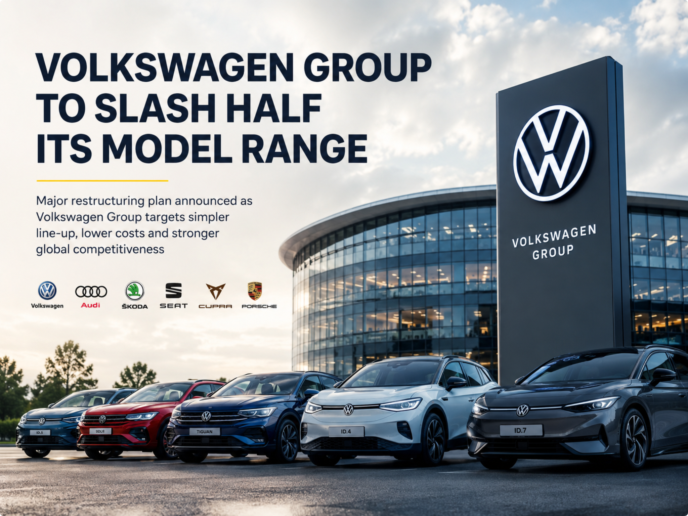
Volkswagen Group has unveiled a significant transformation strategy that could see its global vehicle line-up reduced by up to 50% over the coming years as the automotive giant looks to improve efficiency, reduce costs and strengthen its position in an increasingly competitive market.
The manufacturer also plans to simplify vehicle specifications, reduce production capacity and standardise technologies across its global brands as part of a long-term strategy running to 2030.
While reports have suggested the proposals could eventually lead to factory closures and substantial job losses, Volkswagen’s official announcement focused on product simplification, operational efficiency and investment in future technologies.
Volkswagen Aims to Simplify Its Vehicle Portfolio
One of the most significant elements of the new strategy is a planned reduction of up to half of Volkswagen Group’s global model range.
Rather than offering an extensive selection of vehicles across multiple segments, the company intends to focus on models that deliver the greatest customer demand and long-term commercial value.
Volkswagen also plans to reduce equipment and specification complexity by as much as 75%, making future vehicles easier and more cost-effective to develop and manufacture.
By streamlining its portfolio, the company believes it can accelerate product development, improve profitability and focus investment on key technologies that support its future growth.
Production Capacity Set to Be Reduced
Volkswagen has also confirmed plans to lower its global production capacity to around nine million vehicles per year.
Before the COVID-19 pandemic, the group had the capability to produce approximately 12 million vehicles annually, but changing market conditions, slowing demand in some regions and increasing competition have prompted a reassessment of manufacturing requirements.
The company said further production adjustments are expected across both Europe and China as part of the wider restructuring programme.
Technology Platforms Will Become More Standardised
As part of the transformation, Volkswagen intends to increase the sharing of vehicle platforms, electrical architectures and software systems across its global operations.
The move is designed to reduce duplication between regional markets, improve economies of scale and accelerate the rollout of new technologies.
The manufacturer also plans to make greater use of artificial intelligence, digital technologies and shared business services to simplify internal processes and improve productivity across the organisation.
CEO Says Volkswagen Must Become Faster and More Competitive
Volkswagen Group Chief Executive Oliver Blume said the company is entering the next phase of its long-term transformation strategy.
He explained that reducing organisational complexity and concentrating investment on future technologies will help create a stronger, more resilient business capable of responding more quickly to changes in the global automotive industry.
Blume said Volkswagen’s ambition is to become “the most attractive automotive company in the world” by 2030 through a combination of simpler products, more efficient production and greater operational flexibility.
Reports Suggest Wider Restructuring Plans
Although Volkswagen’s official announcement centred on product and manufacturing changes, reports from Reuters suggested wider restructuring proposals included the possible closure of four factories in Germany and the loss of up to 100,000 jobs.
According to Reuters, those proposals were not approved by Volkswagen’s supervisory board after opposition from employee representatives.
Under Germany’s co-determination system, labour representatives occupy half of the seats on Volkswagen’s supervisory board, giving them significant influence over major business decisions.
Any proposals relating to factory closures or workforce reductions are therefore expected to remain the subject of further negotiations.
Cost Reduction Remains a Key Priority
Volkswagen’s Chief Financial Officer, Arno Antlitz, said that while the business has already introduced several cost-saving programmes, further action is required.
He said the current economic environment, rising regulatory requirements, geopolitical uncertainty and increasing international competition mean the company must fundamentally simplify its operations.
The strategy includes lowering vehicle production costs, improving manufacturing efficiency, accelerating technology development and reducing the number of products, platforms and management layers across the business.
Which Volkswagen Models Could Be Affected?
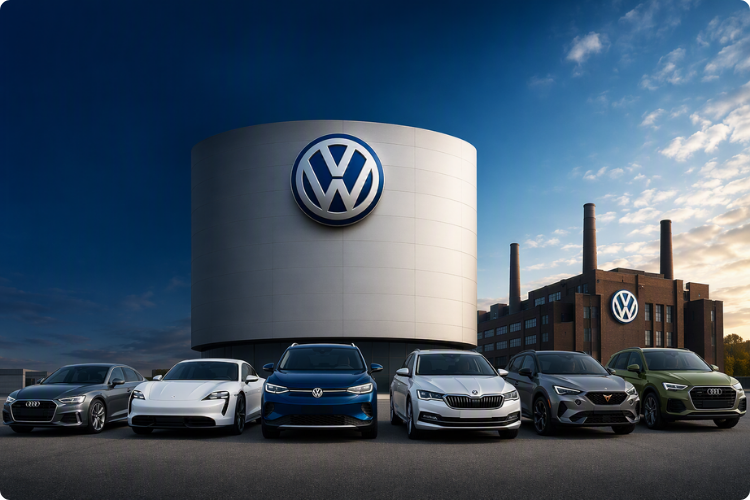
Volkswagen has not yet announced which models or individual brands could be removed as part of the planned restructuring.
The company has also not confirmed whether the changes will affect specific markets, meaning customers and fleet operators are likely to wait some time before the full impact becomes clear.
As Volkswagen continues its transformation, further announcements are expected to outline how the revised product strategy will be implemented across its global brand portfolio.
What Could This Mean for Volkswagen Commercial Vehicles?
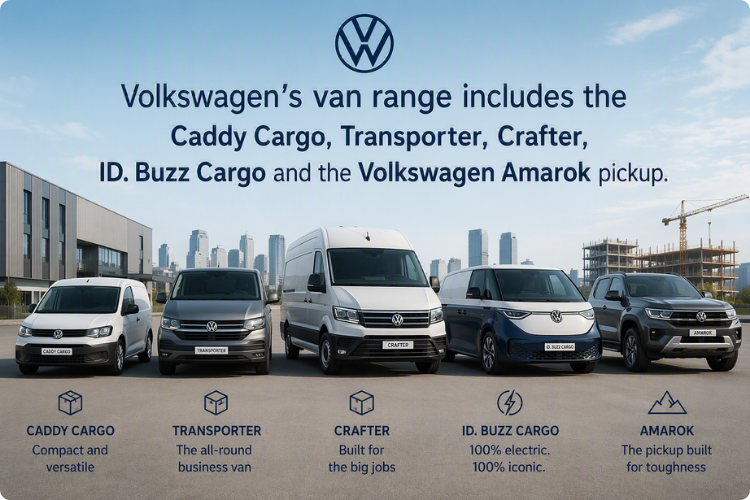
Volkswagen has not indicated whether its commercial vehicle range will be affected by the planned restructuring. Brands within the Volkswagen Group include Volkswagen Commercial Vehicles, which manufactures models such as the Caddy Cargo, Transporter, Crafter, ID. Buzz Cargo and the Volkswagen Amarok pickup.
At this stage, the company has not announced any plans to discontinue or significantly change its van portfolio. However, as Volkswagen reviews its global model range and focuses on improving efficiency, future product strategies across both passenger cars and commercial vehicles will be closely watched by fleet operators and business customers.
For now, businesses considering a Volkswagen van lease can expect the current model line-up to remain unchanged until any further announcements are made.
 Call our expert team on