Businesses across the UK could face increasing pressure to review their vehicle fleets as new sustainability reporting requirements bring greater focus to corporate emissions, climate risks and supply chain performance.
The introduction of the UK Sustainability Reporting Standards (UK SRS) will encourage larger organisations to improve transparency around their environmental impact. While many smaller businesses will not initially be required to report under the new standards, the effects could still be felt throughout supply chains.
Companies that provide services to larger organisations may increasingly be asked to demonstrate their own sustainability credentials, including how they manage fleet emissions and the steps they are taking to reduce their environmental impact.
As sustainability becomes a bigger consideration for businesses, vehicle leasing is playing an increasingly important role in corporate ESG strategies, helping companies access newer, more efficient vehicles without the financial commitment of ownership.
For businesses operating commercial vehicles, understanding fleet emissions and planning for a lower-carbon future could become an increasingly important part of remaining competitive and maintaining valuable contracts.
What Are the UK Sustainability Reporting Standards?
The UK Sustainability Reporting Standards (UK SRS) have been developed to create a more consistent approach to sustainability and climate-related reporting.
The standards are designed to help organisations provide clearer information about sustainability-related risks, opportunities and the actions they are taking to manage their environmental impact.
The Financial Conduct Authority (FCA) has consulted on proposals to introduce sustainability disclosure requirements for listed companies based on the UK SRS framework, with potential new rules expected to come into effect from 2027.
Although the initial focus is on larger organisations, sustainability reporting is expected to have a wider impact as businesses increasingly review the environmental performance of their suppliers and commercial partners.
This means companies that operate vans and commercial vehicles may need to consider how their fleet choices could influence future business opportunities.
Which Businesses Could Be Affected by Sustainability Reporting Requirements?
Many smaller businesses may not be directly required to produce formal sustainability reports, but they could still feel the impact through their relationships with larger organisations.
Companies supplying goods and services to major businesses may increasingly be asked questions about their environmental performance, including:
- How many vehicles they operate
- The type of vehicles within their fleet
- Fuel consumption and emissions data
- Plans to introduce lower-emission vehicles
- Steps being taken to reduce their carbon footprint
This could be particularly relevant for businesses operating within sectors where commercial vehicles play a key role.
Examples include:
- Courier and delivery companies
- Construction businesses
- Facilities management providers
- Maintenance companies
- Engineering firms
- Trades businesses
- Logistics operators
For these businesses, fleet sustainability may become more than an environmental consideration. It could become a factor when bidding for contracts, retaining customers and competing within supply chains.
Why Fleet Emissions Could Become a Bigger Business Consideration
For many organisations, vehicles represent a significant source of operational emissions.
Businesses that rely on vans and commercial vehicles every day need to balance sustainability goals with practical requirements, including payload capacity, driving range, reliability and operating costs.
Before making changes, businesses should understand their current fleet performance by reviewing factors such as:
- Annual mileage
- Fuel usage
- Vehicle age
- Operating routes
- Daily driving patterns
- Maintenance costs
This information can help businesses identify where improvements can be made and whether electric vehicles could be suitable for specific journeys or operations.
Reducing fleet emissions does not necessarily mean replacing every vehicle immediately. For many businesses, the most effective approach will involve gradually introducing lower-emission vehicles as existing contracts come to an end.
Electric Vans Could Help Businesses Prepare for a Lower-Emission Future
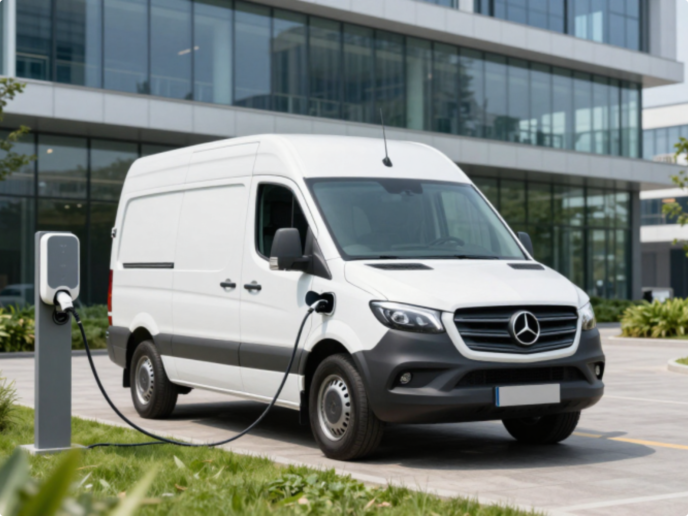
The electric van market has developed significantly in recent years, giving businesses more choice than ever before.
Modern electric vans now offer improved driving ranges, increased payload capabilities and a wider selection of models designed specifically for commercial use. Improvements in battery technology mean that many businesses can now consider electric vans for a wider range of daily operations, including deliveries, trades and local fleet journeys.
Smaller businesses and urban operators may find that compact electric vans offer a practical starting point for reducing emissions while maintaining everyday practicality. These vehicles can be particularly suited to shorter journeys, city-based operations and businesses looking to introduce their first electric commercial vehicle.
Popular electric commercial vehicles available in the UK include:
- Ford E-Transit
- Volkswagen Transporter Electric
- Mercedes-Benz eVito
- Peugeot E-Expert
- Renault Trafic E-Tech
- Kia PV5 Cargo
- Citroën ë-Berlingo Van
- Renault Kangoo E-Tech
- Vauxhall Combo Electric
For businesses with suitable operating requirements, electric vans can provide several potential benefits, including:
- Reduced emissions
- Lower running costs
- Reduced maintenance requirements
- Access to low-emission zones
- Improved sustainability credentials
Many organisations are already exploring electric fleets as a way to reduce running costs while improving their environmental performance.
However, electric vans are not suitable for every business or every journey. Factors such as mileage, charging availability and payload requirements must always be considered before making a decision.
Why Many Businesses Are Considering Mixed Fleets
While electric vehicles are becoming increasingly popular, a complete fleet transition may not be practical for every organisation.
Many businesses are adopting a mixed-fleet approach, combining electric vehicles with other vehicle types depending on their operational requirements.
For example:
- Electric vans may be ideal for local deliveries and urban journeys
- Diesel vehicles may still be required for longer-distance operations
- Specialist vehicles may require different powertrain solutions
A phased approach allows businesses to begin reducing emissions while ensuring they continue to meet customer expectations and operational demands.
The key is selecting vehicles that are suitable for the work they need to perform.
Leasing Could Support Businesses Moving Towards Electric Fleets
Transitioning towards lower-emission vehicles can be challenging, particularly for businesses that need to carefully manage budgets and operational requirements.
Leasing can provide a flexible way for businesses to access the latest electric van technology without the upfront cost associated with purchasing vehicles outright.
Leasing providers are increasingly supporting businesses with the transition towards electric fleets by helping identify suitable vehicles and solutions.
Benefits of leasing a commercial vehicle can include:
- Predictable monthly costs
- Easier fleet replacement cycles
- Access to the latest technology
- Reduced concerns around depreciation
- Support in selecting the right vehicle for business requirements
For companies considering fleet electrification, working with a specialist commercial vehicle leasing provider can help identify suitable options based on mileage, payload, charging requirements and business needs.
What Should Businesses Do Now?
Although sustainability reporting requirements may not directly apply to every business, organisations operating within supply chains should begin preparing for a future where environmental performance becomes increasingly important.
Businesses can start by:
Reviewing Current Fleet Emissions
Understanding current fuel usage, mileage and vehicle emissions provides a clearer picture of where improvements can be made.
Identifying Suitable Electric Vehicle Opportunities
Not every vehicle needs to be replaced immediately, but some journeys may already be suitable for electric vans.
Planning Fleet Replacement Cycles
Considering lower-emission alternatives when vehicles reach the end of their lease or replacement cycle can make the transition easier.
Reviewing Charging Requirements
Businesses should consider charging requirements before introducing electric vehicles. This includes understanding workplace charging options, driver requirements and how vehicles will be charged during daily operations.
Seeking Expert Advice
Choosing the right vehicles requires careful consideration of operational needs, costs and future requirements.
Preparing Your Business Fleet for Future Sustainability Requirements
The introduction of new sustainability reporting standards highlights the growing importance of understanding vehicle emissions and making informed fleet decisions.
While many businesses will not be directly affected by UK Sustainability Reporting Standards immediately, companies operating within larger supply chains may increasingly find that environmental performance becomes part of commercial discussions.
By reviewing fleet operations, exploring lower-emission vehicle options and planning a realistic transition strategy, businesses can put themselves in a stronger position for the future.
 Call our expert team on