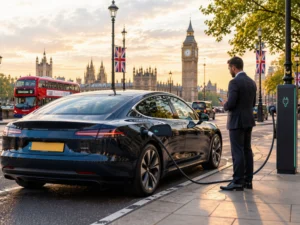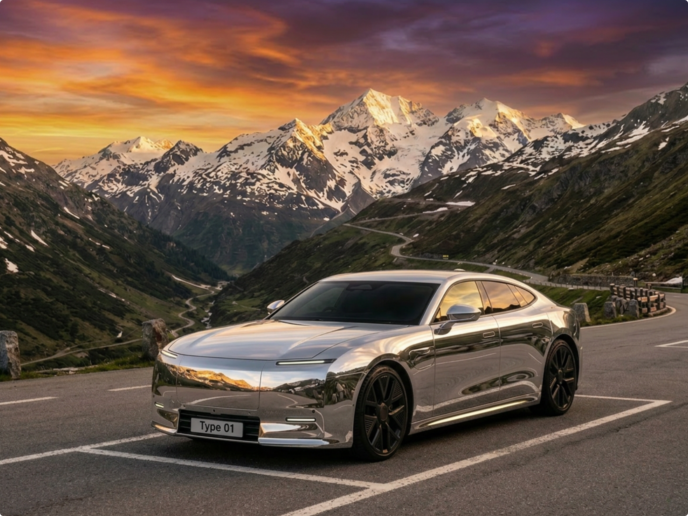
There are new car launches — and then there are cultural events. The new Jaguar Type 01 has somehow become both.
Long before most people had seen the finished production car, Jaguar had already achieved something most manufacturers can only dream of: global attention. Endless debate. Polarising reactions. Social media warfare. Design analysis videos. Furious traditionalists. Curious newcomers. And perhaps most importantly of all — relevance.
The question now is whether the Type 01 will become the defining luxury EV of its era, or simply the most infamous Jaguar ever built.
Jaguar Isn’t Asking for Permission Anymore
What makes the Type 01 so fascinating is Jaguar’s attitude toward the backlash. Most car companies panic when audiences react negatively. Jaguar appears to be leaning into controversy rather than avoiding it.
The company’s transformation into an all-electric luxury brand has felt less like a cautious evolution and more like a full-scale identity reset. Traditional Jaguar cues have been stripped away in favour of dramatic proportions, minimalist surfaces, oversized wheels, and an almost concept-car level of theatricality.
The message from Jaguar is clear: this is not a modernised version of the old Jaguar. It is a Jaguar rebuilt from the ground up.
Jaguar itself has reinforced this positioning. As Rawdon Glover, Managing Director of Jaguar, explains:
“We have reimagined Jaguar for a new era, with inspiration from what has gone before. Our engineers have achieved this with a vehicle that looks and drives like no other electric car, yet reflects a unique provenance. The Type 01 name is part of that story – for me, the zero also signifies a complete brand reset, and the ‘1’, our first car for a new chapter, a ‘one of a kind!’”
This framing underlines that the transformation is not incremental, but deliberately symbolic — a reset rather than a refinement.
And whether people love or hate the Type 01, they are talking about it constantly.
That alone may be enough to make the strategy work.
The Official Picture Behind the Type 01
Beyond the reaction and speculation, Jaguar’s own framing of the Type 01 reveals a more structured strategy than pure provocation.
The “Type” naming convention references the brand’s historic performance lineage, while the “0” represents zero emissions and a complete transition to electric power. The “1” signals the first model in a new generation of Jaguar vehicles, marking the beginning of a broader product cycle rather than a single standalone experiment.
Jaguar has also confirmed that the Type 01 sits on a dedicated new electric architecture and will be the first of a series of ultra-luxury EVs expected to arrive over the coming years. This positions it not as an isolated statement piece, but as the foundation of a wider brand repositioning.
Reported performance targets place the car in the high-performance luxury EV category, with outputs approaching hyper-GT territory and long-range capability designed to compete directly with established premium electric offerings.
The Luxury EV Market: A Converging Design Language
Jaguar is entering a luxury EV market that is already highly competitive but increasingly visually convergent. Brands such as BMW have taken an evolutionary approach to electrification, blending familiar design language with new electric platforms, while maintaining strong continuity across their line-up.
At the other end of the spectrum, Mercedes-Benz has pursued a parallel “EQ” identity focused on aerodynamic efficiency and minimalism, producing cars that are technically advanced but often criticised for lacking emotional impact.
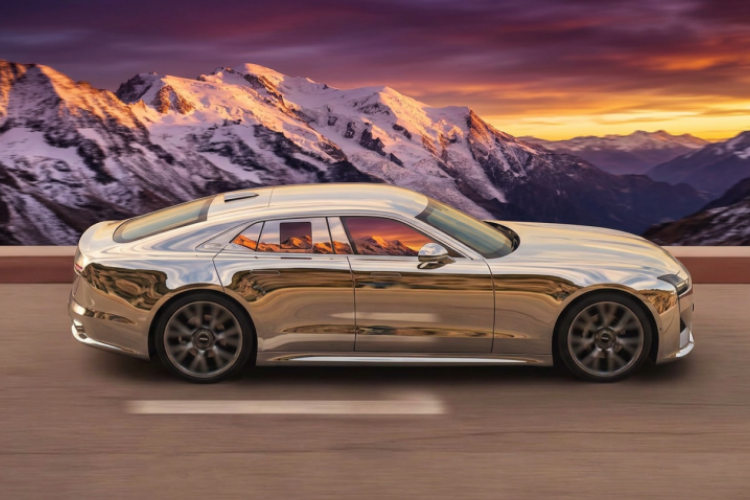
Jaguar’s Type 01 does neither. Instead of evolution or refinement, it represents a deliberate break — prioritising emotional reaction and visual identity over familiarity or restraint. Premium electric cars have increasingly converged on a shared design language — smooth surfaces, aerodynamic efficiency, restrained minimalism, and carefully optimised proportions. Efficient? Yes. Memorable? Not always.
Its proportions are exaggerated almost to the point of absurdity: the impossibly long bonnet, low roofline, aggressive stance, and dramatic surfacing feel deliberately designed to provoke reactions. Some people see futuristic elegance. Others see something completely alien.
But perhaps Jaguar understands something many manufacturers do not: in the ultra-luxury market, being disliked by many can be more valuable than being ignored by everyone.
This places it in direct conceptual competition with ultra-luxury EV offerings from established premium manufacturers such as Mercedes-Benz and BMW, rather than mass-market electric models.
Jaguar Only Needs a Few Buyers
The Psychology of Ultra-Luxury Buyers
In the ultra-luxury segment, purchasing behaviour is less about consensus and more about distinction. Buyers are often motivated by exclusivity, design originality, and perceived cultural relevance rather than mass approval.
For this audience, the question is not “does everyone like it?” but “does it feel different enough to justify its place in my collection or garage?”
That shift in mindset is central to Jaguar’s strategy. The Type 01 does not need to appeal broadly — it only needs to feel irreplaceable to a small number of buyers who value rarity over convention.
This is where the strategy becomes commercially meaningful.
The internet may appear overwhelmingly divided on the Type 01, but Jaguar likely does not care about mass approval. The company is no longer chasing volume sales in the way German rivals traditionally have. Instead, it appears to be targeting exclusivity, visibility, and desirability among a smaller group of wealthy buyers.
For every ten people who dismiss the car as ridiculous, there may be two who find its boldness irresistible.
And in the six-figure luxury market, those two people may be all Jaguar needs.
Monaco Wasn’t an Accident
The Risk Behind the Theatre
While the theatrical marketing approach has successfully amplified attention, it also introduces a risk: the gap between concept identity and production reality.
Historically, many concept-driven vehicles lose much of their visual extremity when adapted for real-world manufacturing, regulations, and usability requirements. If the production version of the Type 01 is significantly softened, Jaguar risks undermining the very impact that has made the car so widely discussed.
In that scenario, the brand could find itself with maximum pre-launch attention but reduced post-launch surprise — a difficult balance to maintain in a market driven by novelty cycles.
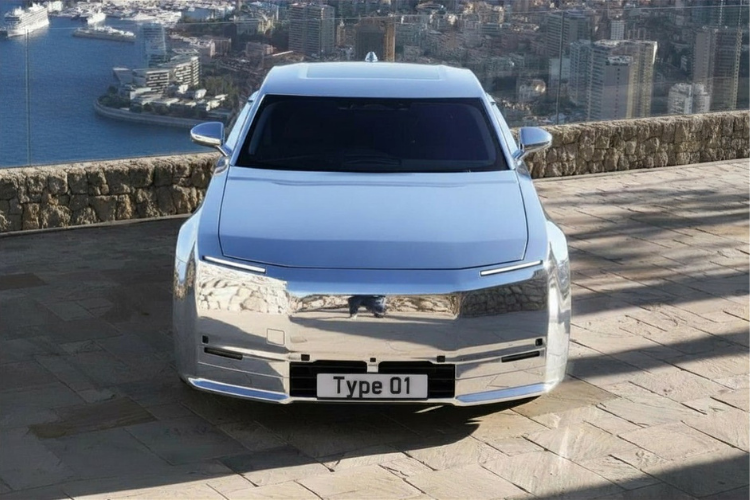
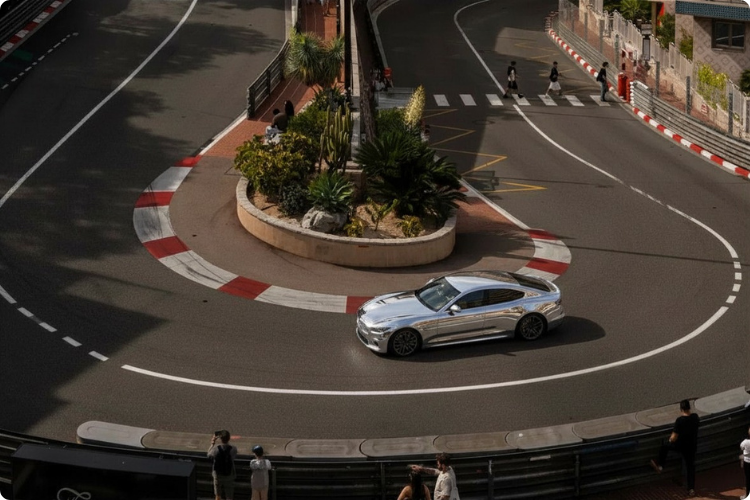
Jaguar’s recent appearance at the Monaco E-Prix only reinforced the theatre surrounding the Type 01 project.
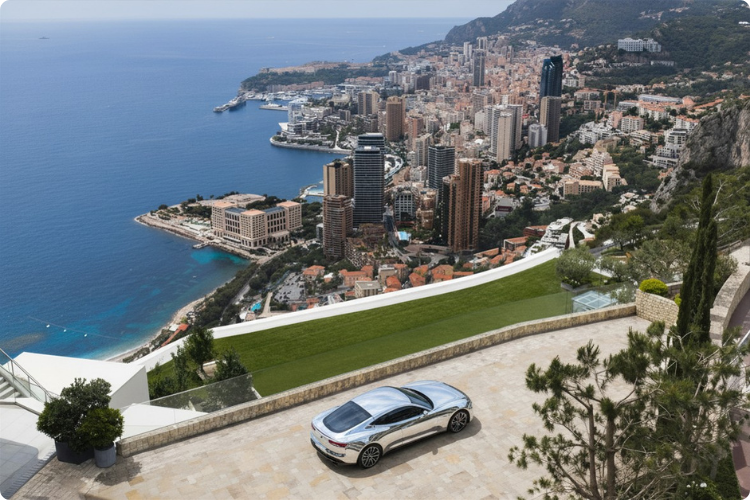
Few places communicate luxury, spectacle, and excess more effectively than Monaco. Sweeping silently through Monte Carlo’s famous streets, the Type 01 looked less like a conventional production car and more like a rolling design statement.
The event also highlighted Jaguar’s increasingly aggressive marketing strategy. Rather than revealing everything at once, the company has turned the Type 01 into a slow-burning spectacle — releasing camouflaged prototypes, teasing design details, and constantly feeding discussion online.
Each appearance extends the conversation.
Each debate strengthens awareness.
And every article, criticism, or social media argument keeps the Type 01 at the centre of automotive culture.
A Dangerous Gamble
A Changing Competitive Pressure
The broader luxury performance landscape is also shifting rather than standing still. While Jaguar commits fully to an electric-only future, competitors continue to hedge their positions.
Brands such as Alpina and other performance-focused divisions of established manufacturers still explore high-displacement internal combustion models alongside electrified offerings. This dual-track strategy allows them to retain traditional enthusiasts while gradually adapting to regulatory and market changes.
Jaguar’s approach is more absolute. There is no transitional portfolio — only a complete repositioning around electric identity, design experimentation, and brand reinvention.
That clarity is bold, but it also removes the safety net that other manufacturers still rely on.
Pricing and Competitive Positioning
Although Jaguar has not officially confirmed pricing, the Type 01 is widely expected to sit in the ultra-luxury EV bracket, with estimates likely placing it in the £120,000–£180,000+ range depending on specification and performance variants. This positions it well above mainstream luxury EVs, and firmly within the territory occupied by high-end performance electric grand tourers.
In this space, its most direct conceptual rivals are expected to include vehicles such as the Porsche Taycan Turbo and Turbo GT models, the Lucid Motors Air Sapphire, and high-performance variants of the Mercedes-Benz EQS lineup. Each of these represents a different interpretation of luxury electric performance — from engineering precision to range-focused efficiency to outright acceleration leadership.
Against this backdrop, Jaguar’s strategy is not simply to compete on performance metrics alone, but to differentiate through design language, exclusivity, and emotional positioning — areas where specification sheets matter less than identity.
Of course, none of this guarantees success.
Jaguar is attempting one of the riskiest reinventions the automotive industry has seen in decades. At a time when some manufacturers are slowing their EV ambitions and consumers remain divided about full electrification, Jaguar has committed itself entirely to the electric future.
Meanwhile, rivals continue offering powerful combustion alternatives. BMW and Alpina still see value in high-performance V8-powered luxury cars — a direction that feels almost rebellious in today’s climate.
Jaguar, however, appears determined to go in the opposite direction.
No compromise.
No hybrid halfway point.
No retreat.
The Type 01 represents a complete break from the past, even while subtly referencing iconic Jaguars like the legendary C-Type through its emphasis on presence, composure, and drama.
One of the most significant aspects of Jaguar’s strategy is that the Type 01 is not intended to stand alone. It is the first of a planned family of ultra-luxury electric vehicles, all built on a dedicated new platform designed specifically for Jaguar’s repositioning.
This means the Type 01 is less a final statement and more a starting point — a design and brand blueprint that will define the next phase of Jaguar’s identity across multiple models.
The Most Important Jaguar in Decades
Whether the Type 01 succeeds or fails commercially almost feels secondary to what it already represents.
For the first time in years, Jaguar matters again.
People are debating the brand passionately. Designers are analysing it. Journalists are arguing over it. Enthusiasts are emotionally reacting to it. In a crowded automotive world dominated by safe decisions and predictable design, Jaguar has chosen chaos, risk, and attention.
That takes confidence.
Or desperation.
Possibly both.
But if the company manages to convert this extraordinary level of curiosity into actual demand, the Type 01 could become far more than just another electric luxury car. It could become the car that completely redefined what modern Jaguar stands for.
In today’s automotive industry, it may prove to be the most consequential move of all.
 Call our expert team on