EVs Now Cheaper Than Petrol Cars for the First Time, Analysis Shows.
For the first time, new electric vehicles (EVs) are, on average, cheaper to buy than their petrol counterparts, according to new market analysis—marking a significant milestone in the shift toward electrification.
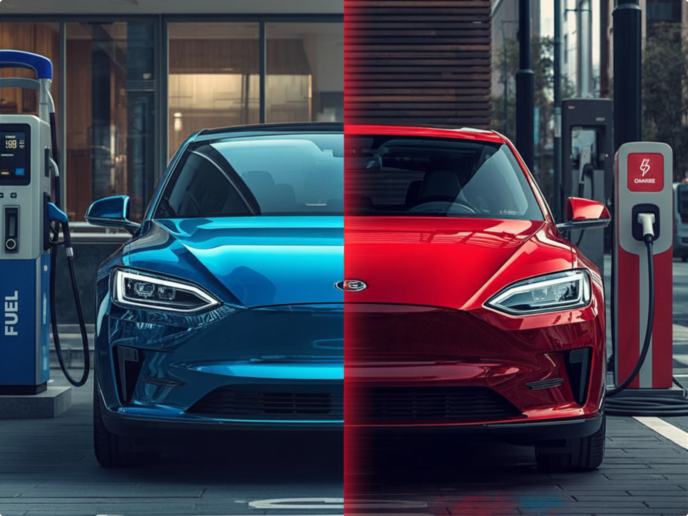
Based on advertised prices after discounts, the average cost of a new EV now stands at £42,620, compared with £43,405 for a petrol model. This creates a £785 price advantage in favour of electric cars, based on figures from Autotrader. While the margin is relatively modest, it represents a symbolic turning point for a market long defined by higher upfront EV costs.
The price realignment has been driven by a combination of government support and sustained discounting by manufacturers. Incentives such as electric car grants have helped reduce the upfront cost burden, while carmakers—under pressure to meet emissions targets and stimulate demand—have significantly increased price reductions across their EV line-ups.
According to the Society of Motor Manufacturers and Traders (SMMT), manufacturers have already invested billions into EV development and now offer a choice of more than 160 models in the UK alone. However, despite this rapid expansion in product availability, demand has not always kept pace, prompting brands to rely heavily on discounts to maintain sales momentum.
This trend is reflected in recent pricing data. After reaching a record high of 12.8% in March—coinciding with the key plate-change period—average discounts on new EVs have eased slightly to 11.7% so far in April. Although this represents a month-on-month decline, discount levels remain historically elevated and continue to play a crucial role in narrowing, and now reversing, the price gap between electric and petrol vehicles.
Industry experts suggest that this pricing shift could have a meaningful impact on buyer behaviour. Bex Kennett, head of new car at Autotrader, noted that a combination of government support and aggressive discounting earlier in the year has brought EV pricing to a tipping point.
At the same time, broader global factors are influencing consumer attitudes. Geopolitical uncertainty—including tensions involving Iran—has renewed concerns around fuel prices and long-term energy security. As a result, more buyers are exploring alternatives to traditional petrol and diesel vehicles, driving increased interest in both new and used EVs.
Autotrader data indicates that this interest is already translating into higher engagement. The number of consumers viewing new cars on its platform has risen by around 20% so far in April, supported not only by improved affordability but also by the arrival of new ‘26 plate’ vehicles and continued government backing.
However, questions remain about whether this surge in interest will translate into sustained long-term demand. Previous spikes in EV consideration have not always resulted in consistent purchasing trends, often due to concerns around charging infrastructure, range anxiety, and residual values.
Even so, the current convergence of lower prices, wider model availability, and shifting consumer priorities may represent a more durable inflection point. For fleet operators in particular—who are highly sensitive to total cost of ownership—the narrowing upfront price gap, combined with lower running costs, could accelerate adoption rates.
The broader new car market is also experiencing heightened pricing competition. Across all fuel types, average discounts have softened slightly to 10% in April but remain well above the 8.7% recorded a year ago. This suggests that manufacturers are continuing to use pricing strategies aggressively to attract buyers in an increasingly competitive and uncertain market environment.
Looking ahead, the sustainability of current EV pricing will likely depend on several factors, including the continuation of government incentives, improvements in supply chains, battery cost reductions, and the pace at which consumer demand strengthens. If discounting begins to ease without a corresponding rise in demand, the current price advantage may prove temporary.
Nevertheless, the fact that EVs have reached price parity—and even a slight advantage—over petrol models marks a pivotal moment for the automotive industry. It signals that the transition to electric mobility is no longer just policy-driven, but increasingly shaped by market forces and consumer economics.
Explore our extensive range of electric cars and vans available for lease.
Speak to our team today to find the right solution for your needs and see how Commercial Vehicle Contracts can drive your business forward.


 Call our expert team on