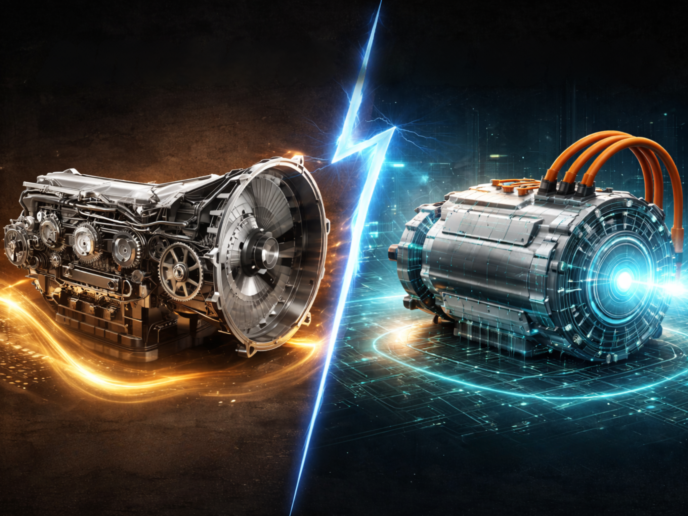
As electric vehicles continue to grow in popularity, many drivers and fleet managers are asking the same question: do electric vehicles drive the same as automatic vehicles?
While both types of vehicles remove the need for a clutch and manual gear changes, there are several key differences in how they work, how they perform, and how they are maintained.
For those considering vehicle leasing, the decision between an automatic petrol or diesel vehicle and an electric vehicle (EV) also comes with different cost and maintenance benefits.
In this guide, we’ll explain the difference between automatic and electric vehicles, how they compare when leasing, and which option may be the better choice for your driving needs. We’ll also cover commercial vehicles such as vans and fleet vehicles, which are increasingly available as automatic or electric options.
What Is an Automatic Vehicle?
An automatic vehicle is a road vehicle that changes gears automatically without requiring the driver to use a clutch or manually select gears.
Instead of shifting gears yourself, the vehicle’s transmission manages this process depending on speed and engine performance.
Common Automatic Vehicle Models
Some popular automatic vehicles include:
- Toyota Corolla (automatic variant)
- BMW 3 Series (automatic variant)
Automatic Gear Selector
Most automatic vehicles use a gear selector with the following options:
- P – Park
- R – Reverse
- N – Neutral
- D – Drive
Once placed in Drive, the vehicle handles gear changes automatically while you focus on steering and controlling speed.
Fuel Type & Maintenance: Automatic vehicles still run on petrol or diesel engines, meaning they require traditional fuel and regular engine maintenance.
What Is an Electric Vehicle?
An electric vehicle (EV) is powered by electric motors and rechargeable batteries instead of an internal combustion engine.
Popular examples include:
Electric Gear Selector
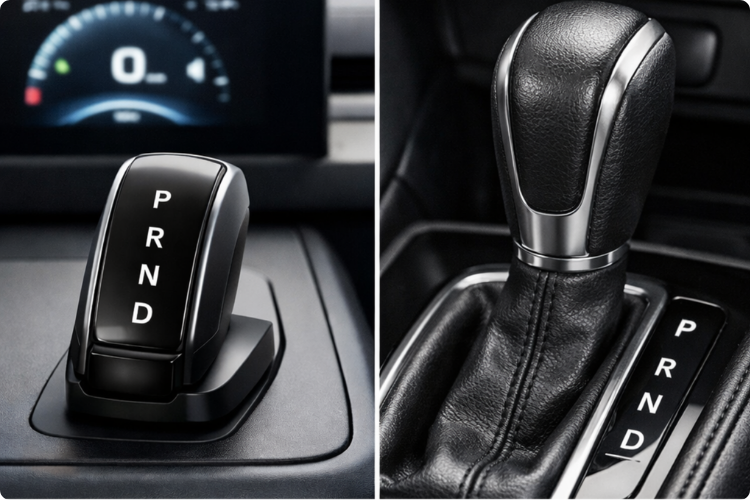
Electric vehicles feature a simple gear selector similar to that of automatic vehicles:
- P – Park
- R – Reverse
- N – Neutral
- D – Drive
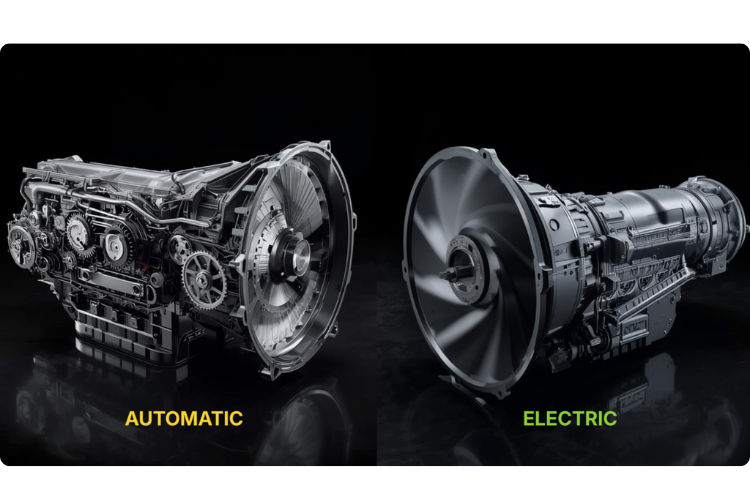
Unlike petrol or diesel vehicles, most electric vehicles use a single-speed transmission, meaning they do not shift through multiple gears.
This results in smooth acceleration and instant power delivery.
Do Electric Vehicles Drive the Same as Automatic Vehicles?
In terms of operation, electric vehicles and automatic vehicles feel very similar to drive.
Similarities
Both vehicle types:
- Do not require a clutch
- Use only two pedals (accelerator and brake)
- Allow you to select Drive and start moving immediately
- Are generally easier to drive than manual vehicles
This means drivers who are used to automatic vehicles usually adapt to electric vehicles quickly.
Key Differences Between Automatic and Electric Vehicles
1. Gear Changes
- Automatic petrol or diesel vehicles have multiple gears, which the transmission shifts automatically while driving.
- Electric vehicles typically have one single gear.
Impact:
- Electric vehicles accelerate smoothly
- No gear shifts occur
- Power delivery feels instant
2. Acceleration and Performance
- Electric vehicles produce instant torque, meaning they can accelerate quickly from a standstill.
- Example: Tesla Model 3 accelerates faster than many traditional petrol vehicles.
- Automatic petrol vehicles build speed gradually through multiple gears.
3. Noise and Driving Comfort
- Electric vehicles are significantly quieter than petrol or diesel vehicles.
- Automatic vehicles produce engine noise during acceleration.
- Electric motors operate almost silently, making EVs comfortable in urban driving.
4. Regenerative Braking
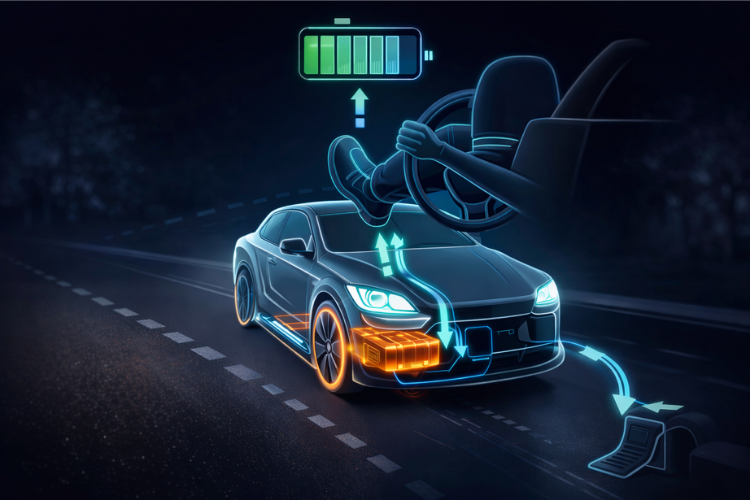
- Many electric vehicles use regenerative braking, which helps recharge the battery when slowing down.
- Lifting your foot off the accelerator slows the vehicle and recovers energy.
- Some EVs offer one-pedal driving, reducing the need to use the brake pedal.
- Example: Nissan Leaf
Leasing Automatic vs Electric Vehicles
Vehicle leasing has become a popular way to drive or operate newer vehicles without long-term ownership.
Benefits of Leasing
- Lower upfront costs
- Fixed monthly payments
- Access to newer vehicles with modern technology
- Reduced worries about resale value
Leasing is particularly appealing for electric vehicles, as technology evolves quickly.
Leasing an Electric Vehicle
Lower Running Costs
- EVs often have lower energy costs compared to petrol or diesel fuel.
- Home charging reduces daily operating expenses.
Reduced Maintenance
Electric vehicles have fewer moving parts, requiring less maintenance:
- No engine oil changes
- No exhaust system maintenance
- Fewer mechanical services
This reduces costs during the lease period.
Access to New Technology
- Leasing allows upgrades to newer EV models every few years.
- Drivers benefit from longer ranges, faster charging, and software improvements.
Leasing an Automatic Petrol or Diesel Vehicle
Greater Range
- Petrol and diesel vehicles can travel long distances without stopping for charging, ideal for:
- Frequent motorway driving
- Long-distance commuting
- Areas with limited charging infrastructure
Fast Refuelling
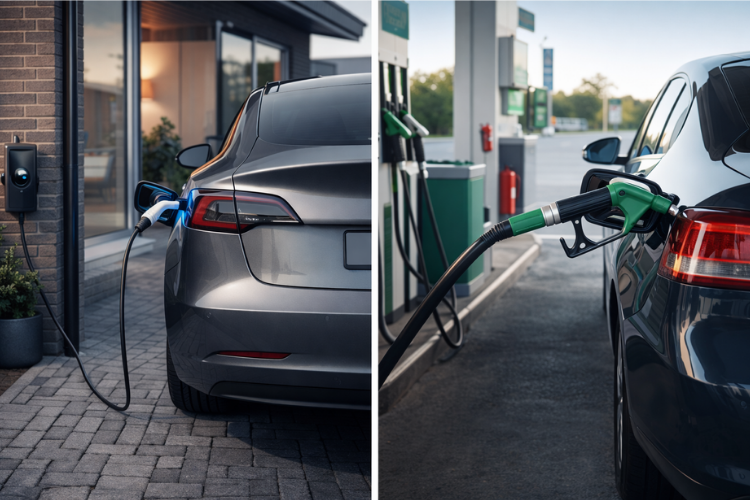
- Refuelling petrol or diesel vehicles only takes a few minutes, unlike EV charging.
Familiar Driving Experience
- Many drivers prefer the familiarity of traditional engines, especially if they haven’t driven EVs before.
Maintenance Considerations When Leasing
Electric vehicles:
- Fewer moving parts → lower mechanical maintenance
- Typical servicing: tyres, brakes, cabin filters, software updates
Automatic petrol/diesel vehicles:
- Engine oil changes
- Fuel system maintenance
- Gearbox servicing
- Exhaust repairs
Leasing advantage: Many lease packages include servicing, making costs predictable and reducing downtime.
Automatic and Electric Commercial Vehicles
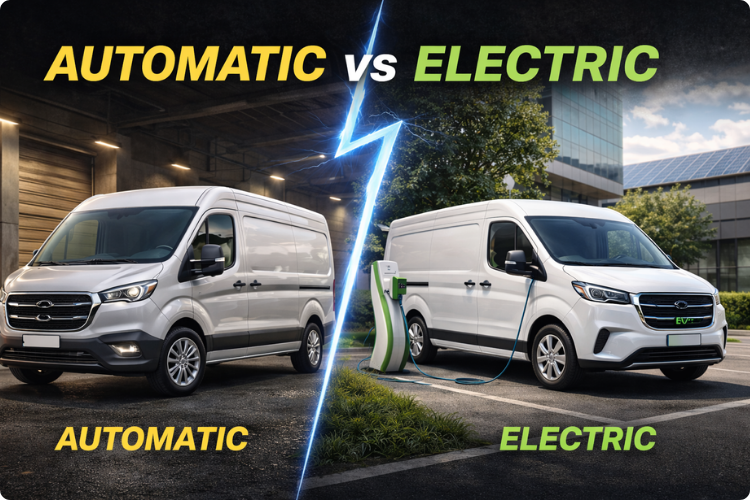
While the discussion so far has focused on passenger vehicles, these concepts also apply to commercial vehicles, such as vans, delivery trucks, and fleet vehicles.
How They Drive
- Automatic commercial vehicles remove clutch use, making urban driving easier.
- Electric commercial vehicles deliver instant torque, making heavy loads easier to move from a standstill.
- Drivers transitioning from automatic to electric commercial vehicles often notice smoother rides and quieter operation.
Maintenance Benefits for Fleets
- Electric commercial vehicles have fewer moving parts → lower repair costs
- Regenerative braking reduces brake wear
- No need for frequent engine oil or exhaust maintenance
Leasing Commercial Vehicles
- Leasing allows fleets to access newer vehicles with better efficiency or EV ranges
- Many lease packages include maintenance and servicing
- Upgrading every few years keeps fleets modern and environmentally friendly
- Electric vans are ideal for city deliveries; automatic diesel vans remain strong for long-distance and heavy-load routes
Automatic Commercial Vehicle Examples
Automatic transmissions are common in modern commercial vehicles, especially for fleets operating in busy urban areas where frequent stopping and starting occurs.
Some well-known automatic commercial vehicles include:
- Ford Transit Automatic – Popular van for deliveries and fleet use.
- Mercedes-Benz Sprinter Automatic – Widely used in logistics and commercial fleets.
- Volkswagen Crafter Automatic – Large van, automatic gearbox for easier city and long-distance driving.
- Toyota Hilux Automatic – A well-known pick-up truck used in construction, utilities, and off-road environments.
Automatic transmissions make commercial driving easier by removing the need for constant clutch use, which can reduce driver fatigue during long workdays.
Electric Commercial Vehicle Examples
Electric commercial vehicles are becoming increasingly common as businesses look to reduce fuel costs and meet environmental targets.
Some popular electric commercial vehicles include:
- Ford E-Transit – Fully electric version of the Transit; instant torque and lower running costs.
- Mercedes-Benz eSprinter – Electric variant, suitable for urban deliveries.
- Volkswagen e-Crafter – Electric large van, ideal for city logistics and low-emission zones.
- Nissan e-NV200 – Small electric van, widely used for last-mile deliveries.
- Maxus T90EV – One of the first fully electric pick-up trucks available in Europe.
Electric commercial vehicles are particularly well-suited to urban deliveries, service fleets, and businesses operating in low-emission zones.
Are Electric Vehicles Better Than Automatic Vehicles?
The choice depends on driving habits, budget, and access to charging.
Electric vehicles may be better for:
- City driving
- Lower running costs
- Drivers with home charging
- Environmentally conscious users
Automatic petrol/diesel vehicles may be better for:
- Long-distance travel
- Quick refuelling needs
- Areas with limited charging infrastructure
| Feature / Vehicle Type | Automatic Vehicles (Examples) | Electric Vehicles (Examples) | Notes / Benefits |
|---|---|---|---|
| Passenger Vehicles | Toyota Corolla (Automatic), BMW 3 Series (Automatic) | Tesla Model 3, Nissan Leaf, Hyundai Kona Electric | Covers typical road-going cars |
| Commercial Vehicles / Vans | Ford Transit Automatic, Mercedes-Benz Sprinter Automatic, Volkswagen Crafter Automatic, Toyota Hilux Automatic | Ford E-Transit, Mercedes-Benz eSprinter, Volkswagen e-Crafter, Nissan e-NV200, Maxus T90EV | Includes fleet-friendly options for urban and long-distance use |
| Transmission | Multi-gear automatic | Single-speed electric motor | EVs do not require gear changes |
| Pedals | Accelerator + Brake | Accelerator + Brake | Same as automatic, easy to switch |
| Clutch | Not required | Not required | Simple driving experience |
| Acceleration | Gradual, depending on gears | Instant torque, smooth and fast | EVs excel in stop-start city driving |
| Noise | Engine noise present | Very quiet | Quieter for urban driving and fleet comfort |
| Maintenance Needs | Oil changes, exhaust, gearbox servicing | Tyres, brakes, cabin filter, software updates | EVs have fewer moving parts → lower maintenance |
| Fuel / Energy | Petrol or diesel | Electricity (battery-powered) | EVs reduce fuel costs, especially with home or depot charging |
| Range | Long-distance without refuelling | Dependent on battery & charging network | Petrol/diesel vehicles suit long journeys; EVs are better for urban/short-range routes |
| Refuelling / Charging | 2–5 minutes at the petrol station | Home charging overnight or public fast chargers | Consider route planning for EVs |
| Regenerative Braking | No | Yes | Reduces brake wear, enables one-pedal driving |
| Leasing Benefits | Gradual, depending on gears | Fixed monthly costs, lower running costs, and access to the latest EV technology | Leasing simplifies fleet and personal vehicle budgeting |
| Ideal Use | Long-distance commuting, heavy-load routes | City driving, urban deliveries, environmentally conscious fleets | EVs excel in stop-start and city traffic; automatic petrol/diesel vehicles excel on highways |
If you’re new to leasing or want to understand each stage in detail, our simple vehicle leasing process guide walks you through everything step by step.
From small, medium, or large panel vans to pickups, dropsides, tippers, or bespoke van conversions, we offer a comprehensive range of makes and models— many available with automatic transmission — including electric and hybrid options — to meet the diverse needs of your business. Alongside our commercial vehicle options, we also provide a wide range of cars, including petrol, diesel, hybrid, and fully electric models for both business and personal leasing.
You can explore our full range of services and offerings, including everything from tailored business van leasing solutions and flexible finance options to bespoke vehicle conversions, maintenance packages, and support for electric and hybrid vehicles. Our services are designed to help your business operate efficiently, reduce costs, and stay ahead with the latest commercial vehicle solutions.
For a clear breakdown of how van leasing works and the advantages for your business, visit our comprehensive UK van leasing explained guide.
 Call our expert team on