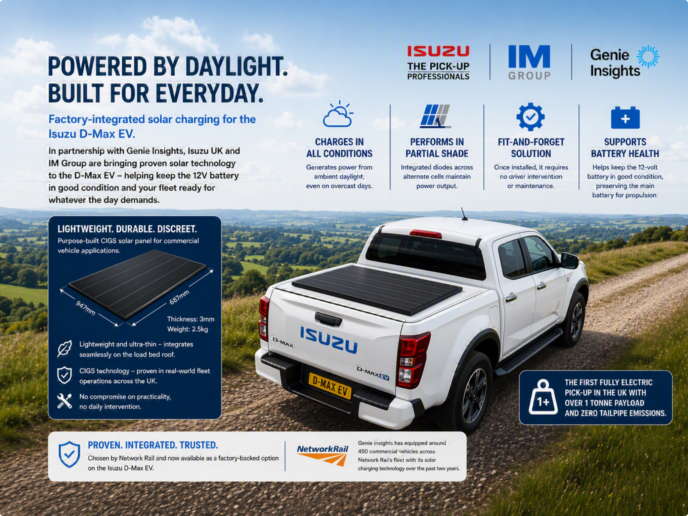
Isuzu has expanded the capabilities of its all-electric D-Max EV with the introduction of an optional factory-fitted solar charging system, designed to maintain the vehicle’s 12V battery and support the reliability of its onboard electrical systems.
Developed in partnership with Genie Insights, the 75-watt solar solution is aimed primarily at fleet operators, particularly those running vehicles with power-hungry auxiliary equipment.
By keeping the 12V battery topped up, the system reduces reliance on the DC-DC converter, easing load on the vehicle’s high-voltage system. This supports overall efficiency and helps maintain consistent battery performance during intensive daily use.
Why the 12V System Matters in EVs
In electric vehicles, the 12V system remains essential for core functions such as lighting, control modules, door locks, telematics, and safety systems. If the 12V battery is depleted, the vehicle can become immobilised even if the high-voltage traction battery is fully charged. This makes auxiliary power management a key reliability factor for fleet operators.
The collaboration between Isuzu UK, its importer IM Group and Genie Insights stems from successful real-world fleet deployments. The partnership first took shape through Network Rail, which already operated diesel-powered Isuzu D-Max models. Since then, Genie Insights has equipped around 450 commercial vehicles across Network Rail’s wider fleet with its solar charging technology over the past two years, demonstrating the system’s effectiveness in demanding operating conditions.
Purpose-built for commercial vehicle applications, the lightweight CIGS (copper indium gallium selenide) solar panel is mounted on the load bed roof. Measuring 947mm long by 687mm wide, the panel weighs just 2.5kg and is only 3mm thick, allowing it to integrate seamlessly without compromising practicality.
While 75 watts may seem modest compared to the vehicle’s main battery capacity, the system is designed for continuous trickle charging rather than propulsion. Over a working day, this can help offset parasitic electrical loads from tracking systems, telematics, sensors, and standby electronics that continue drawing power even when the vehicle is not in active use.
Unlike traditional solar panels that rely on strong sunlight, the CIGS technology generates power from ambient daylight, enabling it to continue producing electricity throughout the UK’s often overcast conditions. Its design also maintains performance when partially shaded, thanks to integrated diodes across alternate cells. Once installed, the system requires no driver intervention, making it a genuine fit-and-forget solution for fleet operators.
The use of CIGS technology is particularly relevant in the UK context, where variable cloud cover limits the effectiveness of conventional solar systems. By maintaining output in low-light conditions, the system is better suited to real-world operating environments rather than idealised peak-sunlight conditions.

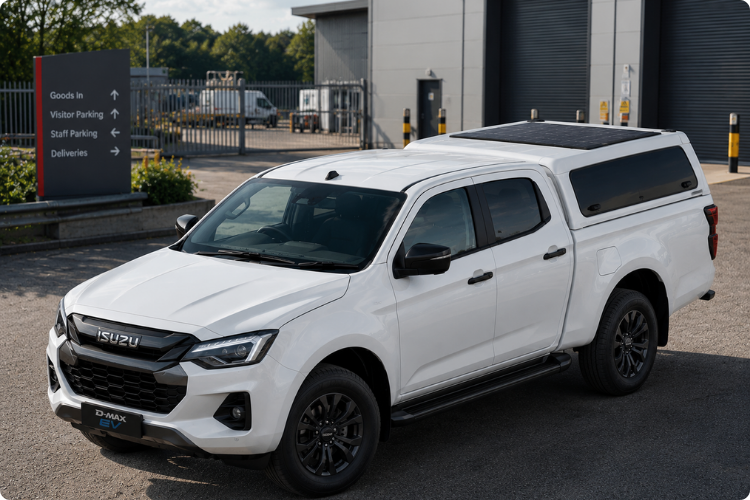
CIGS thin-film solar technology fitted to the D-Max EV, designed to maintain 12V system charge by generating power from ambient daylight in everyday fleet operation.
Although solar panels have featured on selected passenger vehicles in recent years, Isuzu is among the first mainstream manufacturers to apply the technology as a factory-integrated solution for a commercial electric pick-up. Rather than extending driving range directly, the system is designed to keep the 12V battery in good condition, helping preserve the vehicle’s main battery for propulsion and supporting reliability in demanding fleet applications.
Commenting on the new option, Alan Able, Managing Director of Isuzu UK, said the partnership with Genie Insights had developed rapidly thanks to the proven performance of the technology in real fleet operations. He added that offering the solar charging system as a factory-backed option allows customers to benefit from an integrated solution that complements the durability and capability for which the D-Max is well known.
The D-Max EV also continues to stand out in the growing electric pick-up market as the first fully electric pick-up available in the UK capable of carrying a payload of more than one tonne while delivering zero tailpipe emissions.
For fleet operators, the value of the system is less about energy generation and more about operational resilience. Even small reductions in battery-related faults or jump-start interventions can translate into improved uptime, reduced maintenance calls, and lower whole-life operating costs across large vehicle fleets.
To view more vehicles suited to commercial and fleet operations, explore our range of vans and pick-ups.
Vehicle Customisation and Fleet Readiness
Every business has different operational demands, and vehicles can be specified and adapted to suit those requirements. As part of a leasing solution, vehicles can be professionally prepared to be site-ready before delivery.
Available fleet-fit options include:
- Safety and visibility equipment: beacons, lightbars, and Chapter 8 chevrons to support compliance and improve on-site visibility
- Load protection and security: hard tops, roller shutters, sports bars, and load bed liners
- Towing solutions: tow bars and electrics for additional hauling capability
- Specialist access equipment: cherry picker and elevated work platform conversions
- Branding and livery: signwriting and vinyl wraps to support corporate identity and mobile advertising
All modifications are completed prior to delivery, ensuring vehicles arrive fully equipped and ready for immediate operational use. This streamlined approach reduces downtime and removes the need to coordinate multiple suppliers.
 Call our expert team on