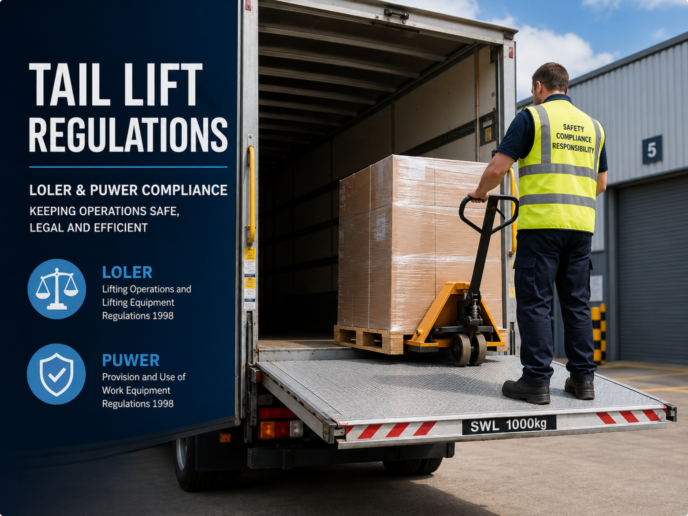
Tail lifts play a vital role in the transport and logistics industry, enabling the safe loading and unloading of goods from commercial vehicles. Whether used by delivery fleets, haulage companies, retailers, or waste management operators, tail lifts help improve efficiency and reduce manual handling risks.
However, because tail lifts are lifting equipment that can pose significant safety hazards if not properly maintained or operated, they are subject to strict UK health and safety legislation. The two primary regulations governing tail lifts are the Lifting Operations and Lifting Equipment Regulations 1998 (LOLER) and the Provision and Use of Work Equipment Regulations 1998 (PUWER).
Understanding these regulations is essential for fleet operators, transport managers, and business owners seeking to maintain compliance, protect employees, and minimise operational downtime.
Both LOLER and PUWER are enforced by the Health and Safety Executive (HSE), which has the authority to investigate incidents and take enforcement action where businesses fail to meet their legal obligations.
Why Tail Lift Regulations Matter
Tail lifts are subjected to frequent use, heavy loads, and varying environmental conditions. Over time, components such as hydraulic systems, platforms, hinges, and electrical controls can wear or deteriorate. Without regular inspection and maintenance, defects may go unnoticed, increasing the risk of equipment failure, injury, or damage to goods.
Regulatory compliance helps ensure that tail lifts remain safe throughout their service life and that operators have confidence in the equipment they use daily.
Understanding LOLER
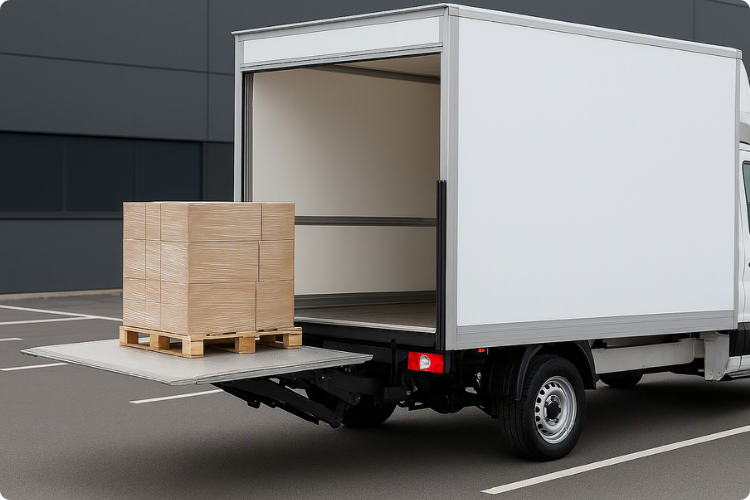
The Lifting Operations and Lifting Equipment Regulations 1998 (LOLER) were introduced to ensure that lifting equipment used in the workplace is safe, properly maintained, thoroughly examined, and suitable for its intended purpose.
As tail lifts are designed to raise and lower loads, they fall within the scope of LOLER. The regulations require employers to take a proactive approach to equipment safety through regular thorough examinations, inspections, and documented record keeping.
Thorough Examinations
One of the most important requirements under LOLER is the need for periodic thorough examinations by a competent person.
A thorough examination is far more detailed than a routine service or maintenance check. It is a systematic inspection designed to identify defects that could affect the safe operation of the equipment.
For most tail lifts used solely for lifting goods, a thorough examination is required at least every 12 months. However, if the equipment is used to lift people or operates in particularly demanding environments, examinations may be required more frequently.
Following the inspection, a written report should be provided detailing:
- The condition of the equipment
- Any defects identified
- Recommendations for corrective action
- The date of the next examination
These records should be retained and readily available if requested during an audit or inspection.
Safe Working Load
Every tail lift must display its Safe Working Load (SWL) clearly and legibly. Operators must understand the load limits and ensure that goods being lifted do not exceed the manufacturer’s specified capacity.
Overloading remains one of the most common causes of excessive wear, mechanical failure, and safety incidents involving tail lifts.
Competent Operators
LOLER places significant emphasis on competence. Employers must ensure that anyone using a tail lift has received appropriate training and understands:
- Correct operating procedures
- Load positioning techniques
- Emergency stop functions
- Daily pre-use inspections
- Hazard awareness
Proper training helps reduce accidents caused by operator error and promotes a safer working environment.
The Role of PUWER
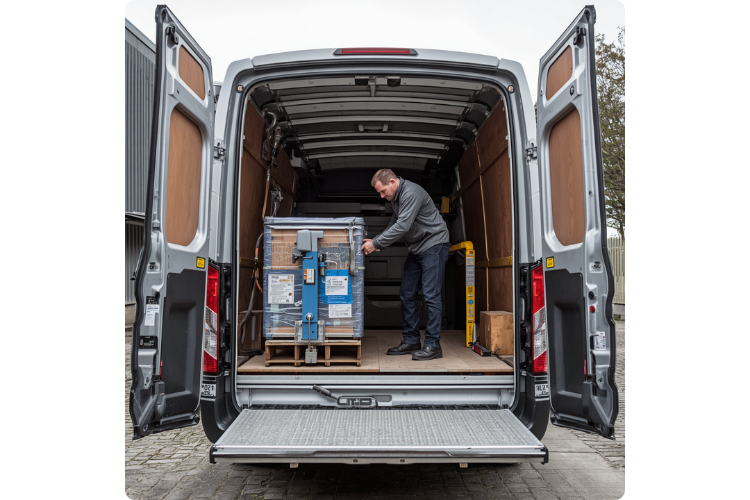
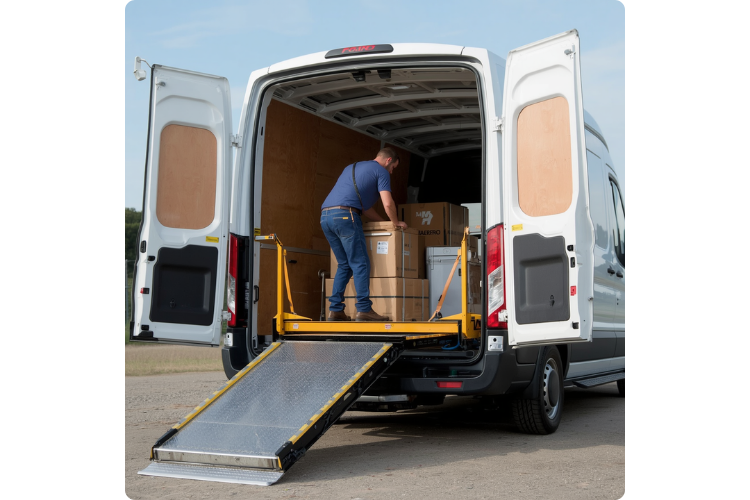
While LOLER focuses specifically on lifting operations, PUWER applies more broadly to work equipment used in the workplace.
Under PUWER, employers must ensure that tail lifts are:
- Suitable for their intended purpose
- Maintained in a safe condition
- Inspected when necessary
- Equipped with appropriate safety devices
- Used only by trained and authorised personnel
PUWER also requires businesses to assess risks associated with equipment use and implement measures to control those risks.
Together, PUWER and LOLER create a comprehensive framework for the safe operation and maintenance of tail lifts.
Additional PUWER Considerations for Tail Lift Operators
The Provision and Use of Work Equipment Regulations 1998 (PUWER) were introduced under the Health and Safety at Work etc. Act 1974, and came into force on 5 December 1998. The regulations place legal duties on employers, self-employed persons, and anyone responsible for work equipment to ensure that it is safe, suitable for its intended purpose, properly maintained, and operated by competent individuals.
PUWER applies to a wide range of workplace equipment, from hand tools and machinery to vehicles and mobile plant. As tail lifts are used as part of daily loading and unloading operations, they fall within the scope of these regulations and must be managed accordingly.
Beyond ensuring that equipment is suitable and maintained, PUWER places particular emphasis on machinery safety and risk reduction. Tail lifts contain moving mechanical and hydraulic components that can create trapping, crushing, and impact hazards if not adequately controlled. Employers must ensure that appropriate safety features, warning devices, and emergency controls remain effective throughout the equipment’s operational life.
The regulations also require equipment to be inspected at appropriate intervals and following any exceptional circumstances that could affect safety, such as accidents, significant repairs, or prolonged periods out of service. These inspections help identify potential defects before they develop into serious safety risks.
PUWER follows the principle that physical safeguards provide more reliable protection than behavioural controls alone. As a result, employers should prioritise engineering controls, safety devices, and equipment design measures before relying solely on operator training or administrative procedures.
Compliance with PUWER is closely linked to workplace risk assessments. Employers should identify hazards associated with the tail lift operation, assess who may be at risk, and implement suitable control measures to reduce the likelihood of injury. This process should form part of a wider safety management system that includes preventative maintenance, operator training, and regular equipment inspections.
By combining the requirements of PUWER with the inspection and examination obligations under LOLER, businesses can create a comprehensive approach to tail lift safety, helping to protect employees, maintain operational efficiency, and demonstrate regulatory compliance.
Daily Checks and Preventive Maintenance
In addition to statutory examinations, operators should perform routine pre-use checks before using a tail lift.
Typical checks may include:
- Inspecting the platform for damage
- Checking hydraulic hoses for leaks
- Testing control buttons and emergency stops
- Verifying that safety markings remain visible
- Looking for signs of corrosion, cracks, or excessive wear
Preventive maintenance programmes can help identify minor issues before they develop into costly repairs or safety concerns.
Consequences of Non-Compliance
Failure to comply with LOLER and PUWER can have serious consequences.
Potential outcomes include:
- Workplace accidents and injuries
- Damage to vehicles, equipment, or goods
- Increased vehicle downtime
- Enforcement action by the Health and Safety Executive (HSE)
- Improvement or prohibition notices
- Significant financial penalties and legal costs
Beyond the legal implications, non-compliance can also damage a company’s reputation and affect customer confidence.
Best Practice for Fleet Operators
Businesses can strengthen compliance by adopting a proactive approach to tail lift management. This includes:
- Maintaining an up-to-date register of all lifting equipment
- Scheduling LOLER examinations well in advance of expiry dates
- Keeping detailed service and inspection records
- Providing regular operator training and refresher courses
- Acting promptly on any reported defects
- Partnering with qualified inspection and maintenance providers
By integrating compliance into routine fleet management processes, organisations can reduce risk while improving operational reliability.
 Call our expert team on