The van that keeps Britain moving
An in-depth look at why the Ford Transit Custom continues to dominate the UK van market — and what the future holds.
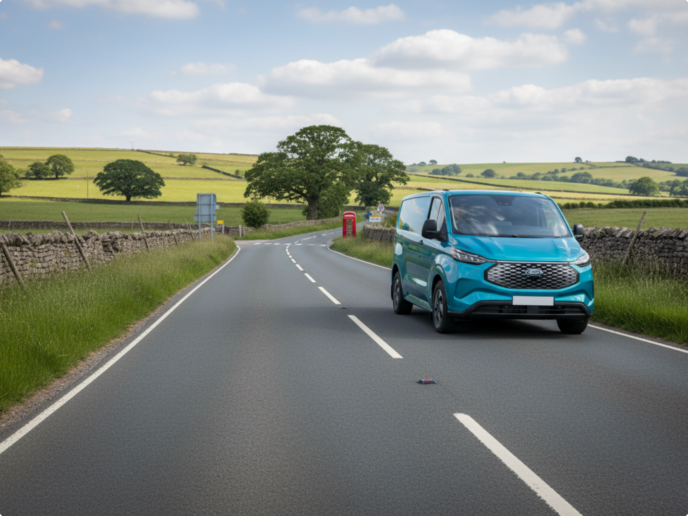
If you spend even a few minutes on UK roads, one thing becomes immediately clear — the Ford Transit Custom is everywhere.
From electricians weaving through city streets to delivery drivers racing against the clock, this mid-sized van has become the backbone of British business.
And in 2026, despite growing competition and a major shift toward electric vehicles, it remains firmly at the top as the UK’s most popular commercial vehicle.
Consistently ranking as the UK’s top-selling van, it has maintained its position through years of market change and increasing competition.
This isn’t just popularity — it’s dominance.
So what makes the Transit Custom so dominant — and can it hold onto that crown in an electric future?
A Market Under Pressure — and Rapidly Changing
The UK’s light commercial vehicle market has faced a challenging few years. Economic uncertainty, rising costs, and cautious business spending have all contributed to a slowdown in new vehicle registrations.
But beneath the surface, something much bigger is happening.
Key Trends Defining 2026
🔋 The Electric Shift
The push toward zero-emission vehicles is accelerating. Businesses are under increasing pressure to adopt cleaner transport solutions, particularly in urban areas.
🏙️ Clean Air Zones Expanding
ULEZ and similar schemes are forcing companies to rethink diesel fleets, especially in cities like London, Birmingham, and Manchester.
📦 E-commerce Still Booming
Online shopping continues to fuel demand for delivery vehicles — especially versatile mid-sized vans.
📡 Smarter Vans
Modern commercial vehicles are now packed with tech, from real-time fleet tracking to advanced driver assistance systems.
The #1 Choice: Ford Transit Custom
Despite all this change, the Ford Transit Custom continues to dominate the UK market — and it remains clearly ahead of its competitors.
Positioned perfectly between small vans and large panel vans, it hits a sweet spot that appeals to almost every type of business.
Why Businesses Keep Choosing It
✔ The Perfect Size
Big enough for serious work, small enough for tight city streets.
✔ Built for Everything
Used across industries:
- Construction
- Delivery and logistics
- Maintenance and repair
- Public sector fleets
✔ Proven Reliability
The Transit name has been trusted in the UK for decades — and that reputation still matters.
✔ Driver-Friendly Interior
Modern versions feel more like cars than vans, with digital displays, comfortable seating, and intuitive controls.
✔ Strong Value for Money
Low running costs, solid fuel efficiency, and excellent resale value make it a smart long-term investment.
Cost of Ownership: Looking Beyond the Purchase Price
While the upfront cost is important, many businesses choose the Transit Custom for its strong long-term value.
Its widespread use across the UK means parts are readily available and servicing is straightforward, helping to keep maintenance costs predictable. In addition, its strong reputation supports high resale values, making it a safer investment compared to less established competitors.
For fleet operators and small businesses alike, these factors combine to deliver a lower total cost of ownership over the vehicle’s lifespan.
How Businesses Use the Transit Custom Every Day
Across the UK, the Ford Transit Custom is more than just a popular van — it’s a core part of how businesses operate every day.
For tradespeople, it often serves as a fully equipped mobile workshop, fitted with shelving, storage systems, chapter 8 chevrons, and onboard power for tools. Its balance of size and practicality makes it ideal for carrying both equipment and materials while still being easy to manoeuvre in urban areas.
In the logistics sector, the Transit Custom plays a key role in last-mile delivery. Its ability to handle frequent stops, tight streets, and high parcel volumes makes it a natural fit for courier and e-commerce operations.
For larger fleets, standardising around a model like the Transit Custom simplifies maintenance, driver training, and fleet management — all of which contribute to improved efficiency and reduced costs.
⚡ Enter the Future: The E-Transit Custom
One of the biggest reasons the Transit Custom remains on top in 2026 is its evolution — particularly with the arrival of the E-Transit Custom.
This fully electric version is Ford’s answer to the rapidly changing commercial landscape.
What Makes the E-Transit Custom Stand Out?
- Zero-emission driving — ideal for urban and regulated zones
- Up to ~240 miles of range — enough for most daily business use
- Fast charging — reduces downtime between jobs
- Pro Power Onboard — power tools directly from the van
If you’re considering making the switch, it’s also worth exploring how the E-Transit Custom compares to other leading electric vans currently available in the UK.
Why It’s a Game-Changer
For many businesses, switching to electric can feel like a risk. But the E-Transit Custom makes that transition easier by combining a familiar platform with fully electric capability.
It allows companies to:
- Future-proof their fleets
- Reduce emissions
- Maintain the same practicality they’re used to
The Reality: Not Everyone Is Switching Yet
Despite its promise, adoption is still gradual.
Common concerns include:
- Higher upfront costs
- Limited public charging infrastructure
- Range anxiety for longer routes
However, for urban fleets and predictable routes, the E-Transit Custom is quickly becoming a serious contender.
Diesel vs Electric: What’s Right for Your Business?
As the market evolves, many businesses are now weighing up whether to stick with diesel or make the move to electric.
Diesel versions of the Transit Custom still offer clear advantages for certain users, including longer driving ranges, quick refuelling, and lower upfront costs. This makes them well-suited to long-distance journeys or mixed-use operations.
On the other hand, the E-Transit Custom is better suited to urban environments, where zero-emission driving, lower running costs, and access to clean air zones can provide significant benefits.
For many businesses, the decision ultimately comes down to how and where the vehicle is used — with some fleets already adopting a mix of both.
A Legacy That Still Matters
The success of the Transit Custom is also rooted in the long-standing reputation of the wider Transit range.
For decades, Transit vans have been a familiar and trusted presence on UK roads. That history of durability and dependability continues to influence buying decisions today, particularly among small businesses that rely on their vehicles every day.
In a competitive market, that level of trust remains a powerful advantage.
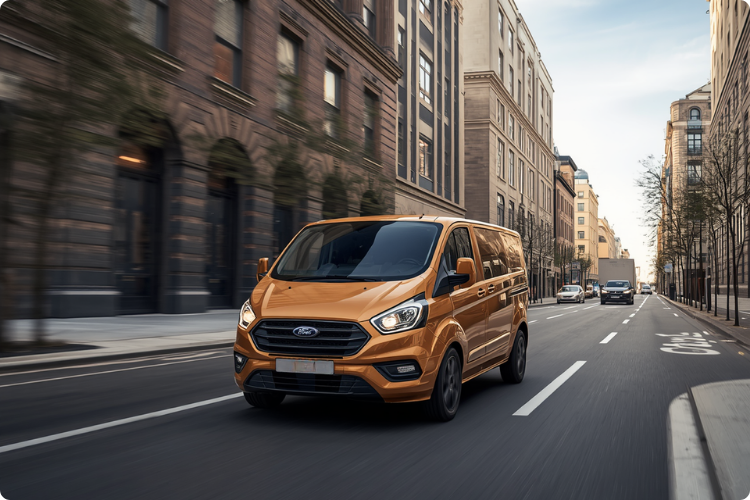
The Competition: Strong, but Not Strong Enough
While the Transit Custom leads, several rivals continue to compete for market share:
- Vauxhall Vivaro
- Volkswagen Transporter
- Renault Trafic
- Mercedes-Benz Sprinter
- Ford Transit (larger variant)
Each offers its own strengths — whether it’s pricing, premium features, or brand appeal — but none have yet managed to dethrone Ford’s mid-size powerhouse.
Why It Continues to Lead the Market
Even with increasing competition, the Transit Custom continues to lead because it consistently delivers where businesses need it most.
It doesn’t just excel in one area — it performs strongly across all of them:
- Practicality
- Cost
- Reliability
- Versatility
And now, with the addition of the E-Transit Custom, it’s also positioned for the future.
What Happens Next?
The UK commercial vehicle market is heading toward a major transformation.
By 2030, expect:
- A significant rise in electric van adoption
- Improved nationwide charging infrastructure
- Stricter emissions regulations
- Greater use of connected and smart vehicle tech
The big question isn’t whether the market will change — it’s whether today’s leaders can adapt fast enough.
Can the Transit Custom Stay on Top?
Despite its current dominance, the market is becoming increasingly competitive.
Rival manufacturers are investing heavily in electric vans, and new entrants are beginning to challenge traditional players with innovative, electric-first designs. As battery technology improves and costs begin to fall, the gap between the Transit Custom and its competitors could narrow.
Maintaining its position will depend on how effectively Ford continues to evolve the model — particularly as the industry moves toward a fully electric future.
 Call our expert team on