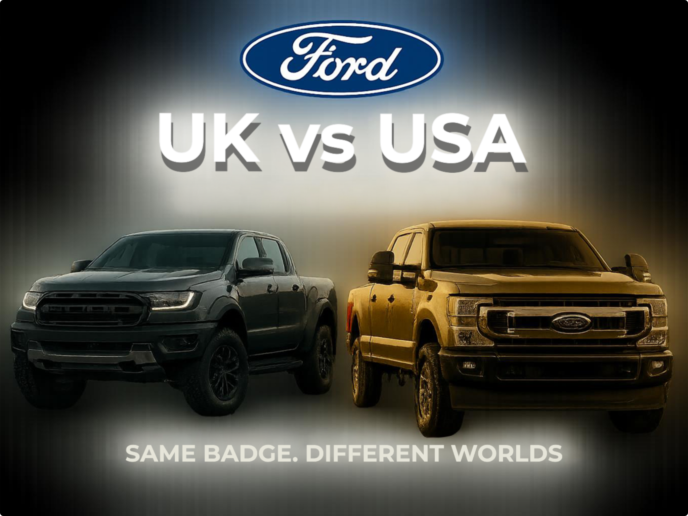
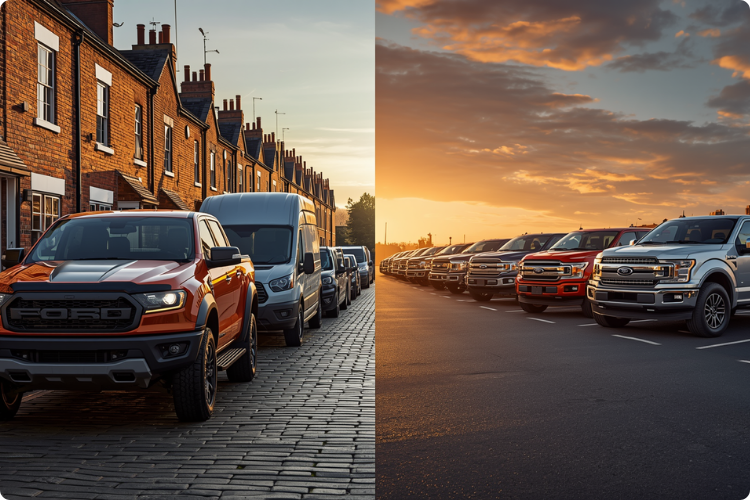
Landing in America, one thing became impossible to ignore: Ford trucks were everywhere.
Not just occasionally. They dominated entire roads. Outside supermarkets, hotels, restaurants and office parks, huge Ford pickups filled car parks in a way that would feel almost surreal to most British drivers. In the UK, Ford has long been associated with practical family cars and work vans — reliable hatchbacks, sensible commuters, and the backbone of small business transport. But in the United States, Ford represents something entirely different. There, the brand is built around enormous pickup trucks, giant SUVs and powerful vehicles designed for a completely different style of driving.
After spending time in America, it became clear that Ford is no longer simply one global car company selling slightly different products in different countries. Instead, it feels like two entirely separate automotive identities sharing the same badge.
The differences between Ford’s American and British lineups reveal much more than contrasting tastes in cars. They reflect two nations with different roads, different fuel prices, different histories of industrial development, and fundamentally different expectations about what a vehicle should do.
Ford’s Identity in Britain
In Britain, Ford built its reputation on accessibility and practicality. Cars like the Ford Fiesta, Ford Focus and Ford Mondeo became staples of British roads because they fit the realities of everyday life.
They were compact enough for crowded streets, efficient enough for high fuel prices, and affordable enough for ordinary households. For decades, Ford succeeded in Britain by understanding that most drivers needed sensible cars that could comfortably navigate narrow roads, tight parking spaces, and expensive running costs.
Historically, Ford of Europe developed almost independently from its American parent in product philosophy. From the 1970s onward, it competed in a completely different environment dominated by small hatchbacks from European rivals like Volkswagen, Peugeot and Renault. This forced Ford to engineer cars specifically for Europe rather than simply adapting American models.
In the UK, Ford became known as a practical brand — dependable, affordable and deeply embedded in everyday life.
But its identity in Britain is not just cars. It is also one of the most dominant forces in commercial transport.
The Ford Transit Empire in the UK
No discussion of Ford in Britain is complete without the Ford Transit.
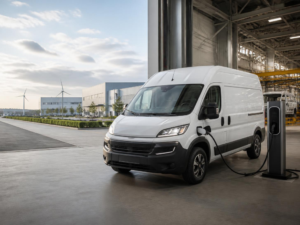
The Transit is not just a van. It is a national institution. It underpins construction, logistics, emergency services, utilities, and the entire “last-mile” delivery economy that has exploded with online shopping. In many ways, it is as culturally significant in Britain as the F-Series is in America.
But what makes Ford unique in the UK is that the Transit is not a single product — it is an entire ecosystem.
Ford Transit (Full-Size Van)
The original workhorse of the range. Used for:
- Construction and trade work
- Fleet logistics and delivery
- Passenger minibuses
- Specialist conversions (ambulances, refrigerated transport, mobile workshops)
It also forms the base for some of the most recognisable British commercial vehicle conversions. The Ford Transit underpins the iconic Luton van, where a large box body sits above the cab for maximum cargo space — a staple of UK removals and logistics.
Beyond that, the Transit chassis is one of the most versatile platforms in the British vehicle market, supporting a wide range of specialist body styles:
- Tipper – widely used in construction, landscaping and waste management, featuring a hydraulically operated rear bed that lifts to unload loose materials like soil, rubble or gravel.
- Dropside – a flatbed-style conversion with fold-down side panels, popular in general haulage and trade work where easy side access to cargo is essential.
- Curtainsider – a flexible body style with sliding fabric curtains on either side, commonly used in palletised freight and logistics because it allows rapid loading and unloading from multiple angles.
These variants highlight just how central the Transit platform is to the UK industry. Rather than being a single vehicle, it functions as a modular base for almost every type of light commercial transport need in Britain.
Ford Transit Custom
The Transit Custom is arguably the most important modern van in the UK.
It dominates:
- Plumbing, electrical and trade work
- Courier and parcel delivery fleets
- Service engineers and mobile technicians
- Small business operations
Its success comes from balancing payload capacity with car-like drivability, making it ideal for Britain’s dense urban environment.
Ford Transit Connect
The Transit Connect is a smaller, more urban-focused van designed for efficiency.
Used widely for:
- City deliveries
- Small business logistics
- Mobile services (IT, repairs, maintenance)
- Inner-city transport operations
It reflects Britain’s need for compact vehicles that can operate in constrained streets without sacrificing utility.
Ford Transit Courier
The Transit Courier is the smallest member of the Transit family.
Designed for:
- Postal delivery routes
- Rapid urban logistics
- Tight residential access work
It exists because British cities often require vehicles that prioritise footprint over load volume.
Why the Transit Defines Ford in Britain
The Transit family effectively functions as critical infrastructure.
Unlike in the US, where pickups dominate commercial roles, Britain relies heavily on enclosed vans due to:
- Narrow roads and alleyways
- Dense housing layouts
- Weather protection needs
- Strict urban parking constraints
- High parcel delivery demand
The result is a market where Ford vans are not just common — they are essential to the functioning of the economy.
America’s Love Affair With Trucks
America developed in the opposite direction.
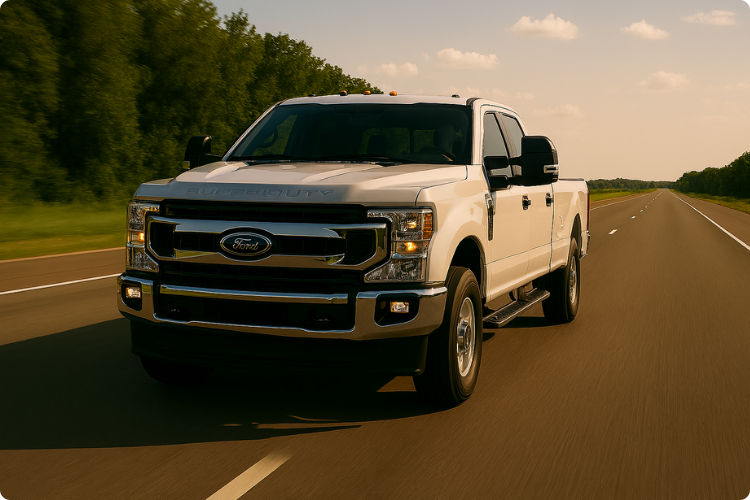
In the United States, Ford’s identity revolves around vehicles like the Ford F-150, the Ford Super Duty and the Ford Expedition.
These are not niche vehicles. The F-Series is the best-selling vehicle line in America and has been for decades.
For a British visitor, the scale is immediately striking. Some versions of the Ford F-350 Super Duty are physically larger than many European vans, yet they are used as everyday transport.
This is because in America, pickups evolved beyond utility vehicles. They became:
- Family cars
- Commuter vehicles
- Towing platforms
- Lifestyle products
- Cultural identity symbols
Why American Roads Create Bigger Vehicles
The United States is built around the automobile in a fundamentally different way.
- Suburban development rather than dense cities
- Wide arterial roads and highways
- Large residential plots and parking spaces
- Long commuting distances
- Strong towing and recreational vehicle culture
This environment naturally rewards larger vehicles.
In Britain, infrastructure developed much earlier and much more compactly:
- Medieval street layouts in cities
- Limited road expansion space
- High population density
- Stricter emissions and congestion constraints
A vehicle designed for rural Texas or interstate highway travel often feels oversized in a British town centre or residential street.
Fuel Prices and Ownership Costs
Fuel economics reinforce the divide.
In the UK:
- Fuel is expensive
- Emissions taxes influence vehicle choice
- Efficiency is financially critical
In the US:
- Fuel is comparatively cheap
- Engine size is less of a constraint
- Running costs are more tolerable for large vehicles
This fundamentally shapes what consumers consider “normal.”
The Evolution of Ford Strategy
A key reason Ford looks so different across markets is that it actively split its product strategy over time.
Ford of Europe became highly independent, designing cars specifically for European roads and regulations. Meanwhile, Ford in North America doubled down on trucks and SUVs as small car demand declined.
In fact, Ford gradually exited many traditional passenger car segments in the US entirely, discontinuing models like sedans in favour of higher-margin trucks and SUVs.
This divergence wasn’t accidental — it was a survival strategy in two completely different markets.
Two Different Car Cultures
The differences go beyond engineering and economics.
In Britain:
- Cars are practical tools
- Efficiency and cost matter most
- Subtle design is preferred
- Ownership is utility-driven
In America:
- Vehicles are identity markers
- Size represents capability
- Trucks carry cultural meaning
- Driving is often lifestyle-oriented
The Ford F-Series represents this cultural divide more than any other vehicle line.
Britain Is Slowly Becoming More American
Despite the differences, convergence is happening.
SUVs and crossovers have rapidly overtaken traditional hatchbacks in Europe. Ford has adapted with models such as:
- Ford Puma
- Ford Kuga
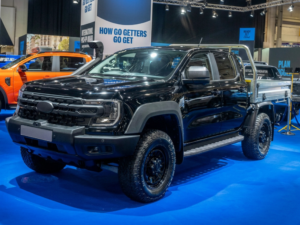
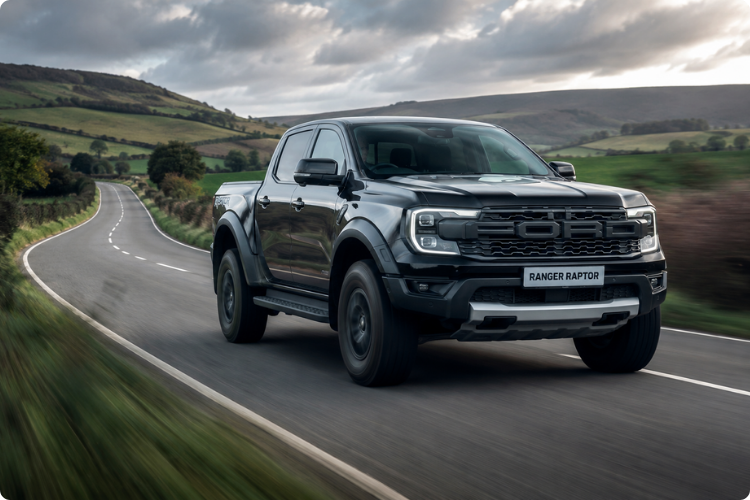
Meanwhile, the Ford Ranger has grown in popularity as a lifestyle pickup rather than just a commercial tool.
Even electrification reflects convergence, especially through the Ford Mustang Mach-E, which blends American branding with European market expectations. Other models include: Ford Explorer, Ford Capri.

Why Some American Fords Still Wouldn’t Work in Britain
Despite convergence, structural limits remain.
Many US Ford vehicles struggle in the UK because:
- Roads are too narrow
- Parking is too constrained
- Fuel is too expensive
- Urban density is too high
Large pickups remain fundamentally mismatched to much of British infrastructure.
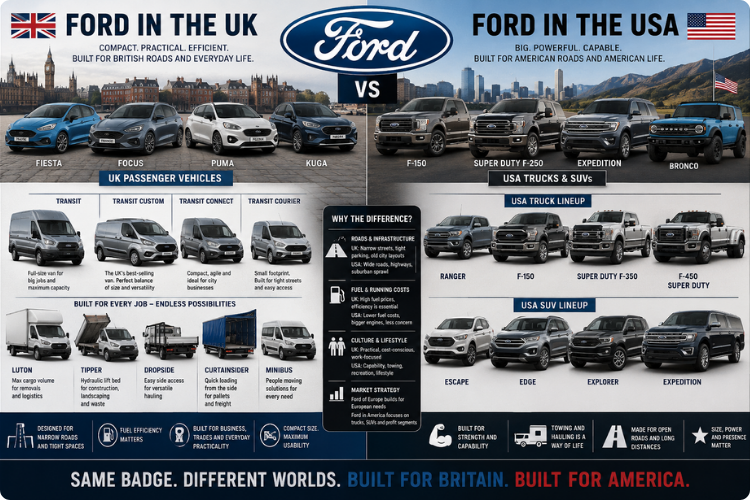
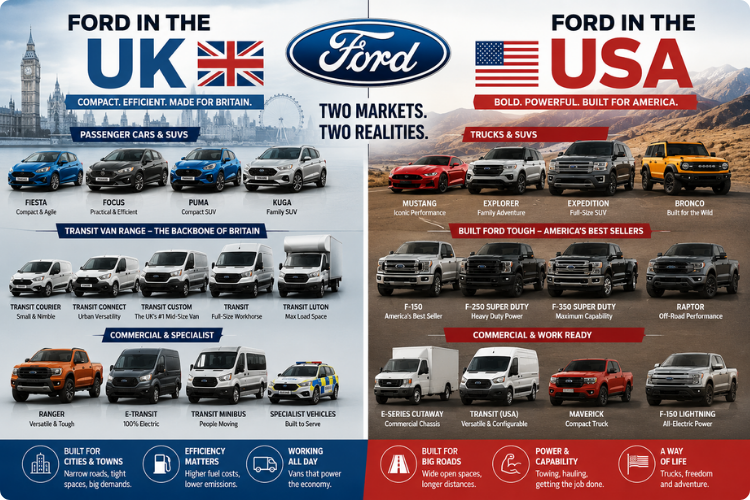
🇬🇧
Compact. Practical. Efficient.
Built for British roads and everyday life.
Passenger Vehicles
- Fiesta
- Focus
- Puma
- Kuga
Transit Range
- Transit – Full-size van for business and commercial use
- Transit Custom – The UK’s best-selling van, ideal for small businesses
- Transit Connect – Compact, agile and built for city streets
- Transit Courier – Small footprint with big storage for urban deliveries
Built for Every Job – Endless Possibilities
- Luton – Maximum cargo volume for removals and logistics
- Tipper – Hydraulic lift bed for construction and landscaping
- Dropside – Easy side access for versatile loading
- Curtain-Sider – Quick loading from the side
- Minibus – Practical people-moving solutions
- Refrigerated Van – Temperature-controlled transport for perishable goods, ideal for food, pharmaceuticals, and other sensitive cargo requiring a cold chain.
Key UK Features
- Designed for narrow roads and tight spaces
- Fuel efficiency is a priority
- Built for business, trades, and practicality
- Compact size maximises usability
Why the Difference?
Roads & Infrastructure
- USA: Wide roads, highways, long-distance travel
- UK: Narrow roads, dense cities, urban driving
Fuel & Running Costs
- USA: Lower fuel costs and larger engines are more common
- UK: Higher fuel costs, smaller engines preferred
Culture & Lifestyle
- UK: Practical, compact, urban-focused
- USA: Capability, towing, outdoor lifestyle
Market Strategy
- Ford Europe focuses on small cars and vans
- Ford USA focuses on trucks and SUVs
🇺🇸
Big. Powerful. Capable.
Built for American roads and American life.
Trucks & SUVs (Examples)
- F-150
- Super Duty F-250
- Expedition
- Bronco
USA Truck Lineup
- Ranger
- F-150
- Super Duty F-350
- F-450 Super Duty
USA SUV Lineup
- Escape
- Edge
- Explorer
- Expedition
Key USA Features
- Built for strength and capability
- Towing and hauling is a core use case
- Designed for open roads and long distances
- Size, power, and road presence matter
Same Badge. Different Worlds.
Built for Britain. Built for America.
Conclusion
What makes Ford particularly fascinating is that it sits directly at the centre of this cultural divide. Few manufacturers have such a clearly split identity.
In Britain, Ford is defined by:
- Hatchbacks
- Compact SUVs
- And above all, the Transit van ecosystem that powers everyday commerce
In America, Ford is defined by:
- Full-size pickup trucks
- Large SUVs
- Towing, distance and scale
Seeing both sides reveals something deeper than automotive design differences. It reveals two entirely different philosophies of mobility shaped by geography, infrastructure and culture.
After travelling through America surrounded by enormous Ford trucks and oversized SUVs, Ford no longer feels like a single global brand. Instead, it feels like two separate identities sharing the same logo — one shaped by Britain’s compact cities and expensive fuel, the other by America’s vast highways and appetite for scale.
And as Britain slowly shifts toward SUVs and crossovers, those two worlds may be starting to converge — even if they will never fully become the same.
 Call our expert team on