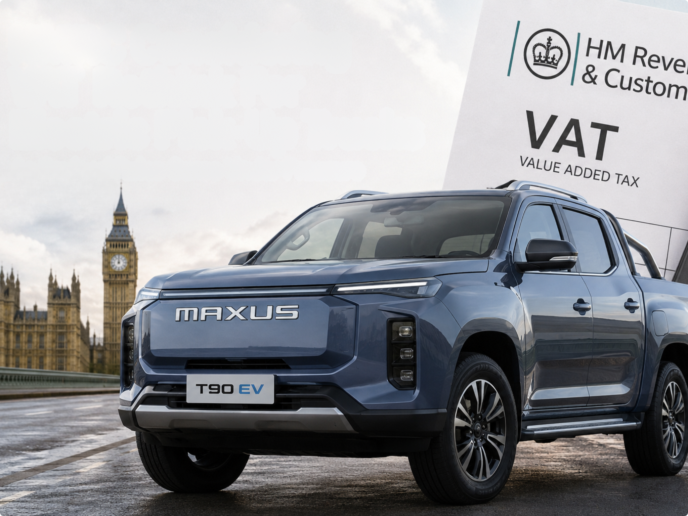
HMRC is considering whether to revise long-standing VAT rules for double-cab pick-up trucks, amid growing industry concerns that current regulations unfairly disadvantage electric commercial vehicles.
The issue centres around the UK’s existing one-tonne payload requirement, which determines whether a double-cab pick-up is classed as a commercial vehicle for VAT purposes.
Under current HMRC rules, pick-ups capable of carrying a payload of at least 1,000kg are generally treated as vans rather than passenger cars, allowing VAT-registered businesses to reclaim VAT on the purchase price and running costs. Vehicles falling below the threshold are typically treated as cars, meaning input VAT recovery is heavily restricted.
However, the rapid shift towards electrification is exposing weaknesses in the system.
EV Batteries Creating Payload Challenges
Manufacturers say the substantial weight of modern EV battery packs is making it increasingly difficult for electric pick-ups to meet the one-tonne requirement — even when the vehicles are designed primarily for commercial use.
The issue has reportedly been raised directly with HMRC by the Society of Motor Manufacturers and Traders (SMMT), which is understood to have proposed a lower payload threshold specifically for electric double-cab pick-ups.
HMRC has confirmed discussions are taking place, but says no decision has yet been made.
The challenge stems from the way the payload is calculated. HMRC defines payload as the difference between a vehicle’s gross vehicle weight and its kerb weight. Because electric vehicles carry significantly heavier battery systems than diesel models, the available payload is often reduced despite similar overall dimensions and towing capability.
Industry analysts say this is becoming one of the biggest structural tax issues facing the electric pick-up market.
Why The VAT Classification Matters
For VAT-registered businesses, the financial implications are considerable.
Commercial vehicles qualifying under the one-tonne rule can normally reclaim 20% VAT on the purchase price, representing savings worth thousands of pounds per vehicle.
That means electric pick-ups sitting just below the threshold risk becoming substantially more expensive than diesel alternatives from a tax perspective — potentially slowing EV adoption among fleets and SMEs.
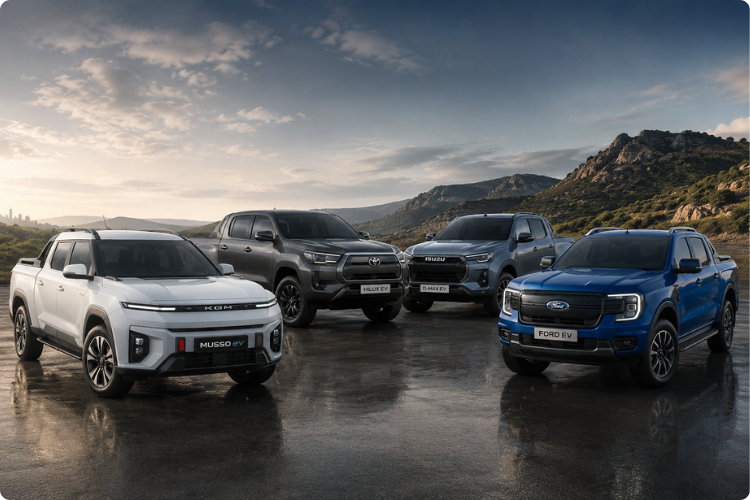
Vehicles understood to fall short of the current VAT threshold include the Maxus eTerron 9, the KGM Musso EV and the forthcoming Toyota Hilux EV, based on early homologation data. Meanwhile, models including the Maxus T90 EV and Isuzu D-Max EV are reported to remain above the threshold and therefore continue to qualify under existing VAT guidance.
For example, a VAT-registered business purchasing a KGM Musso EV priced at just under £40,000 after application of the Government’s £5,000 Plug-in Van Grant could potentially recover close to £8,000 in VAT if HMRC amended the rules.
Tax Complexity Around Pick-Ups Increasing
The debate also comes during a period of major change for double-cab pick-up taxation more broadly.
Since April 2025, HMRC has changed the way many double-cab pick-ups are treated for Benefit-in-Kind (BIK) and capital allowances purposes. Instead of relying on the one-tonne payload test, HMRC now applies a “primary suitability” assessment to determine whether vehicles should be treated as vans or cars for employment tax purposes. As a result, most double-cab pick-ups are now expected to be treated as company cars for BIK calculations, potentially increasing tax liabilities significantly for drivers and employers alike.
It is important to note that VAT classification rules for double-cab pick-up trucks are separate from Benefit-in-Kind (BIK) tax rules. While VAT treatment continues to depend on the one-tonne payload threshold for determining whether a vehicle is classed as a van or a car, BIK rules were updated from April 2025 so that most double-cab pick-ups are treated as company cars for income tax purposes. Zero-emission pick-ups are subject to the standard electric car BIK rates, but this does not affect their VAT classification.
That has created a confusing situation where some pick-ups may be treated as cars for BIK purposes while still qualifying as commercial vehicles for VAT recovery.
Tax advisers say the split treatment is creating growing uncertainty among fleets, accountants and dealers trying to advise customers on electric pick-up purchases.
Pressure Growing From Fleets And Manufacturers
The UK electric pick-up segment remains relatively small compared with the broader van market, but manufacturers increasingly view it as strategically important.
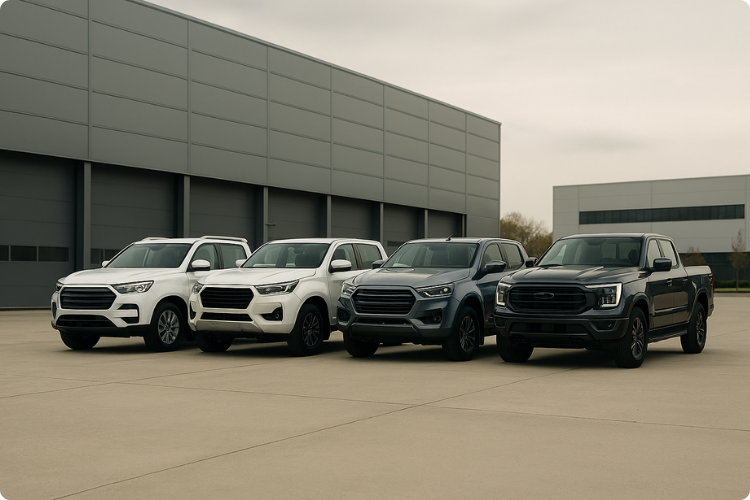
Major brands, including Toyota, Isuzu, Ford, Maxus and KGM, are all investing heavily in electrified or zero-emission pick-up programmes as governments tighten emissions regulations and businesses pursue net-zero targets.
However, payload restrictions remain a major obstacle.
Unlike diesel vehicles, EV pick-ups must balance towing performance, range, battery size and carrying capacity within strict vehicle weight limits. In many cases, increasing battery capacity to improve range directly reduces usable payload.
Industry observers warn that unless tax rules evolve alongside vehicle technology, some electric pick-ups could become commercially unviable in the UK market despite strong fleet demand.
The construction, utilities, agriculture and infrastructure sectors are all viewed as key growth areas for electric pick-ups over the next decade, particularly as urban emissions regulations tighten and businesses seek to decarbonise field operations.
WLTP Regulations Adding Further Complications
The issue has also been compounded by modern WLTP vehicle testing standards, which can affect declared kerb weights and therefore official payload calculations.
Some manufacturers and fleet operators argue that vehicles capable of performing genuine commercial duties are being excluded from VAT recovery purely because of technical weight classifications rather than real-world usability.
Accessories can further complicate matters. HMRC guidance already states that additions such as hard tops may reduce official payload figures enough to push some vehicles below the one-tonne threshold.
That creates a particular problem for electric pick-ups already operating close to the limit.
Potential Policy Shift Could Accelerate EV Adoption
Fleet specialists say that if HMRC were to introduce a reduced payload threshold for zero-emission pick-ups, it could significantly improve the business case for adoption.
The move would likely be welcomed by manufacturers attempting to launch electric alternatives into sectors traditionally dominated by diesel-powered utility vehicles.
However, any reform would also raise wider questions around how commercial vehicles should be classified in the EV era, particularly as battery technology continues to evolve.
At present, HMRC says discussions remain ongoing, and no formal proposal has yet been adopted.


 Call our expert team on