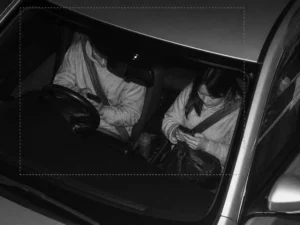
Scotland has begun a six‑month trial using advanced AI‑powered cameras to monitor drivers who use mobile phones at the wheel or fail to wear seatbelts — two of the most dangerous behaviours on the road. This marks the first time this technology has been deployed across Scotland and is believed to be the largest survey of its kind ever carried out in the UK.
What’s Happening
Transport Scotland has stationed AI‑equipped camera units at 12 locations around the country, rotating the equipment over the next half‑year to gather data on driver behaviour across urban arteries, rural roads, trunk routes and areas of roadworks.
The cameras use AI image processing to detect drivers who might be using a handheld mobile phone or failing to wear a seatbelt, automatically flagging instances that are then reviewed by human analysts to ensure accuracy.
Importantly, this phase of the project is not enforcing fines or penalties — it is purely observational. The goal is to build a robust evidence base on how widespread these risky behaviours are before deciding how to enforce compliance or invest in interventions.
Why It Matters
Mobile phone use and seatbelt non‑compliance are part of what safety experts call the “Fatal 5” road risks — alongside speeding, drink/drug driving and careless driving — that contribute most heavily to collisions and serious injuries.
Transport Scotland estimates that of the roughly 4.7 million vehicle journeys made daily in Scotland, around 169,000 drivers may not be wearing a seatbelt, and more than 28,000 could be using handheld devices while driving each day.
Recent Scottish road casualty data shows that almost one in four in‑car fatalities involved people not wearing seatbelts, highlighting how critical compliance is to survival in a crash.
What the Government Says
Scotland’s Transport Secretary, Fiona Hyslop, said the trial will provide the “most comprehensive picture yet of the scale of these issues” and help inform the next steps in tackling them through enforcement, education and targeted safety investment.
She emphasised the Government’s commitment to its Road Safety Framework, which aims to make Scotland’s roads among the safest in the world by 2030.
Technology and Evidence
The AI system being used is similar to solutions already trialled in other parts of the UK, including in Greater Manchester and Devon & Cornwall, where thousands of mobile phone and seatbelt offences were detected over relatively short trial periods.
These systems typically pair automated detection with human verification to ensure high confidence in the data — a balance designed to maximise accuracy and minimise false positives.
What Comes Next
Once the six‑month trial ends, the data will be analysed and used to shape future enforcement policy and road safety campaigns. Police and safety authorities could use insights from the study to decide whether to roll out enforcement‑grade systems or design targeted educational and investment initiatives to reduce high‑risk road behaviours.
UK Penalties for Mobile Phone Use and Seatbelt Offences
Mobile Phone Use While Driving

- Penalty: £200 fine
- Points: 6 penalty points on the driving licence
- Notes: Applies if the driver is holding, dialling, texting, or using apps on a handheld phone, even when stopped at traffic lights or in congestion.
Seatbelt Offences
- Driver not wearing a seatbelt: £100 fine, 3 points
- Passenger not wearing a seatbelt: £100 fine (driver responsible if passenger under 14)
- Notes: Applies to all seating positions; exemptions exist for medical reasons with documentation.


Key Takeaway: Both offences significantly increase the risk of serious injury or death in a crash. Observational trials like Scotland’s aim to reduce these behaviours before enforcement is applied more widely.
 Call our expert team on