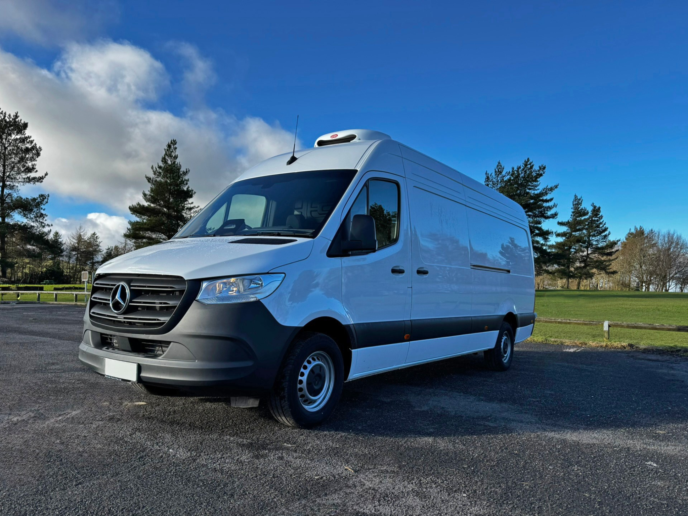
For businesses that transport temperature-sensitive goods, reliability isn’t optional — it’s critical. A single temperature failure can mean wasted stock, lost revenue, and damaged client relationships.
Refrigerated vans provide a purpose-built solution for maintaining consistent temperatures during transport. But selecting the right vehicle requires more than choosing a cooling unit — it requires understanding payload, compliance, operating costs, and long-term business strategy.
This guide explores everything you need to know before investing in a refrigerated van.
How Refrigerated Vans Actually Work
Understanding how a refrigerated van functions helps you choose the right setup.
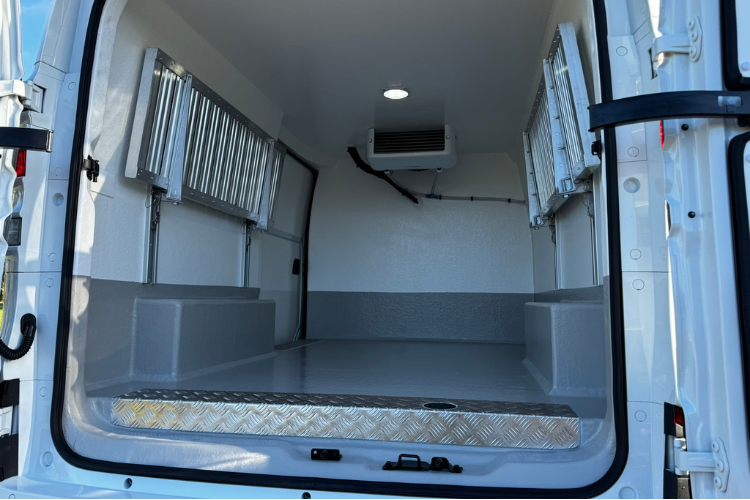
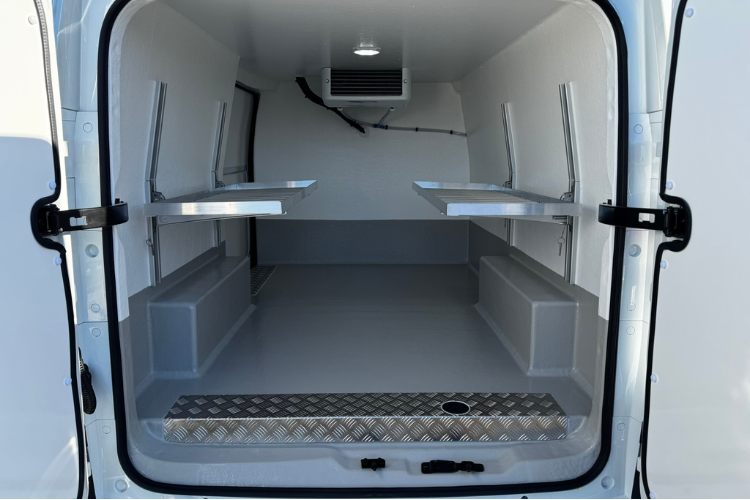
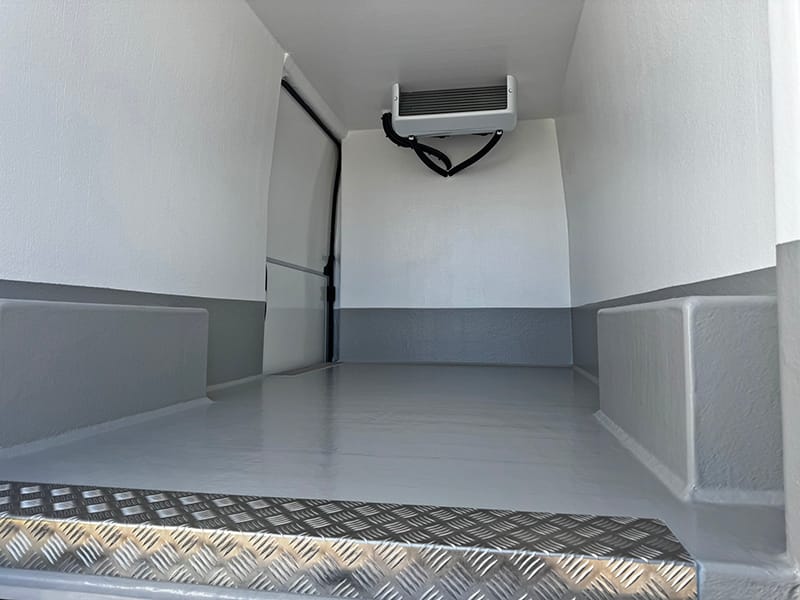
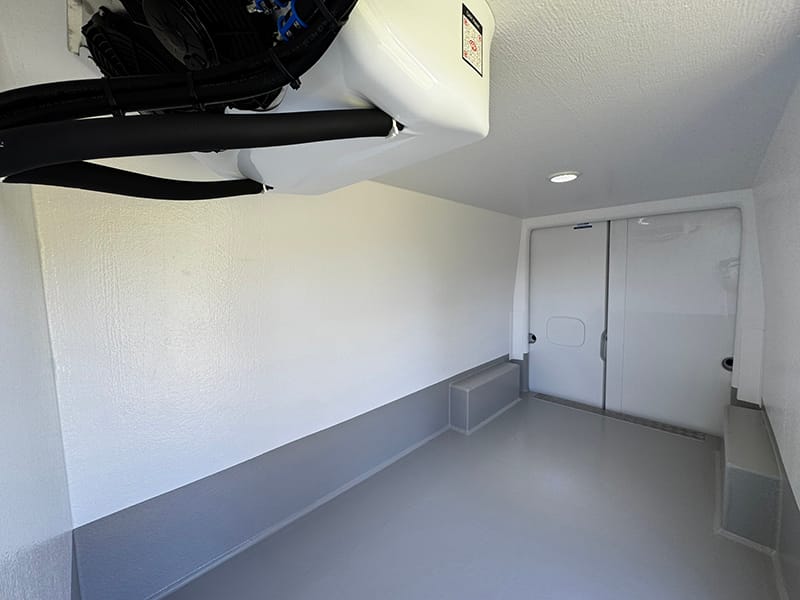
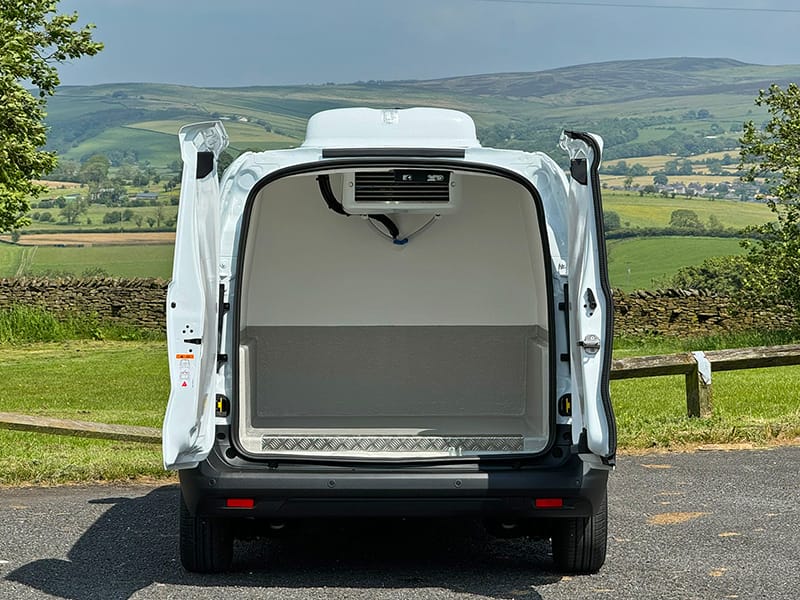
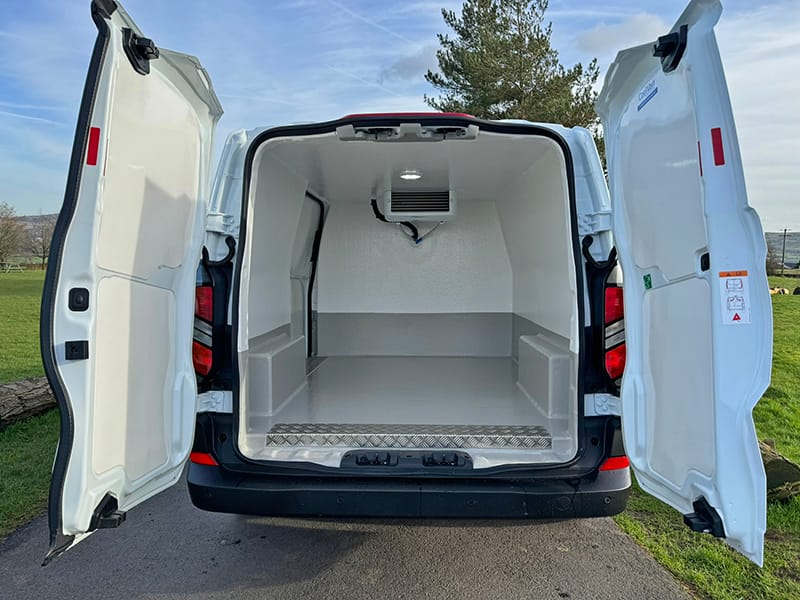
A professional fridge van conversion typically includes:
- High-density insulation panels (walls, ceiling, doors)
- Reinforced, hygienic GRP lining
- Sealed rear and side doors
- A refrigeration unit (engine-driven or electric)
- Optional standby power (plug-in overnight cooling)



Types of Refrigeration Systems
- Direct Drive Systems – Powered by the vehicle’s engine. Suitable for most daily delivery operations.
- Standalone Diesel Systems – Independent power source. Often used for heavy-duty or long-distance freezer transport.
- Electric Refrigeration Units – Increasingly common in urban fleets and compatible with electric vans.
We partner with leading refrigeration unit manufacturers (e.g., Thermo King, Hubbard Refrigeration) and use high-spec insulation and linings to ensure reliability and performance.
Every conversion is backed by a full warranty, with the option to add a maintenance package. Not sure how a maintenance agreement differs from a manufacturer’s warranty? Understanding the distinction is key when selecting the right lease for your business.
A maintenance agreement typically covers ongoing servicing, tyres, MOTs, and general wear-and-tear repairs. In contrast, a manufacturer’s warranty protects you against faults resulting from defects in materials or workmanship.
If you’d like a simple and detailed comparison of the two — and a clear explanation of what each includes — take a look at our blog: ‘Maintenance vs Warranty: What’s the difference?’.
Refrigerated Van Size Guide
Choosing the right size is essential. Overspecifying increases cost; underspecifying restricts growth.
Small Refrigerated Vans
Ideal for:
- Florists
- Local catering
- Small food businesses
- Independent butchers
Advantages:
- Lower purchase cost
- Better fuel economy
- Easier city driving
- Lower insurance
Medium Refrigerated Vans
Ideal for:
- Multi-drop food delivery
- Regional catering firms
- Pharmaceutical distributorsLocal catering
Advantages:
- Strong payload balance
- Flexible shelving layouts
- Suitable for freezer conversion
Large Refrigerated Vans
Ideal for:
- National logistics
- Wholesale food supply
- High-volume frozen distribution
Advantages:
- Maximum load capacity
- Dual-temperature options
- Bulk efficiency
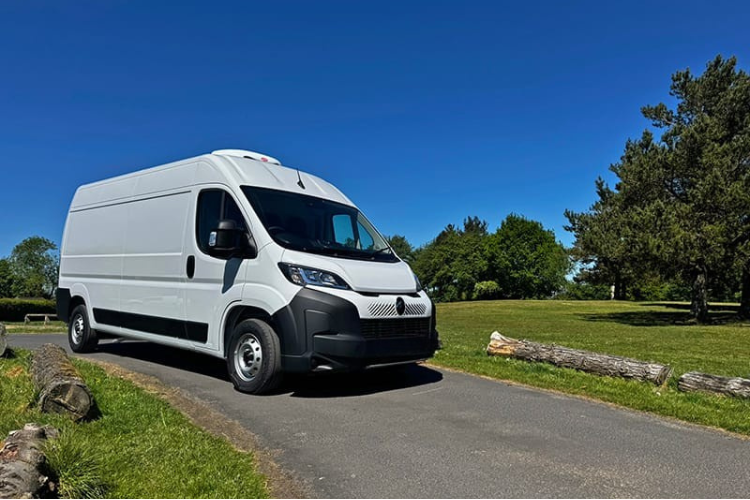

How Much Does a Refrigerated Van Cost?
Costs vary significantly depending on:
- Base vehicle
- Conversion type
- Refrigeration unit
- Standby capability
- Dual-zone configuration
- Finance method
Approximate Price Ranges
- Small Chiller Van: Higher than standard panel van due to conversion
- Medium Freezer Van: Significantly higher due to thicker insulation
- Large Dual-Zone Van: Premium price due to system complexity
Insulated Vans (Non-Refrigerated)
Insulation-only vans are fitted with approximately 50mm of thermal lining within the load compartment. However, because they do not include an active refrigeration unit, they cannot actively cool the cargo area. As a result, they are unsuitable for transporting highly perishable goods such as fresh food or temperature-sensitive pharmaceuticals.
Chiller / Fridge Vans
Chiller vans are one of the most widely used temperature-controlled options due to their versatility. Combining around 50mm of insulation with an integrated refrigeration unit, these vehicles can typically maintain temperatures ranging from 0°C down to approximately -8°C. This makes them ideal for transporting chilled produce, dairy products, and other goods that require consistent but not deep-freeze conditions.
Semi-Freezer Vans
Semi-freezer vans are designed for lower temperature requirements and can achieve levels of around -15°C. They feature thicker insulation — usually around 75mm — along with a more powerful freezer unit. Some semi-freezer models also include automatic defrost systems, allowing the unit to regulate ice build-up efficiently while the vehicle is in operation.
Freezer Vans
Built for deep-freeze transport, freezer vans incorporate approximately 75mm of insulation along with advanced reverse-cycle or hot gas defrost systems. Reinforced side and rear doors help preserve internal temperatures, enabling the van to consistently maintain conditions as low as -20°C. These vehicles are particularly suited for transporting frozen food and other goods that require strict sub-zero storage during transit.
Electric Refrigerated Vans: The Emerging Trend
With emission regulations tightening and Clean Air Zones expanding, electric refrigerated vans are becoming more viable.
Advantages include:
- Zero tailpipe emissions
- Lower running costs
- Reduced congestion charges
- Ideal for urban deliveries
Considerations:
- Refrigeration unit energy draw
- Range impact when cooling is active
- Charging infrastructure
For city-based food and pharmaceutical businesses, electric refrigeration may soon become the preferred option.
Compliance & Legal Considerations
For food businesses, compliance is essential.
You may need:
- Temperature monitoring devices
- HACCP documentation
- Cleaning protocols
- Calibration records
- Regular servicing logs
Failure to maintain required temperatures can lead to:
- Fines
- Insurance issues
- Stock disposal
- Reputational damage
Pharmaceutical transport may require even stricter temperature validation and reporting systems.


Operational Efficiency Tips
To maximise performance:
- Pre-cool the cargo area before loading
- Minimise door opening time
- Avoid overloading
- Park in shade where possible
- Service refrigeration systems proactively
Refrigerated Van Conversion Quality: What to Look For
Not all conversions are equal
Key quality indicators:
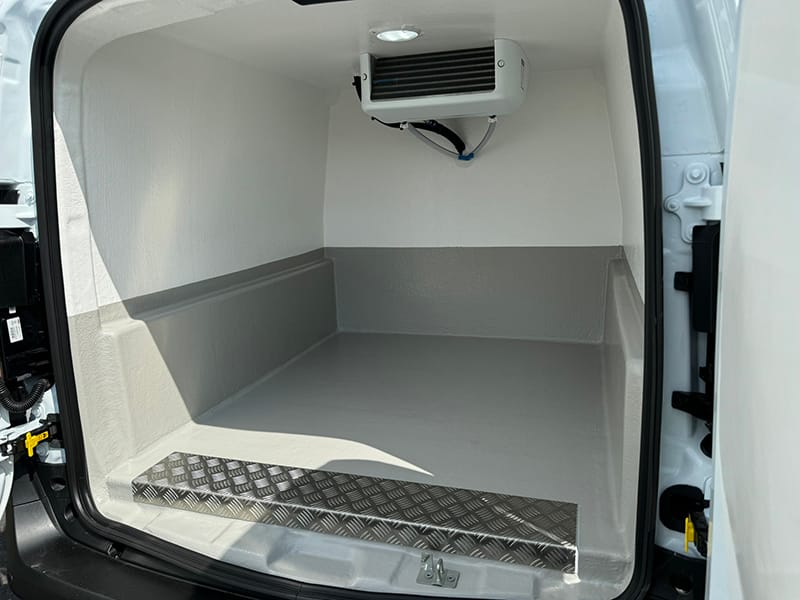
- Smooth internal finish for hygiene
- Strong door seals
- Non-slip, easy-clean flooring
- Properly installed evaporator positioning
- Noise control measures – cool the cargo area before loading
A poor-quality conversion leads to:
- Temperature instability
- Higher energy consumption
- Increased maintenance
- Reduced resale value
For city-based food and pharmaceutical businesses, electric refrigeration may soon become the preferred option.
Refrigerated Vans for Different Industries
Food & Grocery Delivery
- Speed and temperature recovery are critical.
Catering Businesses
- Flexibility and shelving matter more than maximum volume.
Pharmaceutical & Medical Supply
- Precise monitoring and data logging are essential.
Floral & Specialist Goods
- Humidity and stable cooling are priorities.



Leasing vs Financing vs Outright Purchase
Leasing
Best for:
- Preserving working capital
- Upgrading every 2–4 years
- Predictable monthly budgeting
Hire Purchase
Best for:
- Long-term ownership plans
- Businesses with strong cash flow
Outright Purchase
Best for:
- Established fleets
- High-mileage operations
- Asset-focused balance sheets
Long-Term Fleet Planning Strategy
When scaling your refrigerated fleet:
- Standardise vehicle sizes where possible
- Choose models with strong resale value
- Consider future emission regulations
- Monitor fuel and maintenance costs per mile
- Analyse route optimisation regularly
Fleet data can reveal when upsizing or downsizing vehicles improves profitability.
Why Choosing the Right Supplier Matters
Beyond the van itself, support matters:
- Warranty coverage
- Maintenance access
- Replacement vehicle availability
- Conversion certification
- Expert advice
The right partner helps reduce downtime and protect your investment.
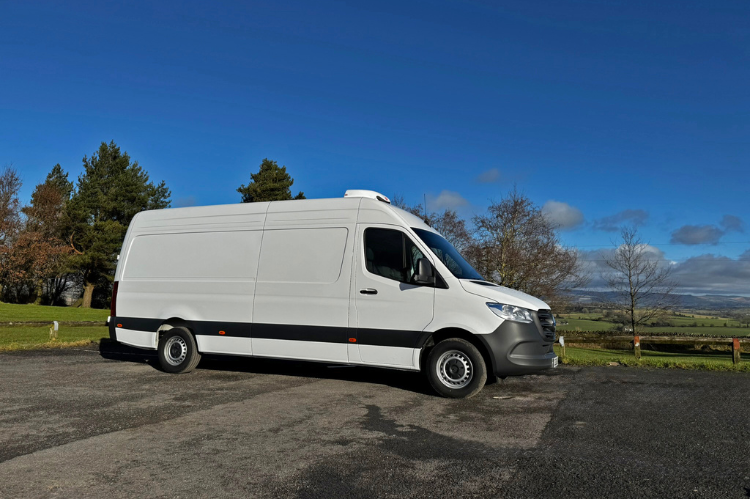
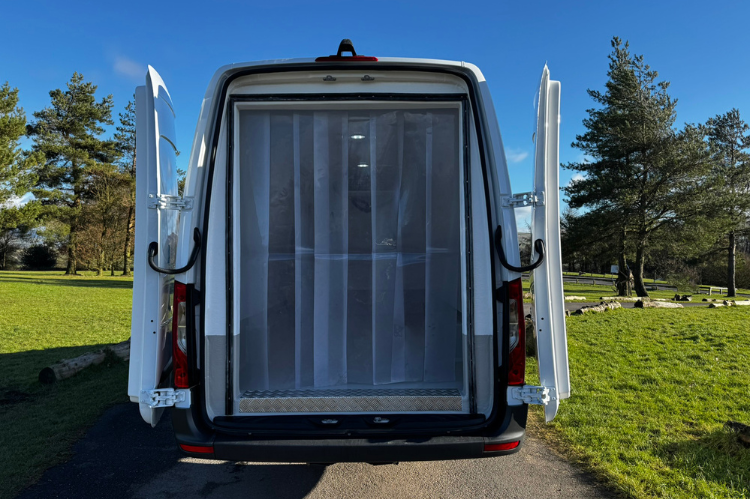


Leasing a refrigerated van through Commercial Vehicle Contracts takes the stress out of fleet management. To provide our customers with the highest quality vehicles, we partner with the UK’s leading refrigerated van converters.
All of our fridge vans come equipped with seamless, leak-proof insulation panels and premium refrigeration units as standard. This ensures exceptional reliability, durability, and performance, making them perfectly suited for even the most demanding transport tasks — and we stand behind every van we provide.
 Call our expert team on
  Drop us a message
 Refrigerated van quote request